清平調

Three years ago, “Charlotte” studied and memorized 清平調 when she was 9.  I put together the following for her to read.  Now, it’s “Georgia”‘s turn, who is also nine now.


清平調

李白

雲想衣裳花想容

春風拂檻露華濃

若非群玉山頭見

會向瑤臺月下逢


一枝紅艷露凝香

雲雨巫山枉斷腸

借問漢宮誰得似

可憐飛燕倚新粧


名花傾國兩相歡

常得君王帶笑看

解釋春風無限恨

沈香亭北倚闌干


楊貴妃 (The story of Imperial Consort Yang, one of the four beauties of ancient China.)

楊玉環於公元719年出生於蜀州(今四川)。十六歲時,楊氏嫁給唐玄宗的兒子李瑁。不久,楊氏生下兩個兒子。李瑁的母親武惠妃是玄宗最寵愛的妃子。公元737年武惠妃逝世,玄宗 悼惜良久,當時後宮數千,無可意者。有人進言楊氏「姿質天挺」,於是唐玄宗將楊氏召入後宮之中。其後,以為玄宗母親祈福的  名義,敕書楊氏出家為女道士。道號「太真」。

745年, 李瑁新娶韋氏。一個月後,楊氏還俗,受冊封為貴妃。此時楊氏二十七歲,而唐玄宗已六十一歲了。這時楊氏反成為李瑁的庶母。楊貴妃備受寵幸,其宗族因此繁盛,很多人都獲授官爵或賞賜。其堂兄楊國忠為人好賭,但也封官入朝、把持朝政。唐玄宗此後愈加沉溺於酒色,政治更加腐敗。

755年,節度使安祿山以清君側,反楊國忠為名, 起兵叛亂,兵鋒直指長安。次年,唐玄宗帶著楊貴妃楊國忠逃往蜀中(今成都), 途經馬嵬驛時,禁軍士兵一致要求處死楊國忠楊貴妃,亂刀殺死了楊國忠唐玄宗言: 楊國忠亂朝當誅,然貴妃無罪,本欲赦免,無奈禁軍士兵皆認為貴妃乃 禍國紅顏,安史之亂乃因貴妃而起,不誅難慰軍心、繼續包圍皇帝。唐玄宗為求自保,不得已之下,賜死了楊貴妃。最終楊貴妃被賜白綾一條,縊死在佛堂的梨樹下,時年  三十八歲。


The poem explained:

清平調

李白

雲想衣裳花想容

春風拂檻露華濃

若非群玉山頭見

會向瑤臺月下逢

檻:欄杆。華:花。

群玉山:神話傳說中西王母所居的仙山。瑤台:傳說在昆侖山,是西王母居住的宮殿。

解釋:楊貴妃是一個十分美麗的女子,我們看見了彩雲,便想著她華麗的衣裳;我們看見了花朵,便想著她姣好的容貌。在春風吹拂著窗櫺,露水濃厚的時候,她的姿態更是嬌滴滴了。如果不是在西王母所住的群玉山看見她,那未必在瑤臺的月光下面,纔能和她相逢呢?


一枝紅艷露凝香

雲雨巫山枉斷腸

借問漢宮誰得似

可憐飛燕倚新粧

紅豔:指牡丹

雲雨巫山:指楚王與巫山神女約會事。
飛燕:漢成帝寵妃趙飛燕。

解釋:一枝繁盛而艷麗的芍藥花,因為沾了露水,更加凝結著香氣;但是楚襄王夢見巫山的神女和他幽會,畢竟是件空虛的事情,徒然使他想斷肝腸罷了。至於我所說的芍藥花,在漢宮裡有誰能夠和她相像呢?只有一個剛才梳妝而令人可愛的趙飛燕了。


名花傾國兩相歡

常得君王帶笑看

解釋春風無限恨

沈香亭北倚闌干

傾國:喻美色驚人。

解釋:消散

沉香:亭名,沉香木所築。

解釋:嬌豔的名花,和蓋世無雙的美貌的貴妃,大家並論起來,這兩件事情,都有歡喜的情緒;所以 常常得到 君王帶著笑臉去觀看,君王要解除春風裡送來的許多煩惱,就和貴妃在沉香亭的北面,把身體靠著欄干,賞玩御花園裡的景色。


這三首詩第一首以牡丹比貴妃,歌詠她的美豔;第二首運用典故,以帶露之花比貴妃得寵;第三首兼詠貴妃和牡丹。這組詩構思精巧,詠花詠人,緊密結合。當時,玄宗和貴妃對詩人的才華都很讚賞。據說後來高力士以詩中用了飛燕、襄王的典故進讒,說是有譏諷貴妃與玄宗之意,使他們頓生疑忌,終至把李白放出京城
Update: A little slowing down

Work is taking up more of my time this year, as one physician left the practice at the end of last year; so, I have not had the time to post recently.  “Charlotte” and “Georgia” continue to work on their Chinese but have a little less time recently.

Charlotte, who is 12 and in 7th grade, has had projects after projects at school since school resumed after Christmas break, which have kept her very busy.  When she has some time to spare, she continues to study Chinese using 6th grade first semester self-study textbook guide from Taiwan but is making slow progress.  I continue to set aside time for her to read the kungfu novel 神雕俠侶 and she continues to reads parts of it aloud with the Chinese tutor on the weekend.

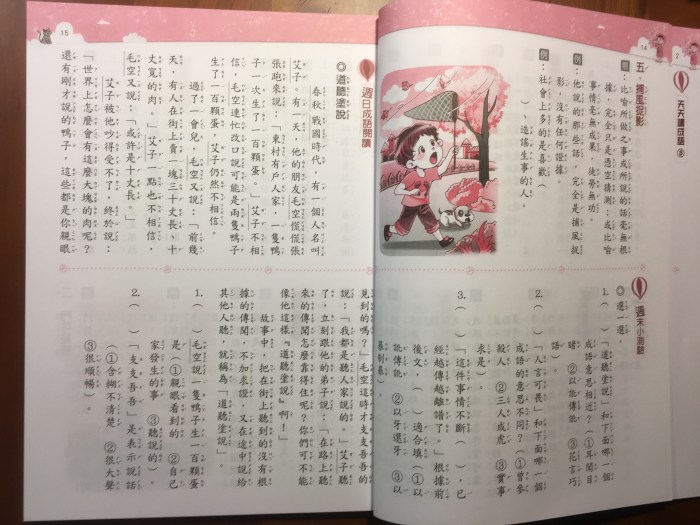
We recently got a fresh supply of workbook from Taiwan, which go over idioms and expressions.  So, we are trying those too.  Here is one such workbook:

image

At home, Charlotte continues to speak Chinese with me about 90% of the time and with her younger sister Georgia about 80% of the time.  Just tonight, she gave a brief impromptu Power Point presentation in Chinese to the rest of the family on why I should drive them to the bus stop in the morning 5 minutes earlier.  She typed up the slides in English but presented it in Chinese; so, my wife and I are happy about it.  The thing is, I converse with the children in Chinese almost exclusively, except for certain expressions we find it more natural to say in English; so it actually would feel rather unnatural if Charlotte presents such topic to us in English.

As for “Georgia”, who is 9 and in 5th grade (skipped a grade), she has been spending a little more time on her English and math recently, trying to catch up to her peers who are mostly at least one and half year older than she is.  Math word problem she has a little more problem with as usual.  In any case, she is still studying Chinese using 4th grade first semester self-study textbook guide, reading Chinese cultural stories with the tutor on the weekend, and is learning more idioms through the new workbooks as well.

I set aside time for her to read novels/chapter books as well.  She is reading the Chinese edition of the abridged version of Animal Farm at this point.  This series is certainly much more challenging for her than the last few books of Magic Tree House, as the selections, though abridged, are of famous English literary works.  So, the theme and the story lines are likely more suitable for middle schoolers.

Lastly, both of them learn to write one classic Chinese poem every 2 weeks or so this year.

Read aloud of kung-fu novel 金庸’s 神鵰俠侶

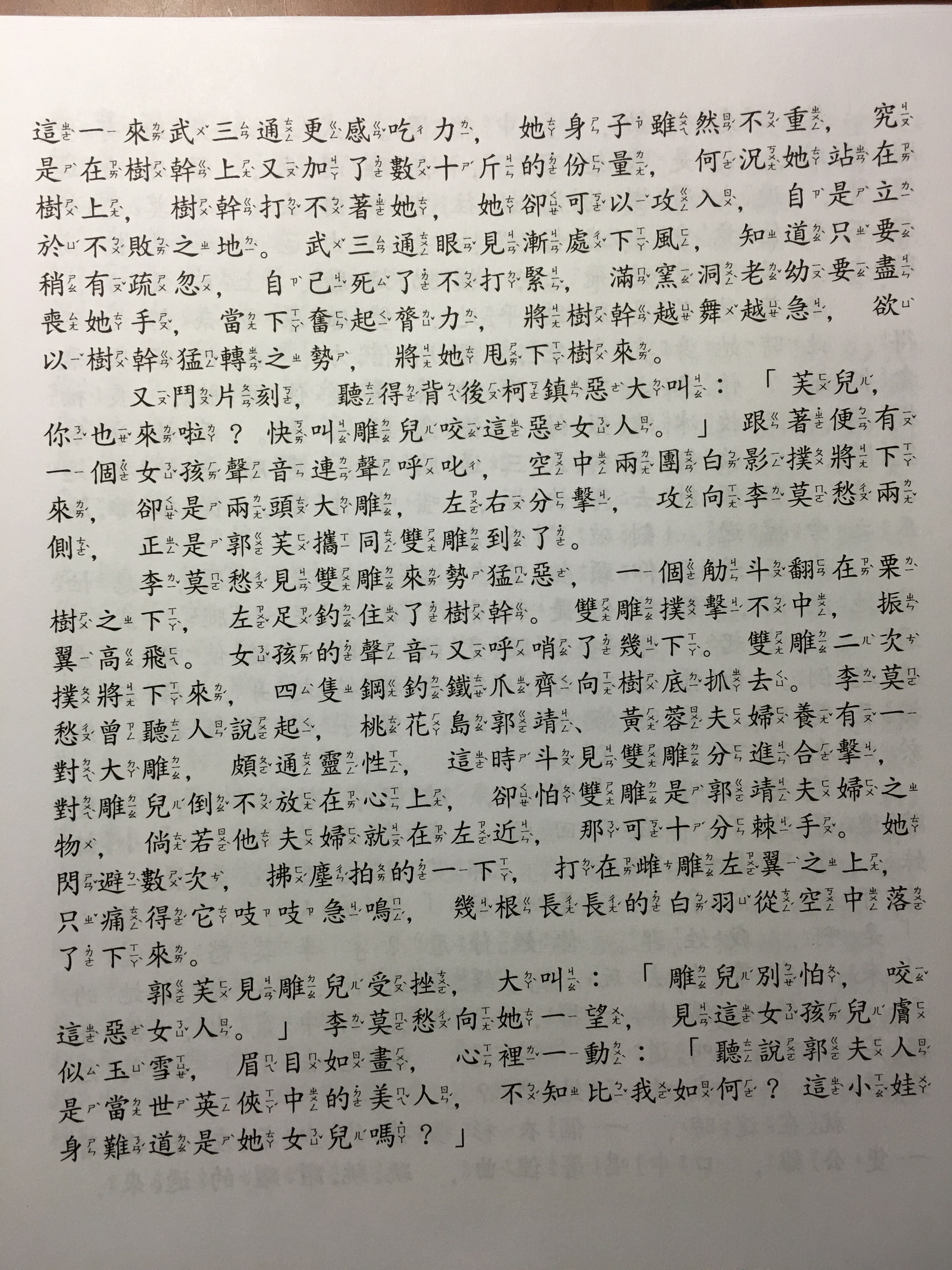
The following is a print-out of salient parts of the novel with zhuyin added, for read-aloud lesson with the Chinese tutor on the weekend, who explains phrases that “Charlotte” doesn’t quite understand.  Original Chinese writings are simply more authentic and just about nothing beats 金庸’s work in this category.  These read-aloud should make Charlotte’s own reading of the novel easier.

(Of note, I didn’t correct for alternative pronunciation for the zhuyin, since that would be too tedious to do.  The tutor will correct her if she reads it incorrectly.)

Last stage, for now

如今十二歲的大女兒已開始讀金庸的神鵰俠侶也開始可用電腦打自己的創作,她的大學前的中文學習似乎也到的最後ㄧ個階段。在接下來的三年,我們目前計畫大致上如下:

  1.  繼續念台灣小六的自修中文課本,多念些介紹中國文化的文章。
  2. 七年級的暑假加強用打字寫作。同時,因她喜歡寫作繪畫和彈吉他,也試編寫和畫雙語童書和學吉他自彈自唱中文歌。
  3. 八年級的暑假學讀簡體字和加強論說文,說明文等非記敘文的文章。
  4. 九年級的暑假由親友安排去台灣或大陸打工ㄧ個月。
  5. 十年級準備考Chinese AP test。學到這階段,這應該不難。

在大學前中文學習進入尾聲時, 她也可重新學習九歲時中斷的西班牙文。

  1. 七年級完後的暑假念五十小時的西文。
  2. 八年級週末念些西文文章。
  3. 八年級完後的暑假念八十小時的西文。
  4. 九年級上西文二或三的課。
  5. 九年級完後的暑假念四十小時的西文。
  6. 十年級上西文三或四的課,之後西文應有ILR第二級的程度。
  7. 十年級完後的暑假由親友安排去我國高中時住的多明尼加去做志工服務ㄧ個月。
  8. 十ㄧ年級上西文四或大學的西文課程,之後希望有~ILR第三級的程度。

至少,這是現在計畫的進度。當然,計畫常常趕不上變化。就再看咯!

Now that 12 year old “Charlotte” starts reading 金庸’s 神鵰俠侶 and can type her own creative writings, I can see the beginning of the last stage of our pre-college Chinese language art (CLA) journey.  At this point, I foresee that this last stage will last three years, from 7th through 9th grade, as follows:

  1.  Continue studying 6th grade self-study guide over the next two years.  It takes longer for my elder daughter, since she has heavier school work.  At the mean time, continue reading novels, concentrating more on original Chinese novels instead of translated ones, and doing read-aloud of literary work and cultural studies with the Chinese tutor on the weekend.
  2. Summer after 7th grade: focus on Chinese composition (by typing).  She will hopefully work on bilingual children’s book, as drawing/painting and writing are two of her passions.  With another year of playing/learning guitar, a favorite activity, she will hopefully work on making covers of Chinese songs (she is playing 時間都去哪兒了 tonight).  She is receptive to voice lessons.  So, we’ll see.
  3. Summer after 8th grade: learn commonly used simplified characters and do more non-fictional readings.  After going over the basics, it should be fairly straight forward.  One simple way would be to read fluently articles on www.slow-chinese.com and www.thechairmansbao.com first in traditional and then in simplified characters.  These articles are suitable for HS students and adults, not kids.
  4. Summer after 9th grade: one month of summer job in mainland China and Taiwan alongside other natives through friends and family.
  5. Studying for and taking the Chinese AP test should be fairly easy in 10th grade.  She will be “wrapping up” her pre-college CLA journey while most heritage students are just ramping it up in 9-10th grade.
  6. Continue reading Chinese novels and enjoying CLE after all these.

This “last” phase of our pre-college CLA journey should be the first phase, or more accurately, resumption of our Spanish language art journey.

  1.  Summer after 7th grade: resume Spanish home self-study and home tutoring.  It’s fairly easy to find suitable tutors.  Current plan is for ~ 50 hours of study.
  2. 8th grade: read/study more Spanish on the weekends.
  3. Summer after 8th grade: Another ~80 hours of study.
  4. 9th grade: HS Spanish II or III.
  5. Summer after 9th grade: ~ 40 hours of study.
  6. 10th grade: Spanish III or IV.  By the end 10th grade, she should be IRL level 2.
  7. Summer after 10th grade: hopefully one month of immersion volunteering trip in the Dominican Republic, back in the home country of my teenage years.
  8. 11th grade: Spanish IV or college Spanish.  She should be close to ILR level 3 by then.

Of course, like all “good” Asian parents, she has time for some fun (she loves sleep-overs and hanging out with her friends – who wouldn’t.) and to work on other subjects, activities, and tennis, her sport of choice.  Lastly, she reminds me that I promised her equestrian lessons this summer, another favorite activity from several years back, for achieving her target grade so far this year.  Thank goodness lesson cost is reasonable in our neck of the wood in relatively rural eastern NC.

Well, at least these are the plans.  We’ll see how it goes.  I can’t wait.

New textbooks for 2016!

“Charlotte”, 12, and “Georgia”, 9, are off to a bright new year.  At the end of 2015, Georgia finished the first semester third grade self-study guide textbook and Charlotte finished her second semester fifth grade Chinese language art textbooks.

Since I don’t have a self-study guide textbook for second semester of third grade for Gerogia, I decided for her to just skip ahead to the first-semester fourth- grade one that I have.  Her reading comprehension is pretty good; so, I think she will be alright.  The material is significantly harder but she will be just fine.


As for Charlotte, we proceeded to first semester sixth grade self-study guide textbook.  She thinks the self-study guide is more tedious, but she will live….

image image

神雕俠侶!The Return of the Condor Heroes

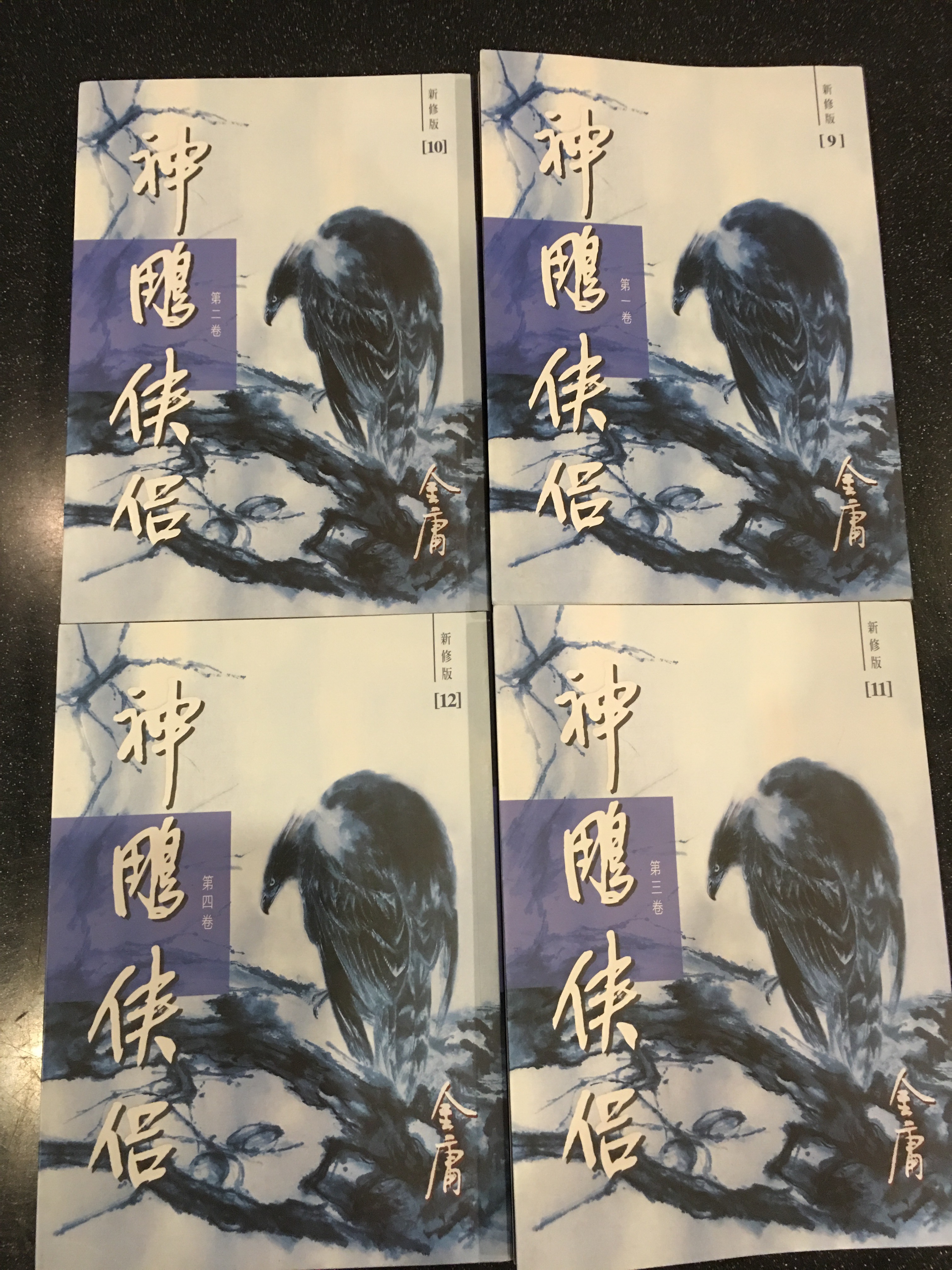
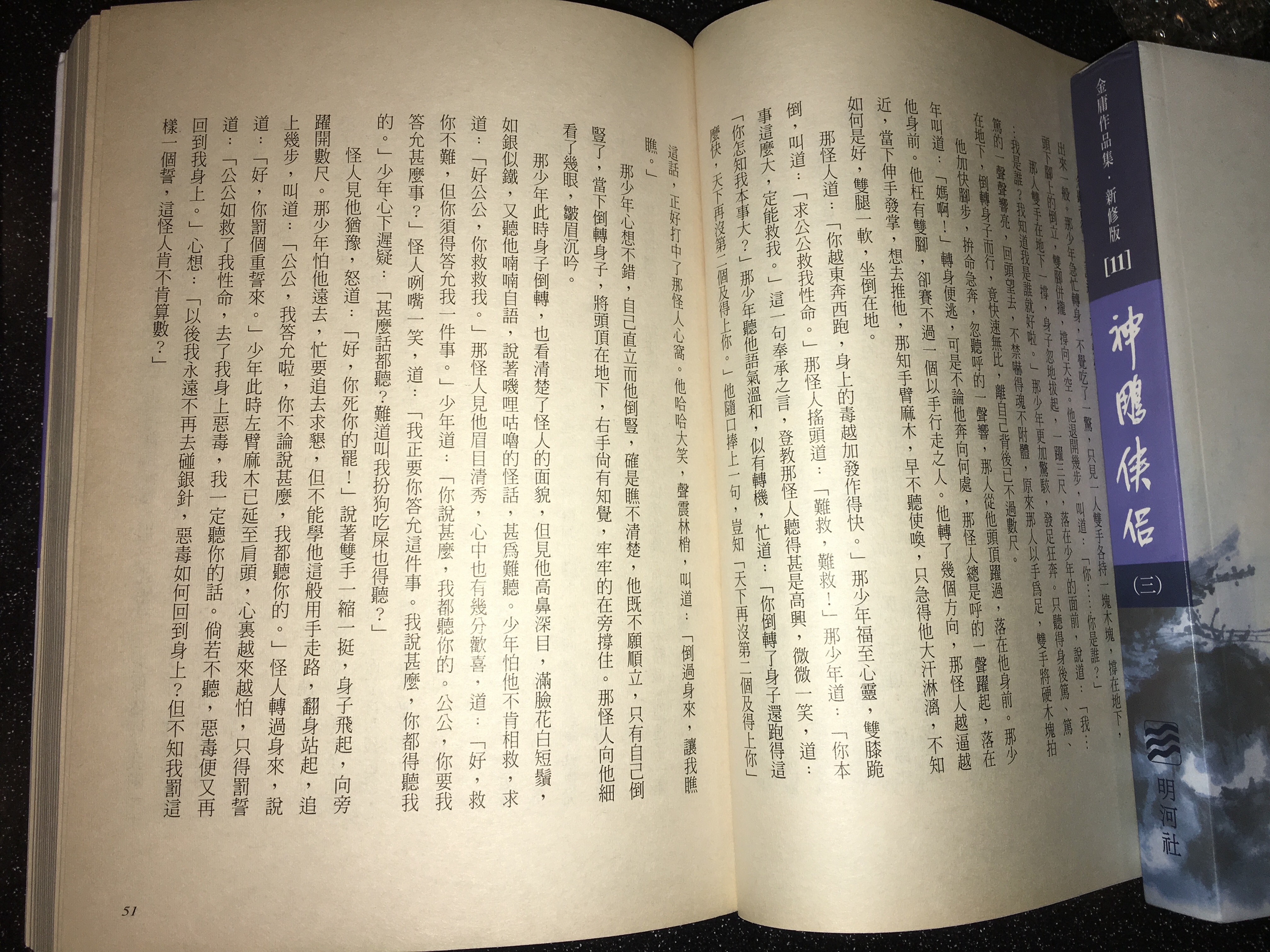
I bought a used copy of 金庸’s 神雕俠侶 (The Return of the Condor Heroes) on Ebay for a fraction of the price and the 4 volume novel arrived today!  Yeah!  “Charlotte”, 12, has already started reading it on Kindle last week.  But, like all things, a book in hand is a book indeed and still works better for her.  I ask her to read a little every day.  I did have to explain to her a few passages that she didn’t get, particularly since she didn’t read the previous series, 射雕英雄傳 (The Legend of the Condor Heroes).  However, having watched the cartoon version a couple of years ago does help her with having an overall understanding of the plot.   I also explain to her a few terms that she didn’t get and read a few paragraphs for her every now and then, to make sure she gets the gist of the plot.  I am not say that she understands every idiom 成語 or word usage (because she doesn’t), but I am sure she will pick up more and more of them up from context over time.

With the novel in hand and the real action finally starting with the arrival of the main protagonist 楊過, she is now getting excited about the story.  Super duper!  I am so glad she can now enjoy what I enjoyed reading in my teens!  I am sure that, after reading this four volume novel, her Chinese would improve by a significant degree.


image  imageimage


Georgia’s reading progression

I was organizing our digital photo album earlier today when I spotted a couple of videos of “Georgia” reading or speaking Chinese from ~ 3 years old to 8 years old.  I put those videos together with the more recent ones, to give fellow parents some idea as to the pace that she was learning Chinese, which may be instructive to fellow parents.  I hope this is helpful.

This is my sweet “Georgia” “reading” with our first au pair at 3 years old.  How quickly a child grows up!


Here is Georgia reading a story book at ~ 5 years and 10 months old:


Here is she reading first grade textbook at ~5 years and 11 months old:


Here is she reading a story book at 7 years and 3 months old, at which time she already started reading comics without zhuyin: 這時侯她已開始看沒注音的漫畫。


Here is she reading second grade textbook at ~ 8 years and 2 months old:


Here is a reading of Bambi storybook at ~ 8 years and 3 months:


Here is Georgia reading third grade first semester textbook at ~9 years and 6 months old, at which time she can read the Chinese edition of Magic Tree House at about 800-1,000 characters a minute.  About a month later, she read the Chinese edition of the first book of The Chronicle of Narnia without zhuyin.


This is Georgia reading third grade social study textbook this week at ~ 9 years and 8 months old:

https://youtu.be/-kuEJ0Crtgw


Finally, here are some readings or recitation at ~ 9 years and 10 months old:


Originally published in 1-2016, revised 3-2016.