Summer of 2016 (2016暑假)

Summer of 2016 passed by so quickly.  I hope you all had a fantastic summer.

Below are some of what my dds did for their Chinese enrichment during the summer.

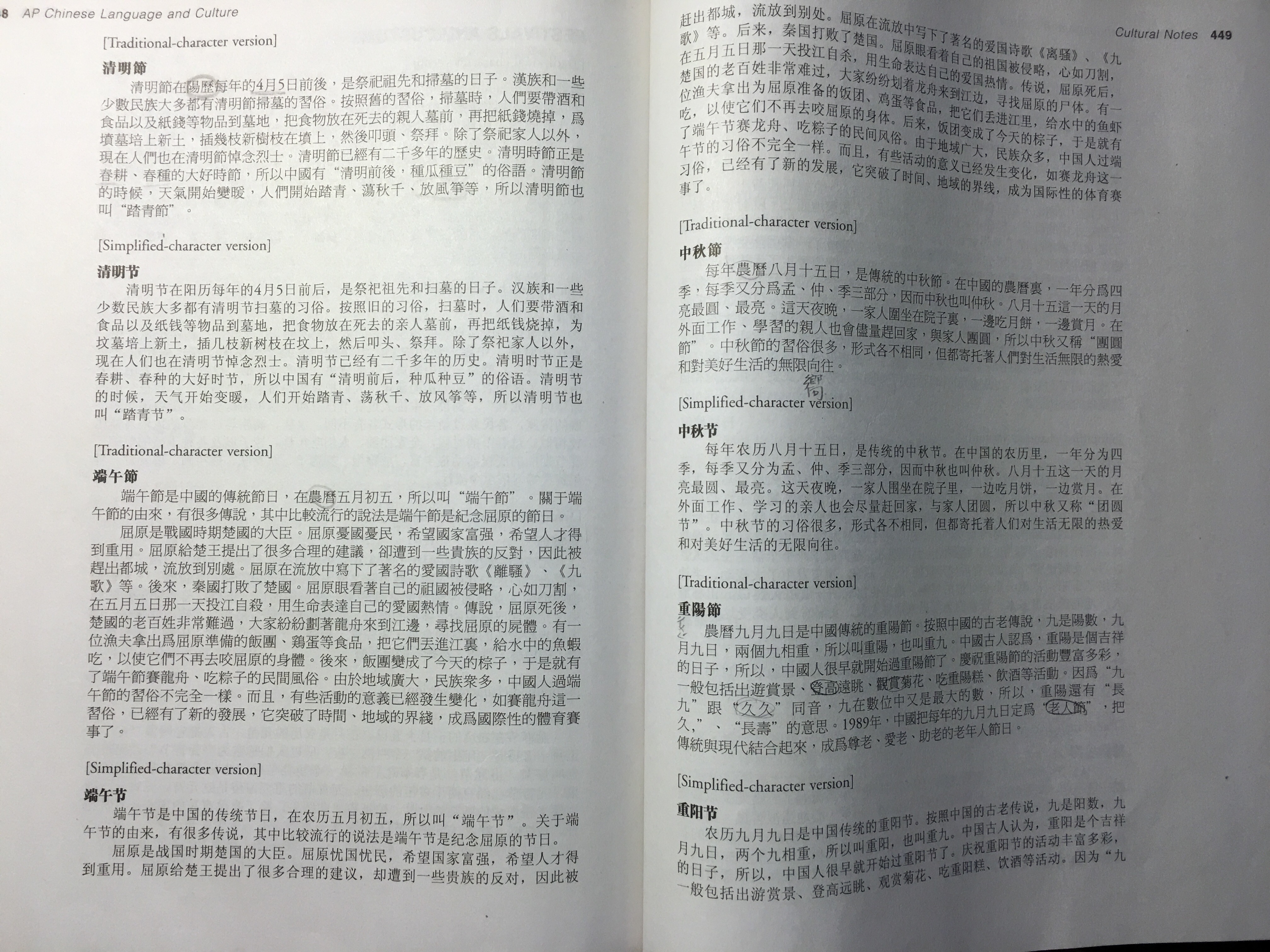
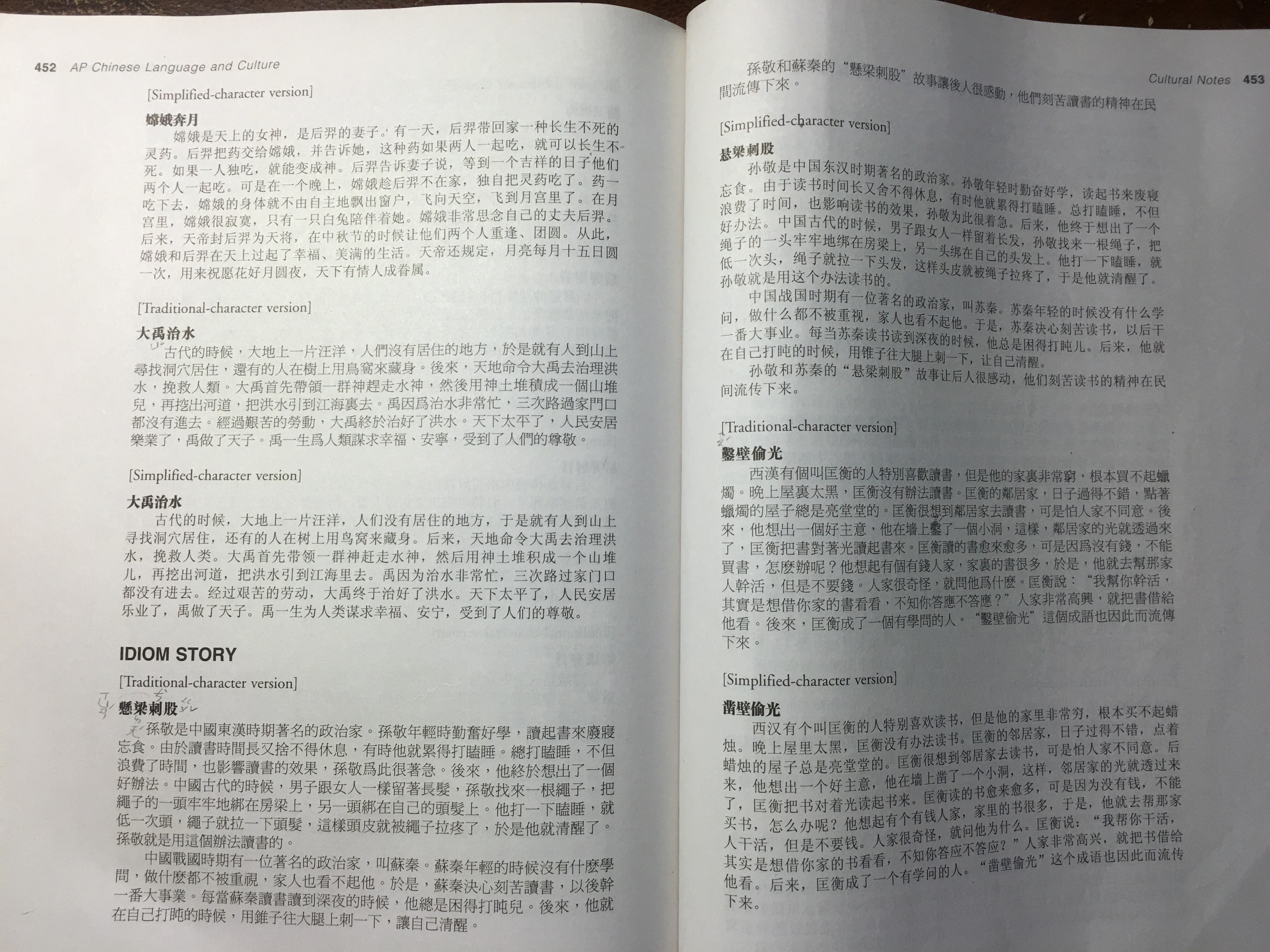
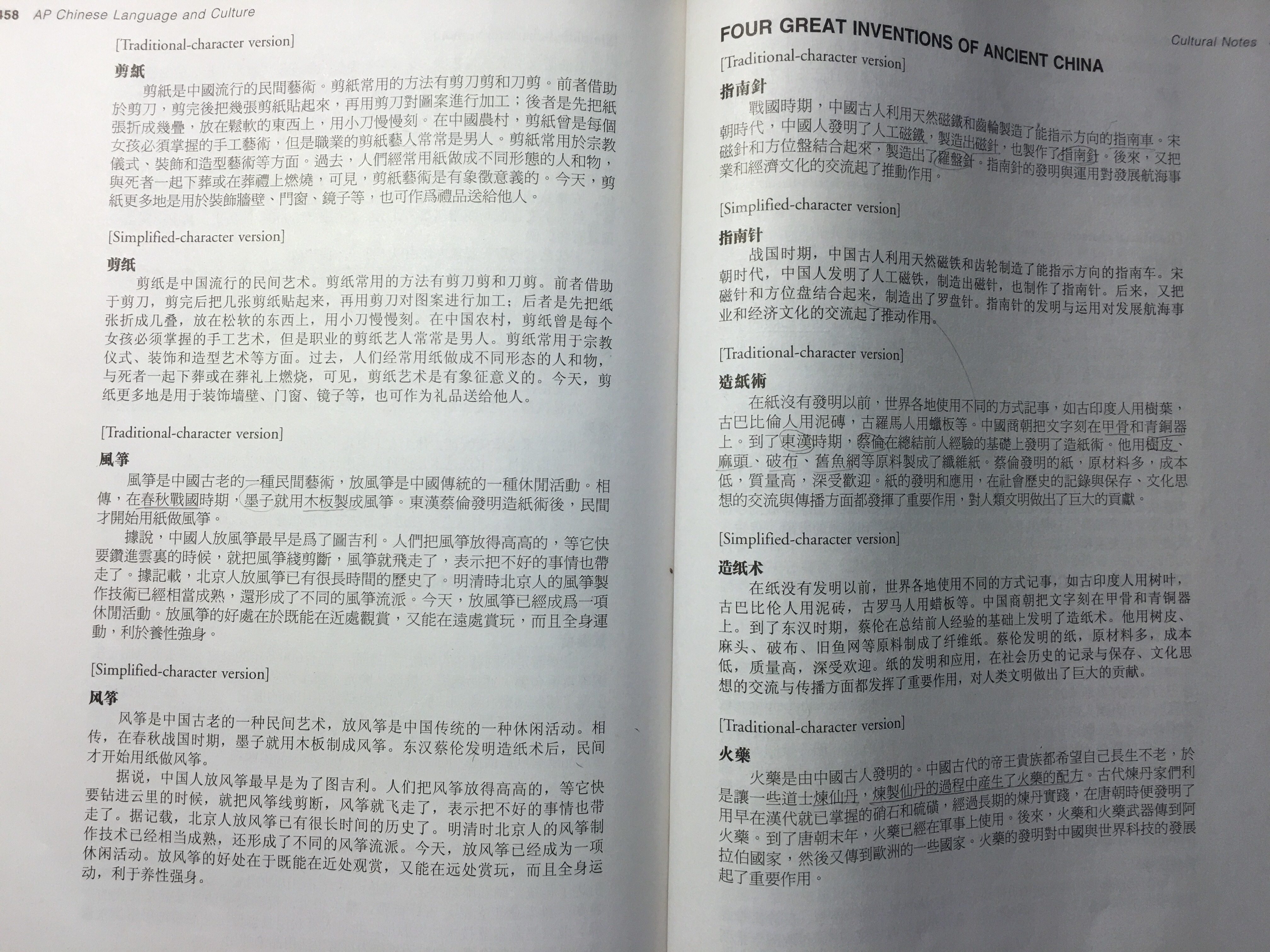
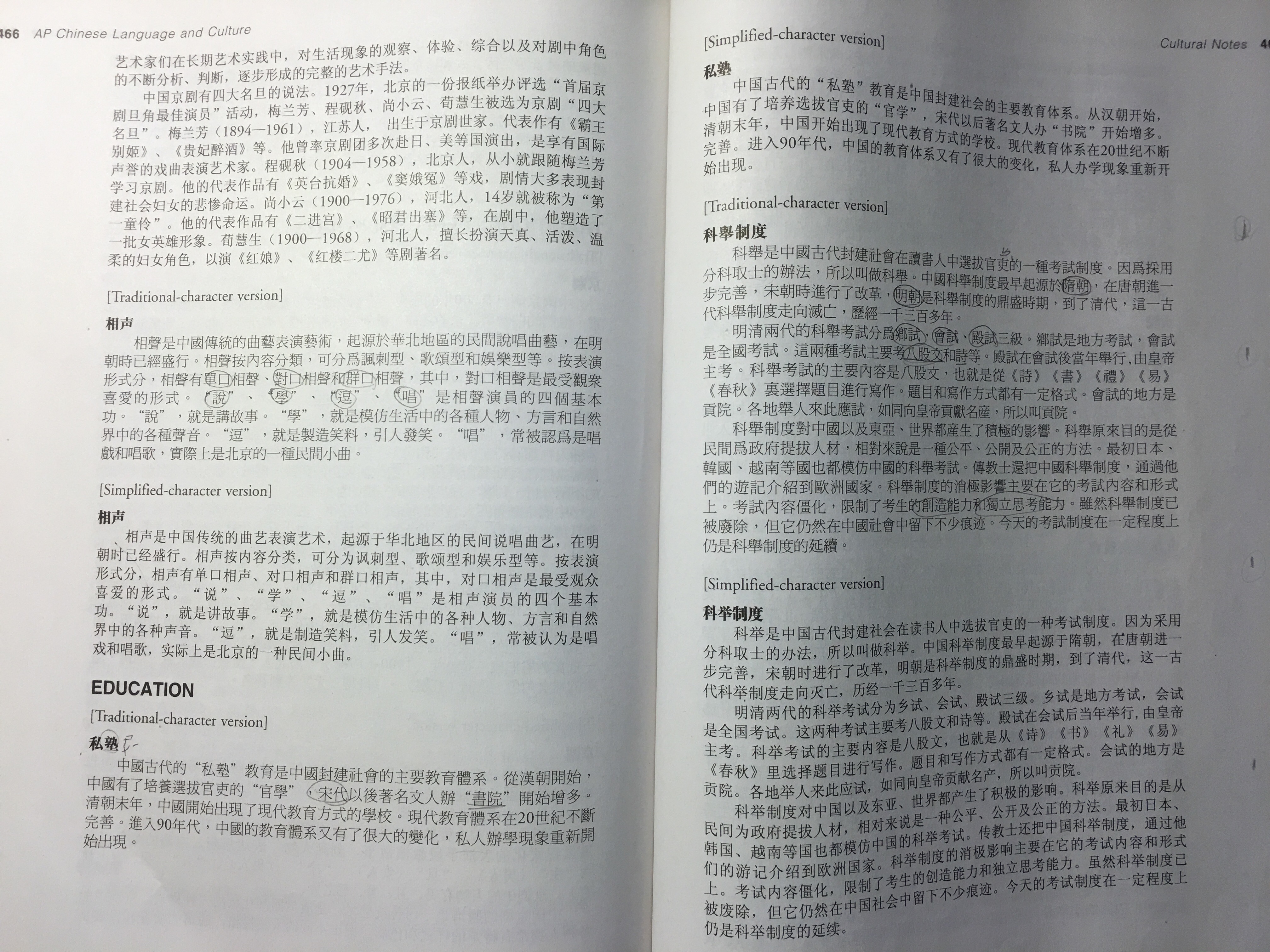
“Charlotte” is 13 now.  She studied Chinese, mostly with her tutor, about 2-3 hours a day, 5 days a week, for ~ 5 weeks.  They used Baron’s AP Chinese Language and Culture to get a feel for the Chinese AP exam.  They went over much of the cultural notes in the book, some of which are shown below.
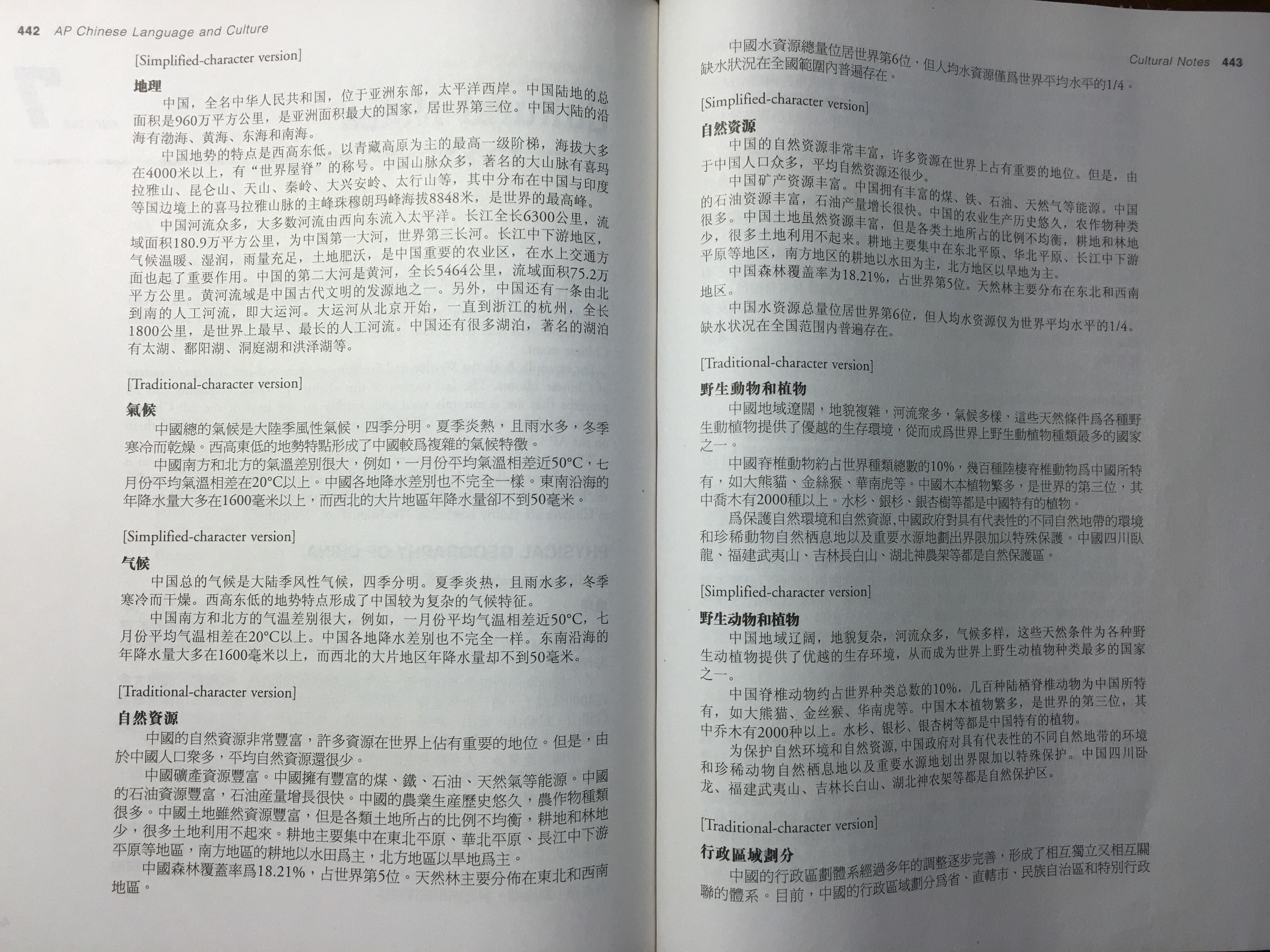
image image image image image image

In terms of writing, there are two tasks in the Writing section of the AP exam.  The first one is story narration.  Students have 15 minutes to write a story according to a four picture sets of prompts.  The second one is email response to an email inquiry from a friend.  The time allotted is also 15 minutes.

Below is one such exam of the story narration.

image

So, Charlotte typed: 有一天, 藝琦量了自己的體重。  當她站上磅稱, 瑩幕上的數字開始漸漸增加到一百四十五磅。  藝琦很不高興的打量一下瑩幕上的數字,   她決定要減肥。  為了要減輕重量, 藝琦開始每天早起跑步跟吃沙拉和別的健康一點的食物。  幾個月後, 藝琦又量了體重。  她又驚又喜的發現自己的體重減到一百二十磅, 比以前少二十五磅。 

In terms of reading, she finished reading 金庸’s 神雕俠侶 (The Return of the Condor Heroes).  I think I asked her to read 50-70 pages a day.  She also created questions sets for a few Magic Tree House books.  Summer really went by fast.  Charlotte just started 8th grade and is immediately bombarded with projects.  I don’t expect home work assignments to lighten up for her.  It looks like she will have little time for Chinese during the school year.

Oh, she loves to write stories (in English really these days).  So, over the summer, I asked her to keep working on the Cinderella like Chinese story she previously started.  I guess she had a writer’s block and instead started working on another story instead.  Here is how it starts, with very limited corrections from me.  I need to email this to her tutor really.  My Chinese writing is grade school level, LOL.  She says she doesn’t like to write in Chinese any more.  It looks like English has almost completely taken over….

下課的鐘終於響了。  我馬上把所有的課本和習作塞進書包裡和跑出教室。  春假開始了。  我得快點敢回家。  我走到阿姨的麵包店,買了哥哥最喜歡吃的新鮮奶油吐司。  我進家門時突然感到頭暈, 然後正常。  我慢慢的走進客廳,看到哥哥和另一位我不認識的男孩子的背影。  哥哥轉向我而開始微笑。  我給了他一個大擁抱後,把麵包給了他。  哥哥接過了麵包後便給我介紹他旁邊的男孩。

  “凱雅, 這是我的朋友維斯。” 哥哥說。  維斯有一雙鑽石藍的眼睛和深咖啡色的頭髮。  他穿著休閑褲子和一件白色的上衣。 

  “妳好。“ 維斯說。

  ”你好。“ 我回答。

  ”維斯跟我是在大學認識的。  因爲他春假沒事所以帶他來。“ 哥哥解釋。 

我怎麼覺得維斯好像不太對勁。  每次靠近他時,我的頭越來越暈。  在吃飯時, 我故意坐和他最遠的坐位。  維斯總是令爸媽和哥哥笑而他很有禮貌。  可是我還是覺得他不太對勁。

  半夜, 我起來去拿一杯水喝。  當我回來時, 快經過哥哥房間時,聽到他和維斯在悄悄的說話。

  ”你確定?“ 哥哥問。

  ”你妹是。“ 維斯回答。

  ”我妹是我們在尋找的天使?”

  “是。”

  “你確定?”

  “安靜, 有人來了。” 維斯說。

我停下了腳步。

  “那是凱莉。” 哥哥說。

我還是站在走廊中間。  為什麼他們在三更半夜講那麽奇怪的話?

  “凱莉。  你三更半夜在家裡走來走去幹嘛?“ 哥哥問。

  ”你們幹嘛三更半夜在講一些奇怪有的沒的?“ 我問。

哥哥把頭探出門外而說, ”妳還沒回答我的問題。“

  ”你也還沒回答我問你的話。“    

  “妳先回答我的問題。“ 哥哥又說。

  ”你們兩個不要吵了。“ 維斯說。 

  “明天再講吧。  我要睡覺。” 我說便回了房間。 

********

(睡夢中……)

太陽的光照射在石門上的圖案。  那些圖案是為了封閉門後面的靈魂。  我拍一拍我雪白的翅膀而降落在門的正前方。從門裡的一些小縫隙我能看到靈魂淡藍色的光。  傑克也在門前降落。
  “妳準備好了嗎?” 他問。  我點了頭。  我從口袋裡拿出一把銀色的鑰匙然後解開了門上的鎖。  古老的石門慢慢的打開。

********

  有人在門上一直敲門。  我看了床頭櫃上的鬧鐘。  現在早上7:45。 

  “幹嘛?  今天禮拜六。” 我問。

  “我們跟你哥哥和維斯要出外爬山。  妳要去嗎?” 媽媽回答。

  “不用了。”

  “好, 傍晚見喔。”  我聽到大家穿鞋和門上鎖的聲音。  幾分鐘後, 我走進哥哥的房間。  在他的床上有一本很厚的書本。  書的封面是用深色的牛皮所做的而且上面沒有字。我把書拿起來便把它拿回我房間去看。  前幾頁記載著一個神話故事:

她的使命, 是守護他的靈魂。  他為了人類跟地獄的鬼魂爭鬥而喪命。  答應了湯姆斯她會盡所有能力保護他。  幾百年過去了。  湯姆斯還是沒有回來。  她的答應,也跟著那些年一天天的消失。  直到那天使死了, 他還是沒有回來。 

真是一個悲慘的故事。  我才不會那麽耐心地去等一個永遠沒回來的人。  這個天使也真是的。我再翻了一頁。  這一頁上面寫了不同人的名字。

1) 露西

2) 賽亞

3) 溫蒂

4) 黎剎

5)   

So, that’s that for Charlotte.  It seems to read like an interesting story.  I only wish she has the time to explore her Chinese writing more.  These days, she is engrossed in writing her English novel…

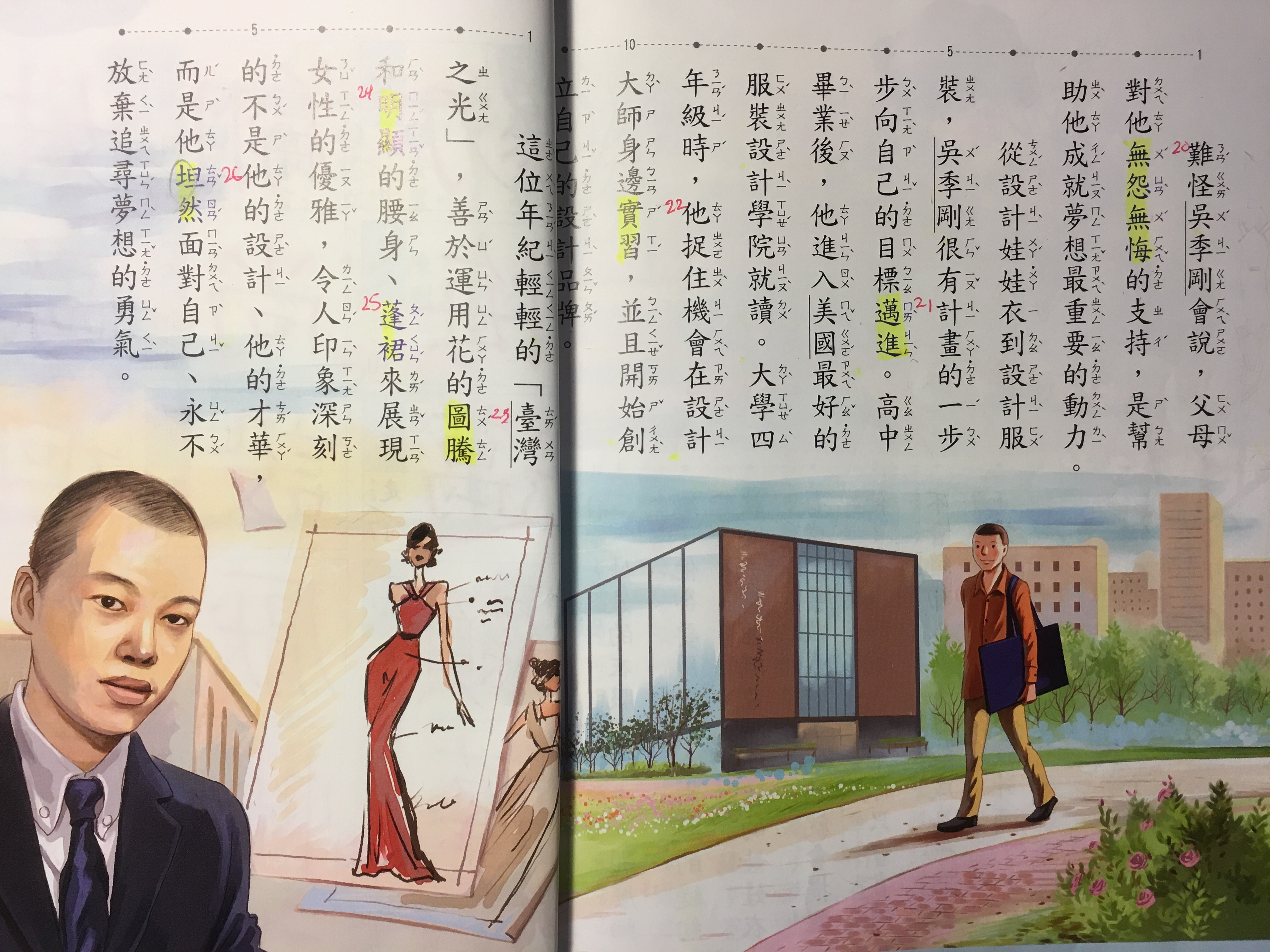
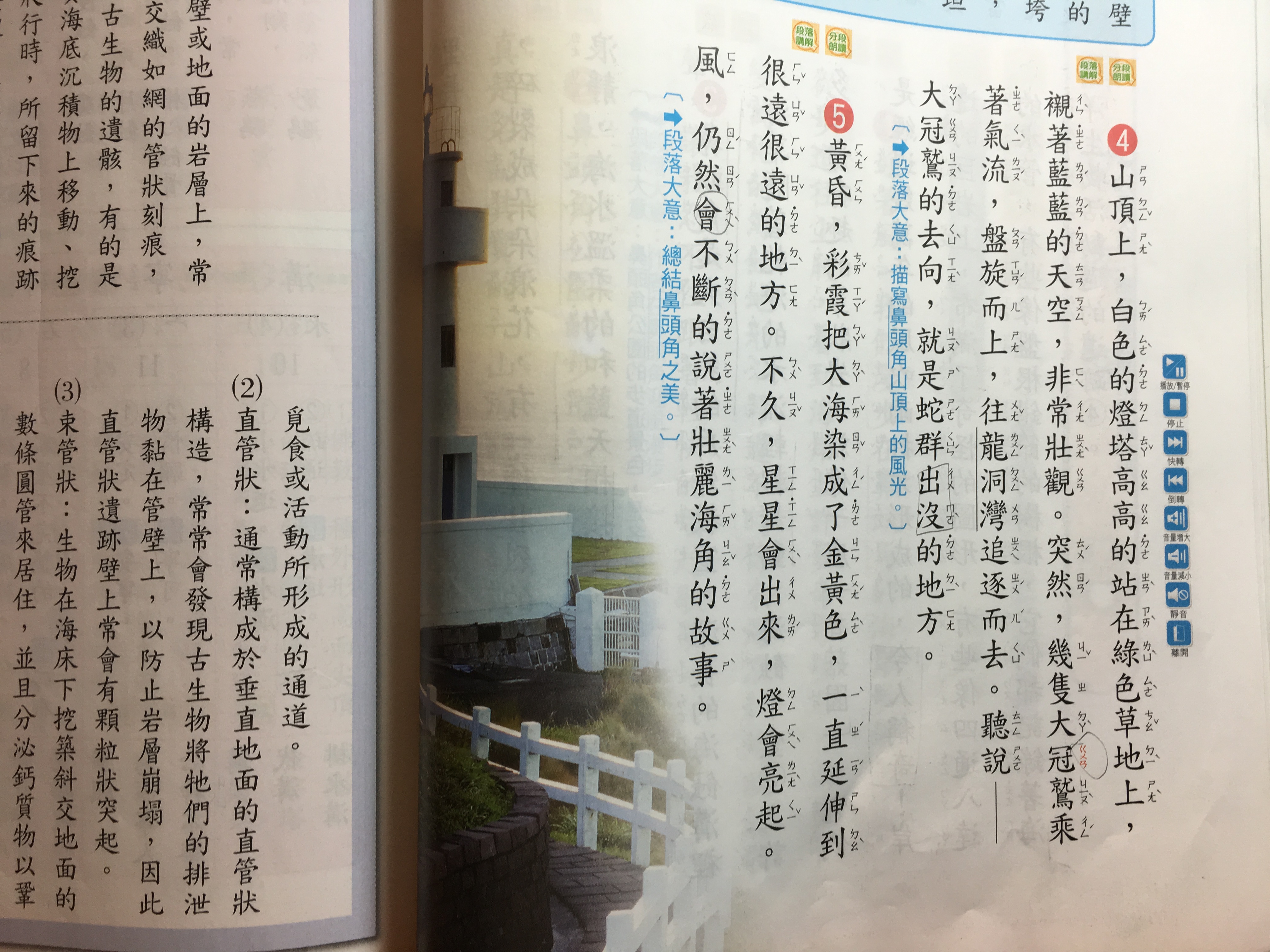
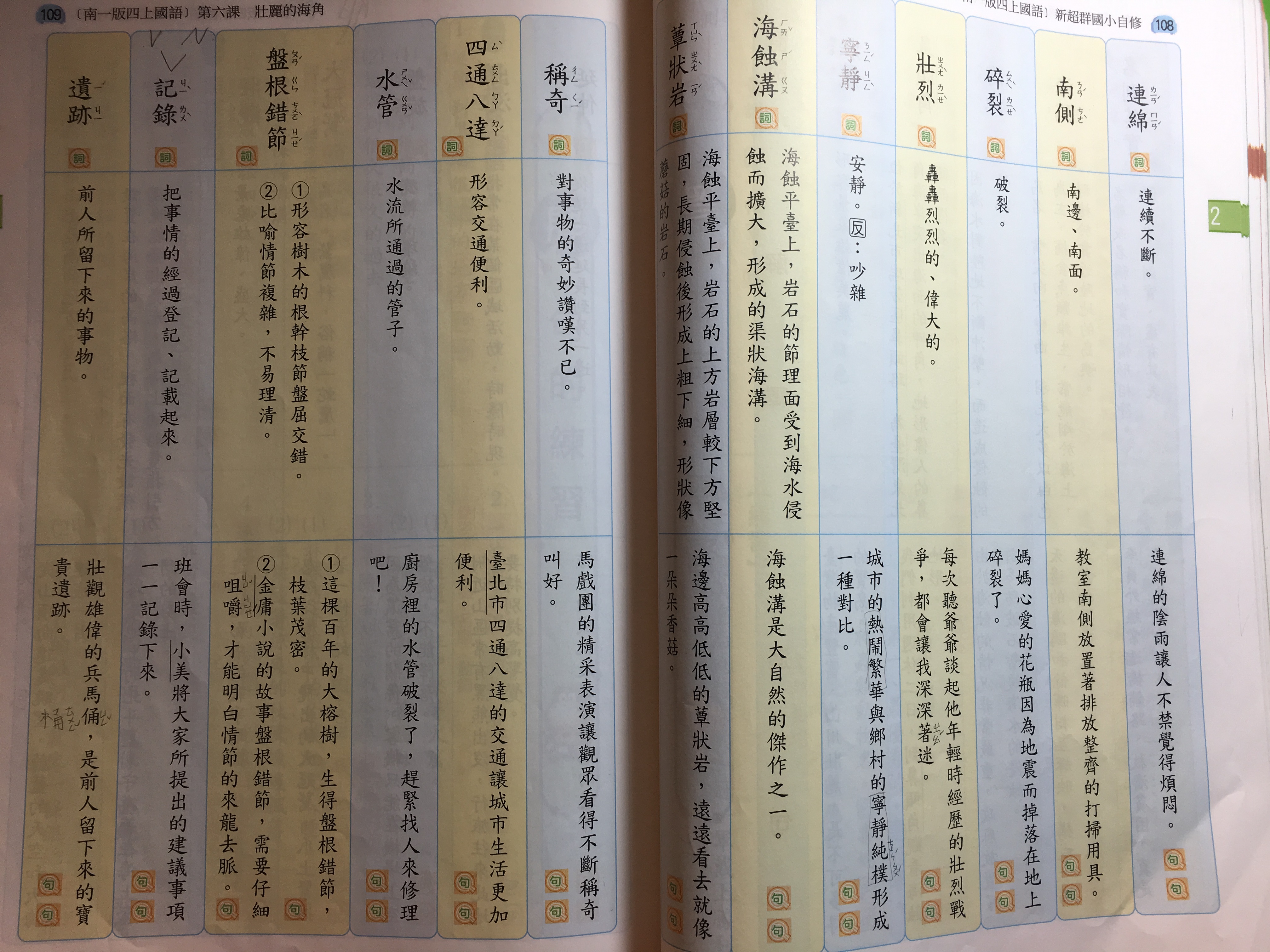
As for 10 year old “Georgia”, she attended a month of 4th grade public school in Taiwan in June.   Here is one chapter of the Chinese Language Art textbook that she had to study for the final exam.  Due to the short term nature of her study, she couldn’t learn all that were covered in the second semester.  She got a 50ish grade on the CLA final exam, she said.  Good job, I told her.  She probably is at least end of third grade level in Taiwan now.  Not bad at all for a heritage kid at 10 years of age.  As I previously suggested, to achieve decent level of the Chinese language for children, the pace of study should be ~ end of second grade level (Taiwan standard, probably ~ middle of second grade in mainland China) by end of third grade in the US, and then advancing by one grade level every two years in the US.  At that pace, the student should reach about end of fifth grade level by the end of middle school.
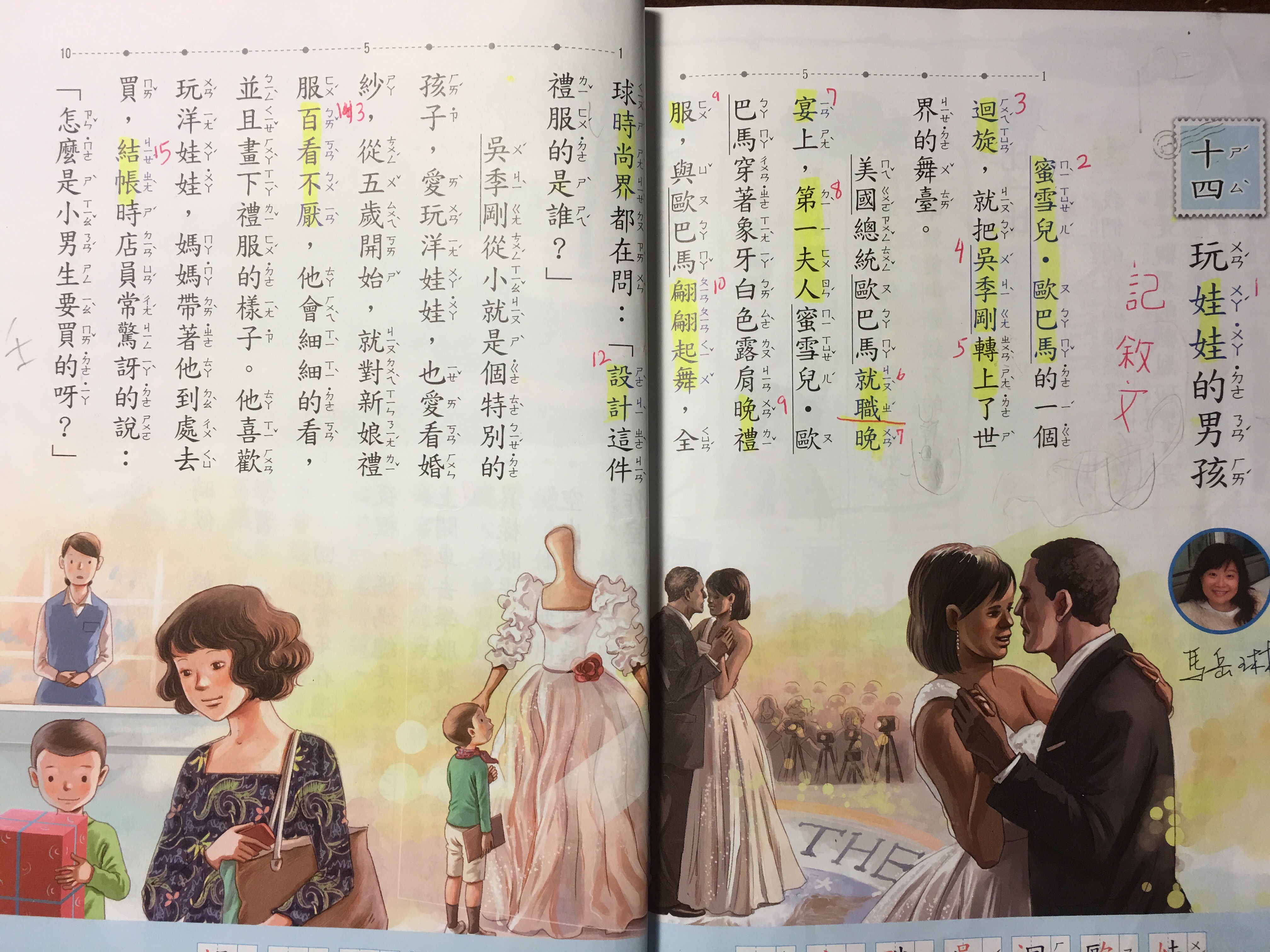
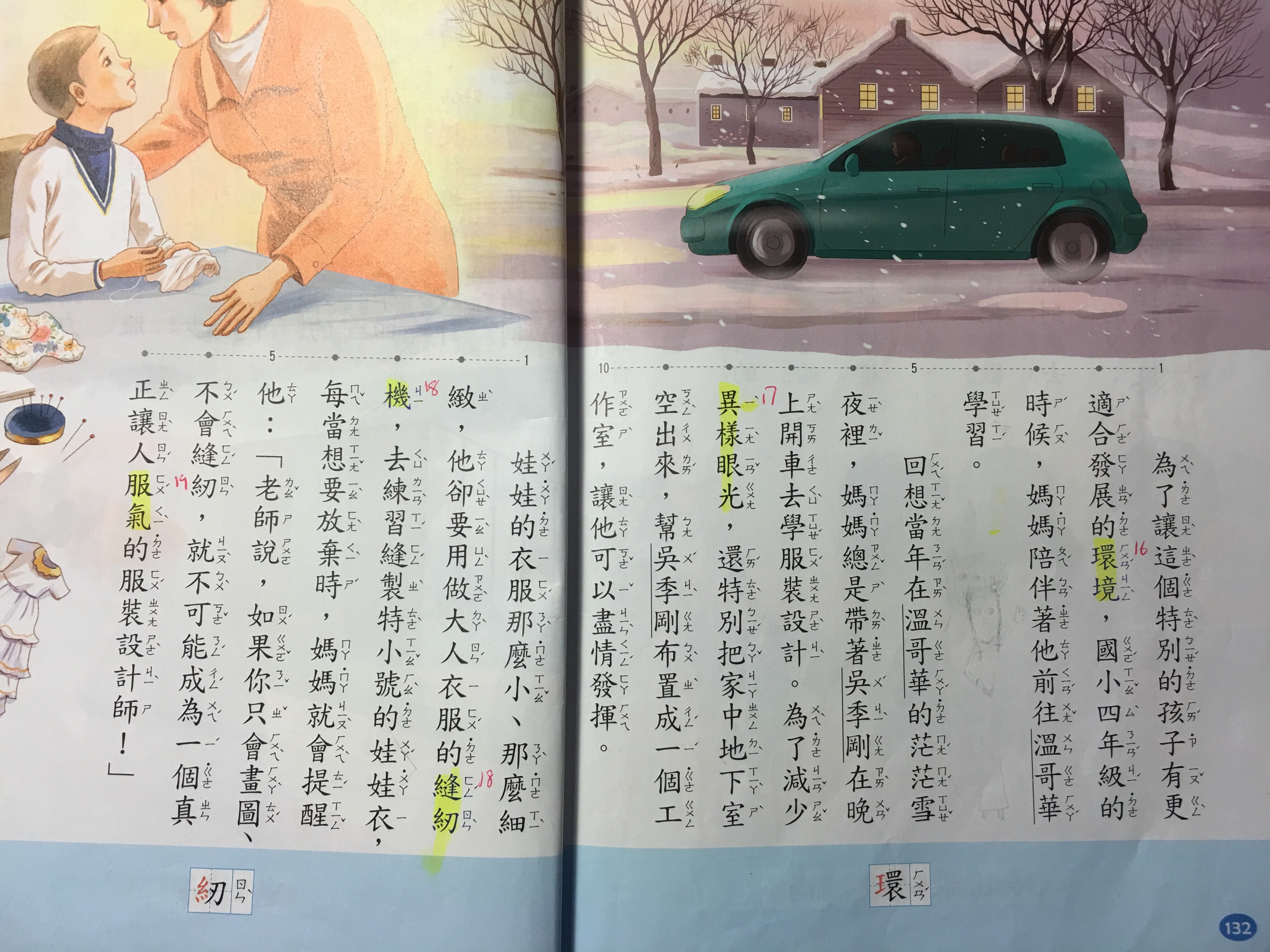
image image image

We worked on Georgia’s English upon her return from Taiwan (with breaks and road trips in between).  As I previously mentioned, due to the amount of time she spent on Chinese her entire life so far and that she skipped a grade upon returning to private school after homeschooling, she is behind in her English.  This has certainly impeded her on the more language intensive part of her schooling.   So, she is still trying to catch up.  The price of a strong dose of CLE, I say.  If it is still too tough after another year or two, we don’t rule out holding her back to her original grade level.

Now that school has started, Georgia is back to reading Chinese novels from the 世界少年文學精選.   She is reading A Midsummer Night’s Dream, since she previously read an abridged children’s book version.  As for regular Chinese textbook study, we are back to where we left off at the end of last school year, namely 4th grade first semester textbook.  Here is the chapter we are working on now.
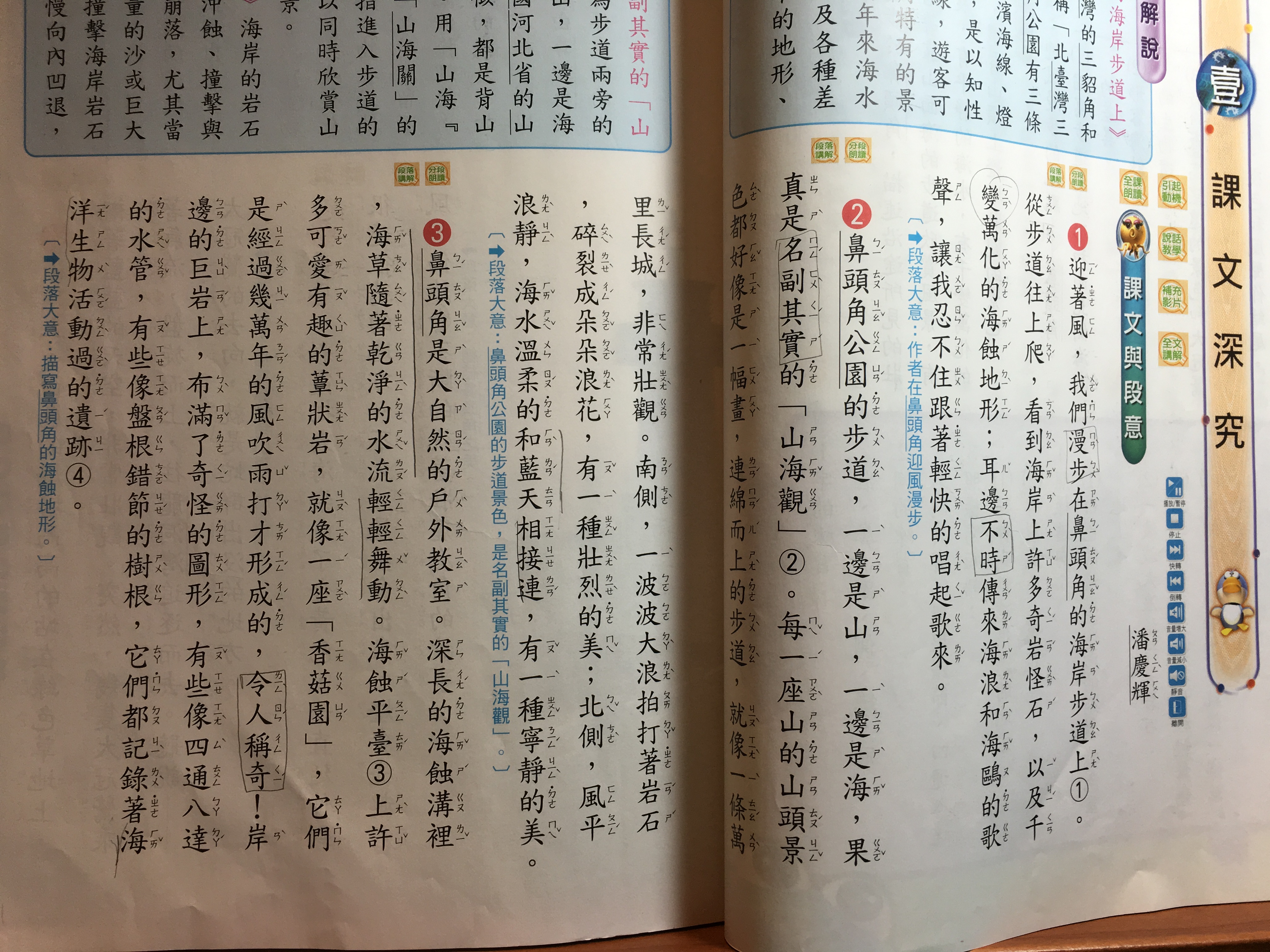
image image image image


So much to do, so little time…..

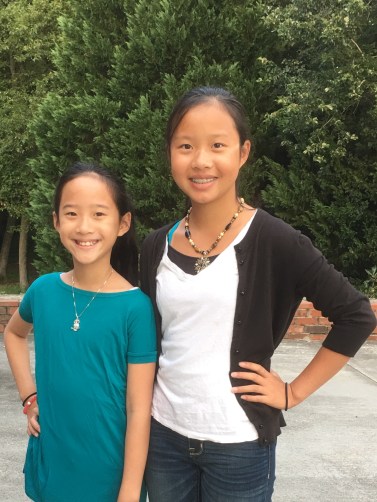
Oh, here is a picture of my dds the first day of school!
image

I wish you all a fantastic new school year!
3 million characters


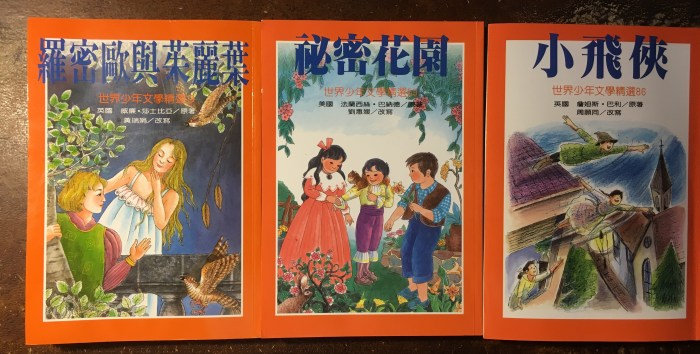
Almost 10 years old “Georgia” is making good progress reading books from “世界少年文學精選“ (World Literature, well, mainly western classic books) series.  She starts by reading books whose content she is familiar with, such as Romeo and Juliet, Secret Garden, and now Peter Pan.

image

That’s just dandy with me, as this is part of the Scaffold Reading Experience or SRE.  I ask her to read at least 50 pages a day, which should work out to be at least ~ 10,000 to 11,000 characters.  Over the past 10 days or so since the books arrived, she has read about 600 pages or ~ 130,000 characters; so, we are on target.

With her willingness to read these books, I think she will be able to read at least 3,000,000 characters by this time next year.  Yes, that’s 3 million characters!  By this time next year, I am certain her reading speed will pick up quite a bit and her proficiency of characters and expressions of this reading level will be quite good.

Once again, thanks to Ms. Lin of Guavarama who organized the group book purchase from Taiwan, we are set for the next year to two!


白蛇傳 (Legend of the White Snake)

Now that the girls have decent Chinese and have watched a number of Chinese themed movies or TV shows, we are returning to reading aloud abridged version of classic Chinese.  I think classic Chinese stories use more Chinese word phrases, idioms, and expressions than translated books.  中國傳統故事比翻譯故事用較多的詞語,用語,和成語。


image image


Here, 9 year old “Georgia” is reading 白蛇傳 (Legend of the White Snake) with the tutor.

image

World Literature series (世界少年文學精選)

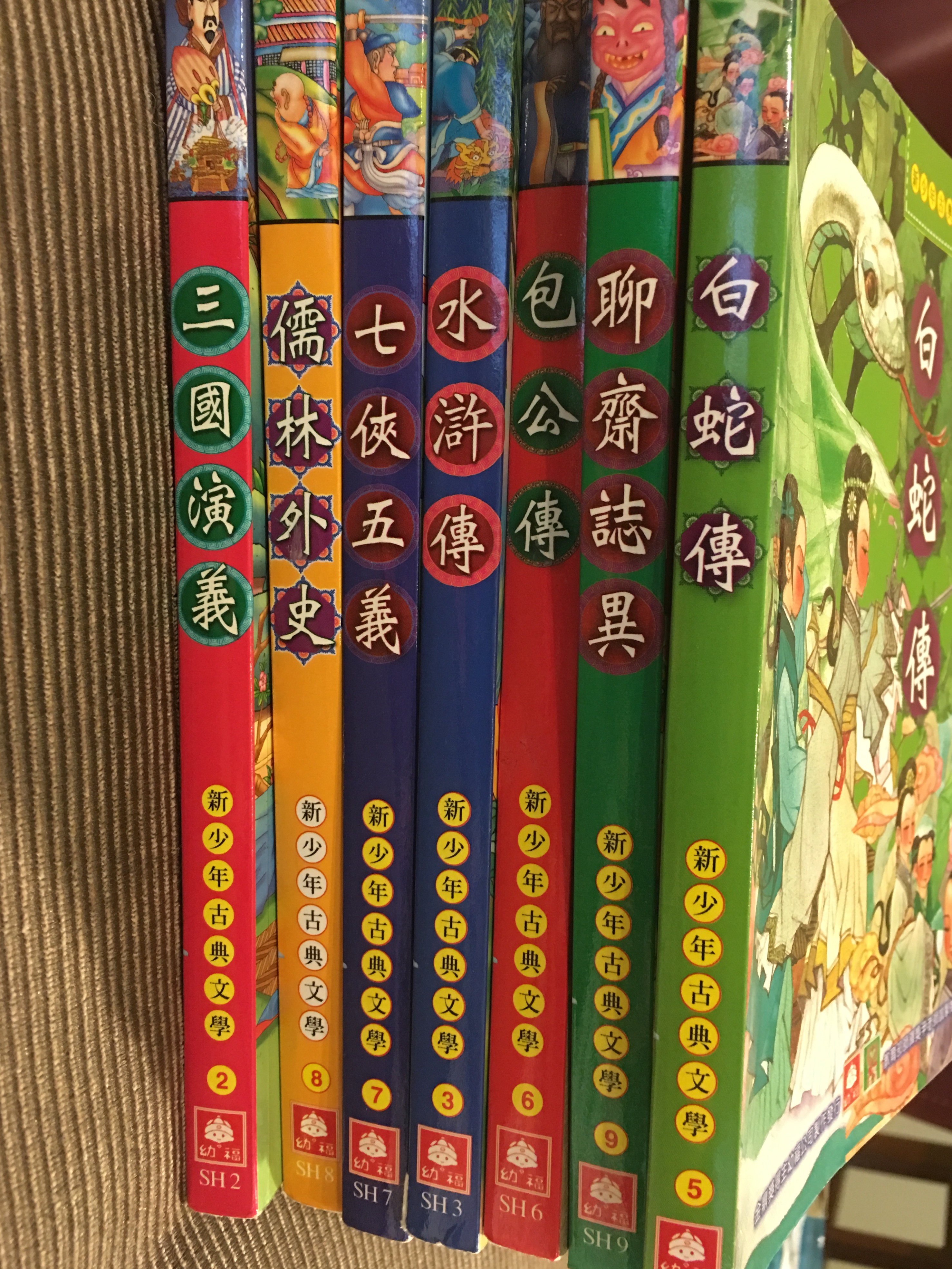
Thanks to fellow parent Ms. Lin of Guavarama who organized group book purchase, we got our shipment of World Literature selections from Eastern Publishing in Taiwan (東方出版社 – 世界少年文學精選) this last couple of days, after waiting for about two months.  There are supposed to be 119 books but three were missing from the shipment.

image image

These books are meant for 8-9 years old in Taiwan, particularly given they have zhuyin 注音.  These books are longer and more difficult than the last dozen books of the Chinese edition of Magic Tree House.  Book #4o of the Magic Tree House probably had ~ 18,000 characters, which my now almost 10 years old “Georgia” read at ~ 800 to 1,000 characters a minute a few months ago.  The first book that Georgia picks out to read from this newly arrived series is Romeo and Juliet.  I estimates that there are ~ 65,000 characters in this book, so more than 3 times as many characters.  For translated literary work, the thing that I hate the most are the translated names!  That really messed my “Charlotte” up, while reading the Chinese edition of Twilight and the Selection series.

image image

Georgia is familiar with the English version of the story of Romeo and Juliet.   In any case, she is reading Romeo and Juliet at ~ 2 pages a minutes, or ~ 450 characters a minute by rough estimates.  So, I think she can read the book in about 2.5 hours.  That’s half of the speed that she was able to read Magic Tree House, for good reasons.  The content is more advanced and there are many more characters involved, with their awful translated names!  Regardless, I think it is realistic for her to read one book a week from this series, which will only be ~ 15-20 minutes of her time every day, depending on the length of the book.  However, it will probably end up being one book every 2 weeks, after all is said and done.  So, hopefully, over the next two to three years, she will go through most of this series.  I am certain she will pick up her speed as she matures over time and gets acclimated to this series, hopefully reaching ~ 800 characters a minute.  At that speed, she should be able to read books of similar level without zhuyin at ~ 400-500 characters a minute.

As you may have noticed, I am shying away from having her read books without zhuyin.  I am using the Scaffold Reading Experience (SRE).  The zhuyin of books that are more advanced for her allows her not to dwell on character recognition, but instead get her to become familiar with the expressions and language usage.  After she gets those down and read new characters enough times, she will pick up her speed and will be able to read books of similar level and content without zhuyin at reasonable speed, the phase of dismantling the scaffold.

木蘭辭背誦

木蘭辭

唧唧複唧唧,木蘭當戶織。不聞機杼聲,唯聞女歎息。問女何所思?問女何所憶?

女亦無所思,女亦無所憶。昨夜見軍帖,可汗大點兵,軍書十二卷,卷卷有爺名。

阿爺無大兒,木蘭無長兄,願為市鞍馬,從此替爺征。

東市買駿馬,西市買鞍韉,南市買轡頭,北市買長鞭。

朝辭爺娘去,暮宿黃河邊。不聞爺娘喚女聲,但聞黃河流水鳴濺濺。

旦辭黃河去,暮至黑山頭。不聞爺娘喚女聲,但聞燕山胡騎聲啾啾。

萬里赴戎機,關山度若飛。朔氣傳金柝,寒光照鐵衣。將軍百戰死,壯士十年歸。

歸來見天子,天子坐明堂。策勳十二轉,賞賜百千強。可汗問所欲,“木蘭不用尚書郎,願借明駝千里足,送兒還故鄉。”

爺娘聞女來,出郭相扶將。阿姊聞妹來,當戶理紅妝。小弟聞姊來,磨刀霍霍向豬羊。

開我東閣門,坐我西閣床。脫我戰時袍,著我舊時裳。當窗理雲鬢,對鏡貼花黃。

出門看夥伴,夥伴皆驚惶。同行十二年,不知木蘭是女郎。

“雄兔腳撲朔,雌兔眼迷離;兩兔傍地走,安能辨我是雄雌!”

神鵰俠侶 (Return of the Condor Heroes)

前些日我分享了「支架式教學」 。十二歲的大女兒過去兩個月有空時讀自製有注音的「神雕俠侶」版本,我也請家教在週末時聽及帶女兒朗讀,解釋不解之處及用詞。如此看完我印出的半集”注音版”後(此金庸小說共有四集),大女兒已經可以看普通的版本了,不像當初的吃力。現在她回到以往看中文版的英文翻譯小說的速度,以ㄧ分鐘ㄧ面(~500個國字)讀「神雕俠侶」,中文功力更上ㄧ層樓了~!(但還沒到「玉女心經」級,更不用說「九陰真經」級!LOL)

Back in January, I shared with you the Scaffold Reading Experience.  In the past two months, 12 year old “Charlotte” read the famed kungfu novel “Return of the Condor Heroes” using the self -made version with zhuyin on the side, when she’s got time.  On the weekend, Charlotte read it aloud to her Chinese tutor, who guided her reading with explanation when needed.  The novel has four volumes and I printed out half a volume with zhuyin on the side.  After reading such half volume, Charlotte now is able to read the regular novel with much more ease than at the very beginning.  She can now read this kungfu novel at the speed of one page per minute, or ~ 500 characters a minute.  This is the same speed at which she previously read the Chinese edition of translated English novels.  It looks like her Chinese proficiency is up a notch now.

木蘭辭

前幾天有網友建議女兒們可學朗讀木蘭辭,所以就找ㄧ版本來念念看。以下是小女兒念前半段。

A FB group member suggested that we can try Mulan Verse.  Since many heritage kids are familiar with the story, we gave it a shot.  Here is “Georgia” reading the first half on the second day.


木蘭辭

唧唧複唧唧,木蘭當戶織。聞機杼聲,唯聞女歎息。問女何所思?問女何所憶?

女亦無所思,女亦無所憶。昨夜見軍,可汗大點兵,軍書十二卷卷有爺名。

阿爺無大兒,木蘭無兄,願市鞍馬,從此替爺征。

東市買駿馬,西市買鞍韉,南市買轡頭,北市買長鞭。

朝辭爺娘去,暮宿黃河邊。聞爺娘喚女聲,但聞黃河流水鳴濺濺。

旦辭黃河去,暮至黑山頭。聞爺娘喚女聲,但聞燕山胡聲啾啾。

萬里赴戎機,關山度若飛。朔氣傳金柝,寒光照鐵衣。將軍百戰死,壯士十年歸。

歸來見天,天坐明堂。策勳十二,賞賜百千強。可汗問所欲,“木蘭不用尚書郎,願借明駝千里足,送兒故鄉。”

爺娘聞女來,出郭相扶。阿姊聞妹來,當戶理紅妝。小弟聞姊來,磨刀霍霍向豬羊。

開我東閣門,坐我西閣床。脫我戰時袍,我舊時。當窗理雲鬢,對鏡貼花黃。

出門看夥伴,夥伴皆驚惶。同行十二年,知木蘭是女郎。

“雄兔腳撲朔,雌兔眼迷離;兩兔地走,安能辨我是雄雌!”

塞翁失馬

Prosody appreciation through a short classical Chinese piece of writing.  This is the story behind the idiom, 塞翁失馬, 焉知非(禍)福.

小時候,父親教過我幾篇文言文的文章,讓我有最基本的認識。雖自己小五後就全家移民,現為人父,也用ㄧ短篇成語的文言文典故來教女兒們朗讀的技巧。

原文

近塞上之人,有善術者,馬無故亡而入胡,人皆吊之。其父曰:『此何遽不福乎?』居月,其馬將駿馬而歸,人皆賀之。其父曰:『此何遽不禍乎?』家富良 馬,其子好騎,墮而折其髀,人皆吊之。其父曰:『此何遽不福乎?』

居一年,胡人大入塞,丁壯者引弦而戰,近塞之人,死者十九,此獨以跛之故,父相保。 故福之禍,禍之福,化可極,深可測也。」

English explanation from Wikitionary

“It can be difficult to foresee the twists and turns which compel misfortune to beget fortune, and vice versa. There once was a old man, skilled in divination, who lived close to the frontier (with his son). One of his horses accidentally strayed into the lands of the Xiongnu, so everyone consoled him. (But) the old man said, “Why should I hastily (conclude) that this is not fortunate?” After several months, the horse came back from the land of the Xiongnu, accompanied by another stallion, so everyone congratulated him. (But) the father said, “Why should I hastily (conclude) that this can not be unfortunate?”. One day (the son) fell off the stallion, and broke his leg, so everyone consoled (the father). (But) the father said, “Why should I hastily (conclude) that this is not fortunate?”

One year later, the Xiongnu invaded the frontier, and all able-bodied men took up arms and went to war. Of the men from the frontier (who volunteered), nine out of ten men perished (from the fighting). It was only because of (the son’s) broken leg, that the father and son were spared (this tragedy). Therefore misfortune begets fortune, and fortune begets misfortune. This goes on without end, and its depths can not be measured. (Wiktionary translation)”


Definition:

(1)塞上:長城一帶。塞,邊塞。

(2)善術者:精通術的人。善:擅長。術,術,推測人事吉凶禍福的法術,如看,占卜等。

(3)故:緣故。亡:逃跑。

(4)吊:對其不幸表示安慰。

(5)何遽:怎麼就,表示反問。

(6)居:過了。在表示時間的詞語前面,指經過的時間。

(7)將:帶領。

(8)為:是。

(9)富:很多。

(10)好:喜歡。

(11)墮:掉下來。

(11)髀:大腿。

(12)大:大舉。

(13)引弦:拿起弓箭去打仗。引弦,拉開弓弦。。

(14)近塞:靠近長城邊境。

(15)十九:十分之九;指絕大部分。

(16)跛:名詞,指腿腳不好,走路失去平衡,一拐一拐的;瘸腿。

(17)保:保全。

楊貴妃

It took 9 year old “Georgia” a few days of reading practice to get this right.  The text is likely at least junior high level.


楊貴妃 (The story of Imperial Consort Yang, one of the four beauties of ancient China.)

楊玉環於公元719年出生於蜀州(今四川)。十六歲時,楊氏嫁給唐玄宗的兒子李瑁。不久,楊氏生下兩個兒子。李瑁的母親武惠妃是玄宗最寵愛的妃子。公元737年武惠妃逝世,玄宗 悼惜良久,當時後宮數千,無可意者。有人進言楊氏「姿質天挺」,於是唐玄宗將楊氏召入後宮之中。其後,以為玄宗母親祈福的  名義,敕書楊氏出家為女道士。道號「太真」。

745年, 李瑁新娶韋氏。一個月後,楊氏還俗,受冊封為貴妃。此時楊氏二十七歲,而唐玄宗已六十一歲了。這時楊氏反成為李瑁的庶母。楊貴妃備受寵幸,其宗族因此繁盛,很多人都獲授官爵或賞賜。其堂兄楊國忠為人好賭,但也封官入朝、把持朝政。唐玄宗此後愈加沉溺於酒色,政治更加腐敗。

755年,節度使安祿山以清君側,反楊國忠為名, 起兵叛亂,兵鋒直指長安。次年,唐玄宗帶著楊貴妃楊國忠逃往蜀中(今成都), 途經馬嵬驛時,禁軍士兵一致要求處死楊國忠楊貴妃,亂刀殺死了楊國忠唐玄宗言: 楊國忠亂朝當誅,然貴妃無罪,本欲赦免,無奈禁軍士兵皆認為貴妃乃 禍國紅顏,安史之亂乃因貴妃而起,不誅難慰軍心、繼續包圍皇帝。唐玄宗為求自保,不得已之下,賜死了楊貴妃。最終楊貴妃被賜白綾一條,縊死在佛堂的梨樹下,時年  三十八歲。