Talk shows

Watching talk shows is an excellent way for both non-native level parents and late teens to learn how the Chinese language is used in every day conversation.  Like any English talk shows, these shows are just constant back-and-forth conversations with various levels of intricacies and nuances that are hard to match in terms of their breadth and efficiency.

Here is one of the last episodes (1/11-12/16) of the famed Taiwanese talk show 康熙來了 (Kangsi Coming), featuring as a guest famed Chinese actress Fan Bingbing, who played Blink in X-Men: Days of Future Past.


Here is an interesting one from the same talk show:

Another one that I find interesting is 奇葩說 (You Can You BB), which touts itself as the first Chinese internet talk show, now in its second season.  The show invites one popular Chinese female celebrity to chat with three male commentators on trending topics and organizes debates around a current issue in Chinese society.  The language used is slightly crude and the views expressed are quirky.  This show seems to be more appropriate for those with fairly high level Chinese proficiency.  Check it out and see for yourself.

奇葩說 (You Can You BB)

66% for CLE vs. 20% for ELE

In one prior post, I noted that it takes about 2/3 of the waking hours for CLE (Chinese Language Ecosystem) exposure for the children to achieve a minimum of ILR level 3 speaking proficiency between the age of 3-8, as compared to ~ 10-20% English Language Ecosystem (ELE) exposure to achieve the same level in English.

Now, why is that?  Does anyone really think that colloquial Chinese is intrinsically more difficult to learn as a native speaker in Chinese speaking country, as compared to English in English speaking country?  Do average 6 year old children in China have worse command of colloquial Chinese when compared to the command of colloquial English of average 6 year old children in the US?

To my untrained mind, the answer is a NO.  They are more likely than not equivalent.

I postulate that the reason for much higher required exposure time for CLE is that the QUALITY of CLE is not as good as the quality of ELE that typical children get in English speaking country.  So, to compensate for such deficiencies, more exposure TIME to CLE is required.  I think we all know this to be true.  I will try to list the difference in the quality of CLE and ELE.

Features of typical ELE that 3-8 year olds are exposed to are:

  1. High level interactivity.  Children typically and frequently play with peers who are mostly fluent in English.
  2. Variety of teaching method:  Children in different school or extracurricular classes or activities are exposed to different instructional styles, such as lecture-authority, demonstrator-coach, facilitator-activity, delegator-group, etc.
  3. “Native” or “faster” pace of advancement in language and subject instruction and usage.
  4. Wide breadth of language exposure in a variety of topics and subject matters in school.


Features of typical CLE that 3-8 year olds are exposed to are:

  1.  Lower level interactivity.  Children have few peers to play with who are fluent in Chinese and such play are harder to come by as well.
  2. Limited teaching style: Children in typical CLE are exposed to classes or activities with less variety of instructional methods.
  3. “Non-native” or “slower” pace of advancement in language and subject instruction and usage.  This limits the depth and breadth of children’s Chinese.
  4. More narrow breath of language exposure with a more limited range of topics and subject mattes.  At home, conversations often centers on activities of daily living and schooling.  Parents, often the main source of Chinese language exposure, may not have established a habit of extended conversation with the children in a variety of subject and topics.  The children also spend a big chunk of time doing things that do not require active use of the Chinese language.


With such major differences in the QUALITY of the two language ecosystem, it is not a surprise that more TIME in the CLE is needed to achieve equivalent proficiency.

Therefore, parents with hopes of higher Chinese proficiency level for their children would do better by IMPROVING not just the percentage of CLE exposure but also the QUALITY of such exposure.  INTERACTIVITY, BREADTH, and PACE of exposure are so very important.

To this end, I spend much time talking to my daughters on a variety of subjects and topics.  I would say that one important thing that I talk about with my daughters is their friends, friendships (school drama….I mean girl drama), and their personal struggle as they grow in maturity over time.


What’s your opinion on this topic?

Scaffolding Reading Experience for Chinese-English bilingual children

My 12 year old “Charlotte” at times refers herself as my 白老鼠 “white mouse”  or  guinea pig in my quest to raise them to be bilingual and biliterate in Chinese and English in the US.  I don’t blame her for saying so.  There was simply no readily available guide to this journey with sufficient detail and tract record when she was born.  So, to achieve the extraordinary, I had to resort to the extraordinary.

Not that learning Chinese well is difficult by itself, but that learning Chinese well as a child in the sea of English language ecosystem is an immense challenge, not just for the sanity of the parents but that of the child also.  Whether one likes it or not, such quest can throw into the open the question of “Who am I and what do I value” and constantly challenges the entire family every step of the way regardless of one’s resource, for there is one thing that limits us all – time.

In my quest, I at times stumbled upon ideas or goals that are deemed out of reach (such as reading 金庸 in middle school) or contrary to popular sentiments (such as the importance of phonetics).  At other times,  I “discovered” teaching techniques that are likely of common knowledge in the disciple of pedagogy and second language learning.  Today, it came upon me that parents can indeed aim for seemingly out-of-reach goal in Chinese reading through the Scaffolding Reading Experience (SRE), an instructional technique used for English language learner or learners of any subject.

As you know, our children are often limited to basic reading proficiency as more “advanced” Chinese reading calls upon knowledge of many  more characters, words, phrases, sentence structure, idioms, and background knowledge, whether cultural or technical.  The Scaffolding Reading Experience (SRE)*, tailored for the Chinese language, just might make this quest a little easier.

The SRE has three essential components, as follows:

  1.  The scaffold.  This is a temporary and supportive structure that helps the learner accomplish a task beyond his or her ability without the scaffold.
  2. Zone of Proximal Development.  A learner has a surrounding zone of development, a range within which they can learn.  At one end of this range are learning tasks that the learner can operate independently.  At the other end are learning tasks that the learner can not complete even with assistance.  Between these two ends is the zone that the learner can complete with some assistance.
  3. Dismantling the scaffold.  Over time, the instructor gradually remove the scaffold and allows the learner to complete the task independently.

There are two phases of the SRE:

  1. Planning phase.  This phase takes into account the learner, the reading selection, and the reading purpose.  The planning leads to the creation of the SRE and its implementation.
  2. Implementation phase.  This phase has three activities.
    1. Pre-reading.  This consists of motivating the learner, building background knowledge, making the reading relevant and meaningful to the learner, preteaching the vocabulary, etc.
    2. Reading.  This consists of reading to the learner, guided reading, silent reading, read-aloud, etc.
    3. Post-reading.  This consists of discussion, writing, artistic/acting activities, application, etc.

With these in mind, the SRE for Chinese can be as follows:

The three SRE components for Chinese:

  1. Scaffold: Chinese text with zhuyin or pinyin.
  2. Zone of proximal development.  Separate language learning from subject learning.   Allow the child to learn the subject either first in English, the more proficient language almost for all past third grade, or learn the subject in Chinese through multimedia and be familiar with the concept and terminology first.  For effective Chinese as second language learners, it may even be better to first learn the subject in English and then learn the Chinese terminology first through Chinese multimedia exposure.
  3. Dismantling the scaffold.  Chinese text of the same subject and level without zhuyin or pinyin.

The two phases of SRE for Chinese:

  1.  Planning phase.  Take into account the child, his/her interest, and the purpose of the readings.  Sometimes, the reading is for academic purpose, such as social studies or science text.  (Personally, I think social studies reading is more important than science reading.)  At times, it is for general reading, such as 金庸‘s kungfu novels, which contain plenty of cultural knowledge of course.
  2. Implementation phase.
    1. Pre-reading.  Learn the subjects first in English at school and then come back to do Chinese reading on the same subject weeks to months later.  Or watch kungfu TV series or cartoon in Chinese and then come back to do the Chinese reading on the same story.
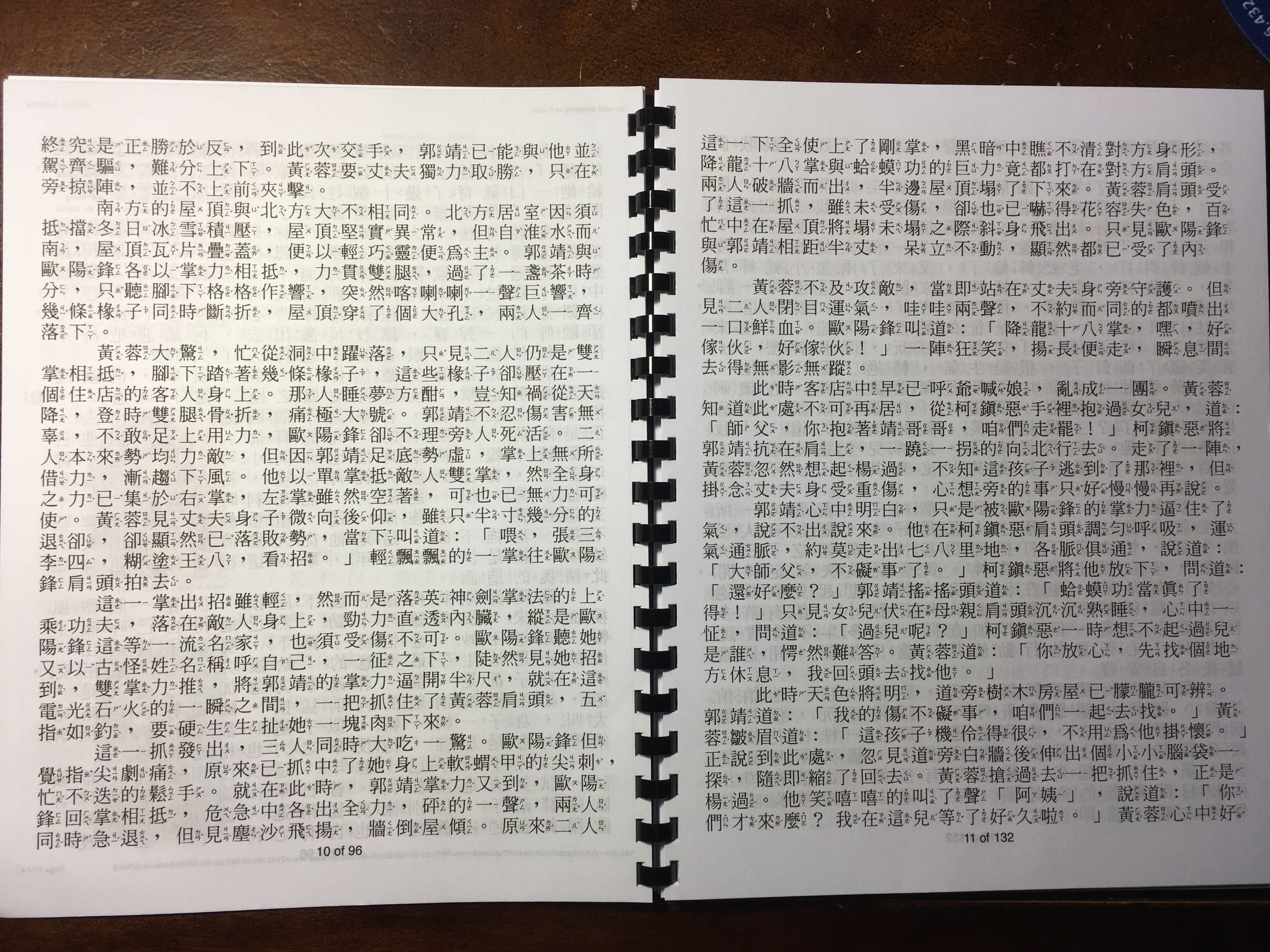
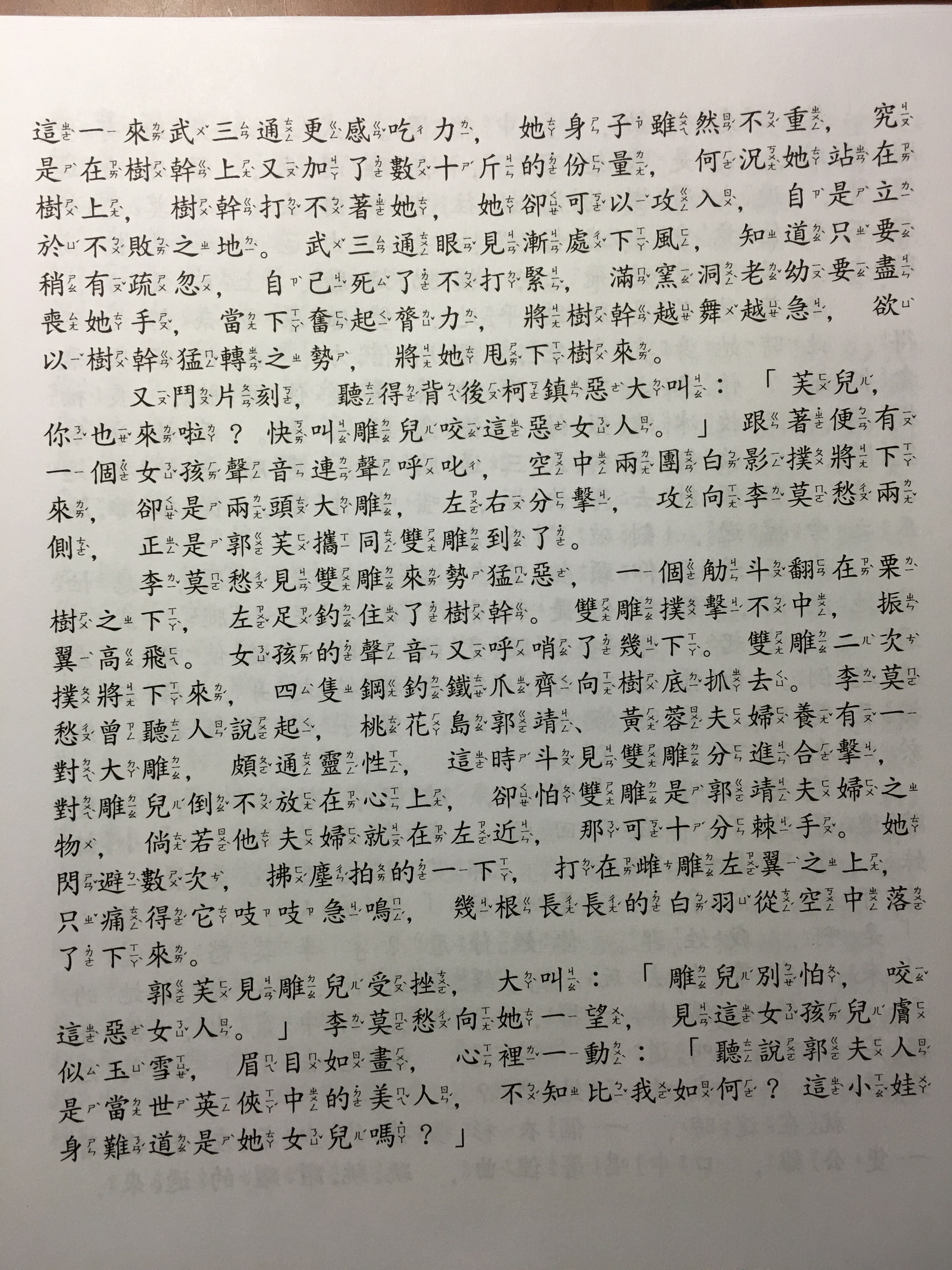
    2. Reading.  Read first the text with zhuyin or pinyin.  Print out text with phonetics yourself if needed (search for text, copy, paste, add phonetics – super easy).  A combination of reading to the child, listening to audio-recording, guided reading, read-aloud, and silent reading are great ways to speed up learning.  Then, read, read, and read.  Once the child can read the text quickly (different speed for different topics – faster for casual reading like novels, say > 500 characters a minute), it would be time to try similar text without zhuyin.
    3. Post-reading.  Discuss the subject, do brief writing/character practices, or do some artistic activities.

Below are two examples of SRE for Chinese:

#1.   My daughters learned in English about communities in the third grade and basic North Carolina history/geography in the fourth grade.  A couple of years later, I ask them to read the corresponding Chinese textbook from Taiwan.   It was still challenging for 9 year old “Georgia” due to the amount of new Chinese terminology but at least she knows some basic concept already.

image image image

Here is Georgia reading one such text, as posted a few weeks ago: https://youtu.be/-kuEJ0Crtgw.  She has yet to progress to reading such text without zhuyin.  That can wait.

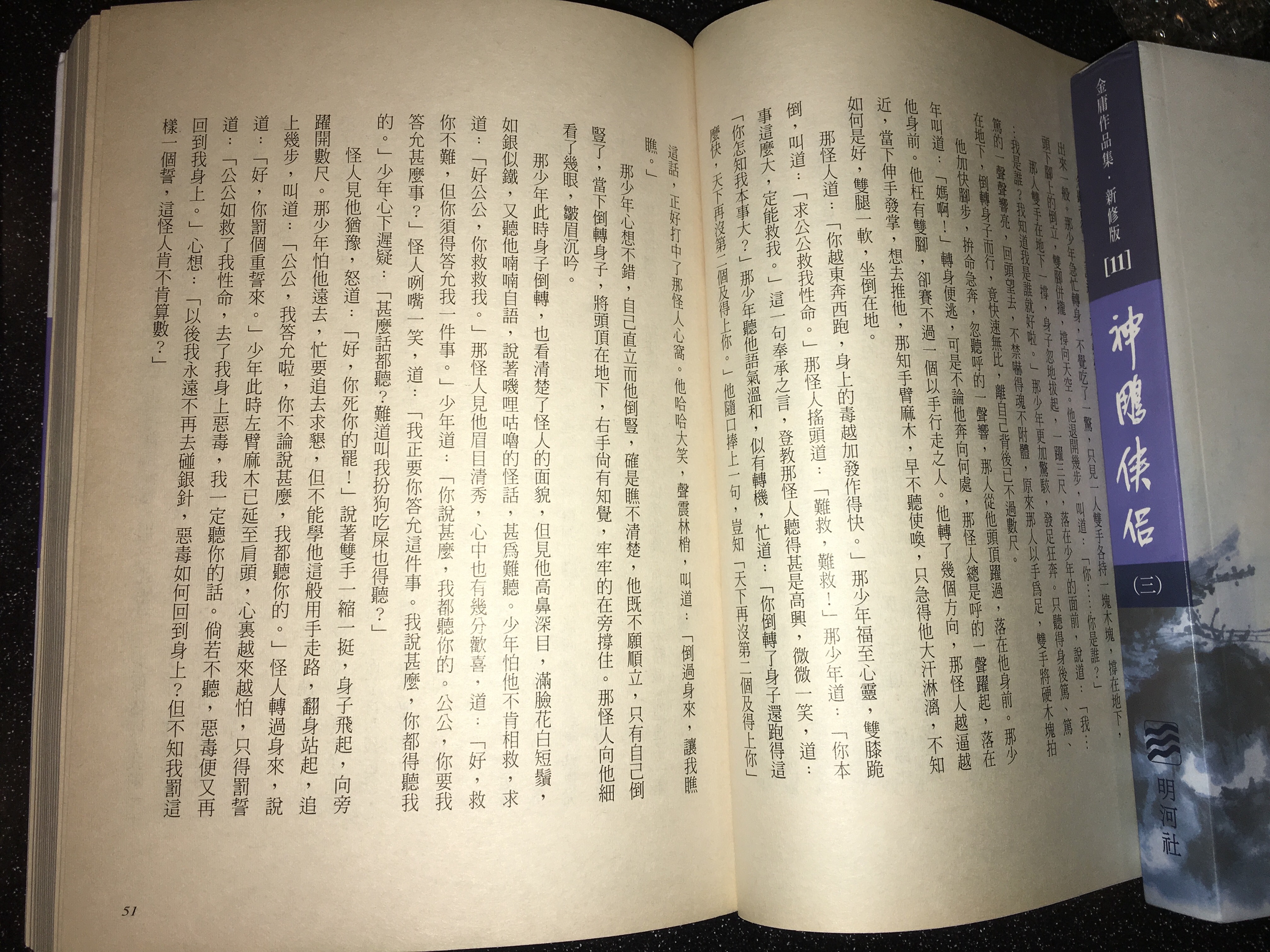
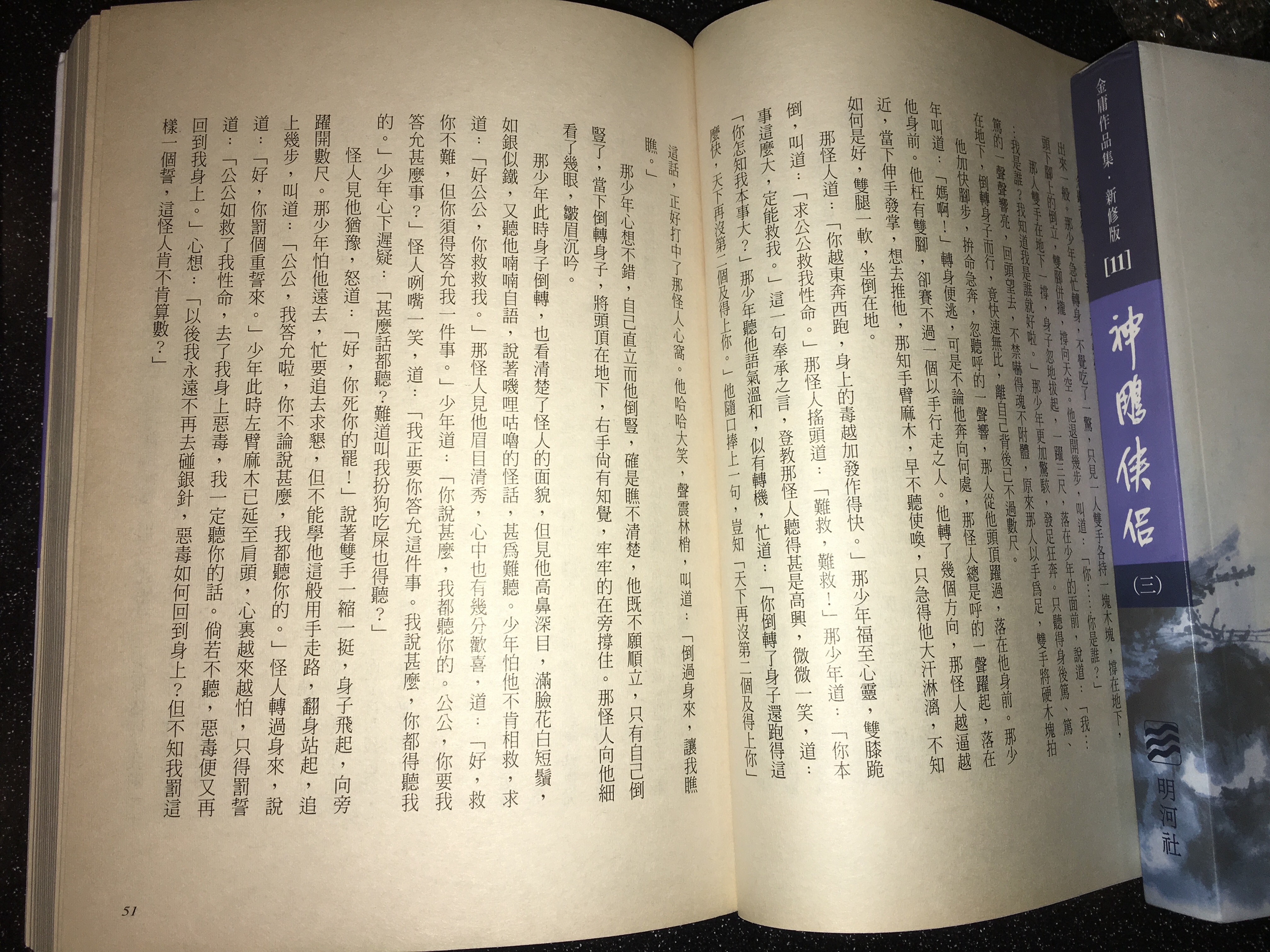
#2.  Charlotte started reading Return of the Condor Heroes earlier this month.

image imageimage

img_3813

Charlotte had watched the cartoon version several times a couple of years ago.  She read the dialogues in the novel just fine but has had difficult with some passages and visualizing the fight sequence.  So, I printed out the text with zhuyin and asked Charlotte to read it aloud with the tutor, who then explained whatever she didn’t understand.  After doing so for about an hour and half over two days, Charlotte had much better mental picture of the story.  Now, instead of going back to the novel book without zhuyin, I have her read the text with zhuyin and she finds it much easier to read.  I will just have her read such text until she reads it very quickly and then go back to the novel without zhuyin.  I will ask her to do some read-aloud with me from time to time.


So, the above is SRE for Chinese in a nutshell.  I am certain many of you have utilized similar technique to various degree. I am simply laying it out in a somewhat organized fashion.


I hope this post is helpful.  Thank you for reading.


*   Michael F. Graves and Jill Fitzgerald, Scaffolding Reading Experiences for Multilingual Classrooms.   

Read aloud of kung-fu novel 金庸’s 神鵰俠侶

The following is a print-out of salient parts of the novel with zhuyin added, for read-aloud lesson with the Chinese tutor on the weekend, who explains phrases that “Charlotte” doesn’t quite understand.  Original Chinese writings are simply more authentic and just about nothing beats 金庸’s work in this category.  These read-aloud should make Charlotte’s own reading of the novel easier.

(Of note, I didn’t correct for alternative pronunciation for the zhuyin, since that would be too tedious to do.  The tutor will correct her if she reads it incorrectly.)

Last stage, for now

如今十二歲的大女兒已開始讀金庸的神鵰俠侶也開始可用電腦打自己的創作,她的大學前的中文學習似乎也到的最後ㄧ個階段。在接下來的三年,我們目前計畫大致上如下:

  1.  繼續念台灣小六的自修中文課本,多念些介紹中國文化的文章。
  2. 七年級的暑假加強用打字寫作。同時,因她喜歡寫作繪畫和彈吉他,也試編寫和畫雙語童書和學吉他自彈自唱中文歌。
  3. 八年級的暑假學讀簡體字和加強論說文,說明文等非記敘文的文章。
  4. 九年級的暑假由親友安排去台灣或大陸打工ㄧ個月。
  5. 十年級準備考Chinese AP test。學到這階段,這應該不難。

在大學前中文學習進入尾聲時, 她也可重新學習九歲時中斷的西班牙文。

  1. 七年級完後的暑假念五十小時的西文。
  2. 八年級週末念些西文文章。
  3. 八年級完後的暑假念八十小時的西文。
  4. 九年級上西文二或三的課。
  5. 九年級完後的暑假念四十小時的西文。
  6. 十年級上西文三或四的課,之後西文應有ILR第二級的程度。
  7. 十年級完後的暑假由親友安排去我國高中時住的多明尼加去做志工服務ㄧ個月。
  8. 十ㄧ年級上西文四或大學的西文課程,之後希望有~ILR第三級的程度。

至少,這是現在計畫的進度。當然,計畫常常趕不上變化。就再看咯!

Now that 12 year old “Charlotte” starts reading 金庸’s 神鵰俠侶 and can type her own creative writings, I can see the beginning of the last stage of our pre-college Chinese language art (CLA) journey.  At this point, I foresee that this last stage will last three years, from 7th through 9th grade, as follows:

  1.  Continue studying 6th grade self-study guide over the next two years.  It takes longer for my elder daughter, since she has heavier school work.  At the mean time, continue reading novels, concentrating more on original Chinese novels instead of translated ones, and doing read-aloud of literary work and cultural studies with the Chinese tutor on the weekend.
  2. Summer after 7th grade: focus on Chinese composition (by typing).  She will hopefully work on bilingual children’s book, as drawing/painting and writing are two of her passions.  With another year of playing/learning guitar, a favorite activity, she will hopefully work on making covers of Chinese songs (she is playing 時間都去哪兒了 tonight).  She is receptive to voice lessons.  So, we’ll see.
  3. Summer after 8th grade: learn commonly used simplified characters and do more non-fictional readings.  After going over the basics, it should be fairly straight forward.  One simple way would be to read fluently articles on www.slow-chinese.com and www.thechairmansbao.com first in traditional and then in simplified characters.  These articles are suitable for HS students and adults, not kids.
  4. Summer after 9th grade: one month of summer job in mainland China and Taiwan alongside other natives through friends and family.
  5. Studying for and taking the Chinese AP test should be fairly easy in 10th grade.  She will be “wrapping up” her pre-college CLA journey while most heritage students are just ramping it up in 9-10th grade.
  6. Continue reading Chinese novels and enjoying CLE after all these.

This “last” phase of our pre-college CLA journey should be the first phase, or more accurately, resumption of our Spanish language art journey.

  1.  Summer after 7th grade: resume Spanish home self-study and home tutoring.  It’s fairly easy to find suitable tutors.  Current plan is for ~ 50 hours of study.
  2. 8th grade: read/study more Spanish on the weekends.
  3. Summer after 8th grade: Another ~80 hours of study.
  4. 9th grade: HS Spanish II or III.
  5. Summer after 9th grade: ~ 40 hours of study.
  6. 10th grade: Spanish III or IV.  By the end 10th grade, she should be IRL level 2.
  7. Summer after 10th grade: hopefully one month of immersion volunteering trip in the Dominican Republic, back in the home country of my teenage years.
  8. 11th grade: Spanish IV or college Spanish.  She should be close to ILR level 3 by then.

Of course, like all “good” Asian parents, she has time for some fun (she loves sleep-overs and hanging out with her friends – who wouldn’t.) and to work on other subjects, activities, and tennis, her sport of choice.  Lastly, she reminds me that I promised her equestrian lessons this summer, another favorite activity from several years back, for achieving her target grade so far this year.  Thank goodness lesson cost is reasonable in our neck of the wood in relatively rural eastern NC.

Well, at least these are the plans.  We’ll see how it goes.  I can’t wait.

New textbooks for 2016!

“Charlotte”, 12, and “Georgia”, 9, are off to a bright new year.  At the end of 2015, Georgia finished the first semester third grade self-study guide textbook and Charlotte finished her second semester fifth grade Chinese language art textbooks.

Since I don’t have a self-study guide textbook for second semester of third grade for Gerogia, I decided for her to just skip ahead to the first-semester fourth- grade one that I have.  Her reading comprehension is pretty good; so, I think she will be alright.  The material is significantly harder but she will be just fine.


As for Charlotte, we proceeded to first semester sixth grade self-study guide textbook.  She thinks the self-study guide is more tedious, but she will live….

image image

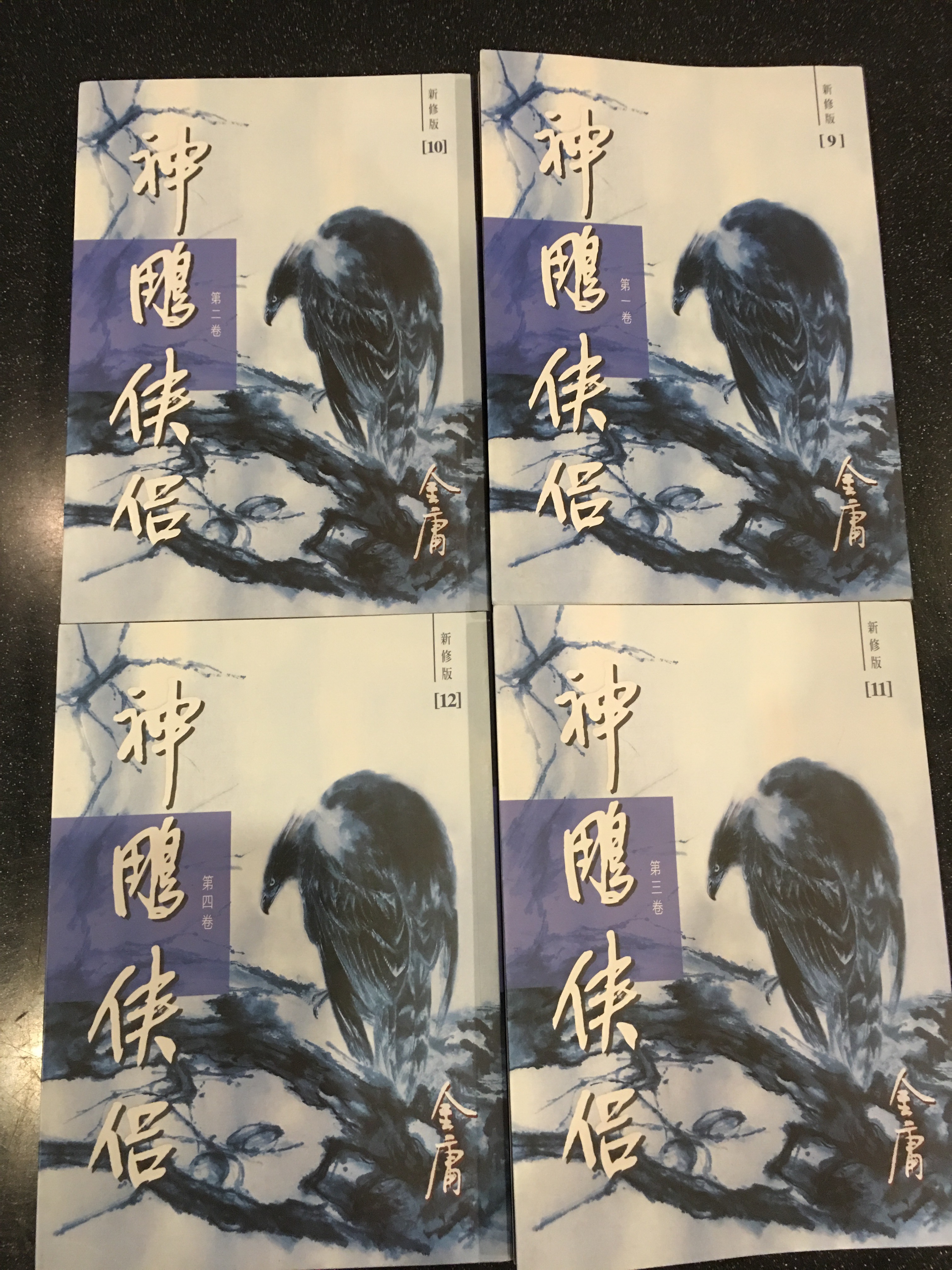
神雕俠侶!The Return of the Condor Heroes

I bought a used copy of 金庸’s 神雕俠侶 (The Return of the Condor Heroes) on Ebay for a fraction of the price and the 4 volume novel arrived today!  Yeah!  “Charlotte”, 12, has already started reading it on Kindle last week.  But, like all things, a book in hand is a book indeed and still works better for her.  I ask her to read a little every day.  I did have to explain to her a few passages that she didn’t get, particularly since she didn’t read the previous series, 射雕英雄傳 (The Legend of the Condor Heroes).  However, having watched the cartoon version a couple of years ago does help her with having an overall understanding of the plot.   I also explain to her a few terms that she didn’t get and read a few paragraphs for her every now and then, to make sure she gets the gist of the plot.  I am not say that she understands every idiom 成語 or word usage (because she doesn’t), but I am sure she will pick up more and more of them up from context over time.

With the novel in hand and the real action finally starting with the arrival of the main protagonist 楊過, she is now getting excited about the story.  Super duper!  I am so glad she can now enjoy what I enjoyed reading in my teens!  I am sure that, after reading this four volume novel, her Chinese would improve by a significant degree.


image  imageimage


~2/3 CLE exposure time for ILR level 3 or above

Over the last few days, I revisited my prior observation that a minimum of 50% exposure to CLE (Chinese language ecosystem) before age of 8 is required to reach ILR level 3 or above in terms of speaking proficiency.  Having seen how a few of the younger fellow parents’ children have blossomed in terms of their Chinese proficiency over the last two years since I started my FB group Raising Bilingual Children in Chinese and English and joined 中英文雙語並進的養兒育女手記 another similar group composed mainly of adult immigrant parents, I reached out to some of them and made revision and refinement to my observation and expanded it to specifically reading proficiency.

Now, there are very few parent members of my FB group having pre-college children with ILR level 3 or above in terms of reading proficiency above the age of 9 or so, except for my daughters and maybe a couple of other children.  The main reason, I believe, is as follows:

  1. Few success stories.  There are few heritage parents who were as “aggressive” in pursuing reading proficiency for their preschoolers around 6-10 years ago – so there are few “success” stories to share by their tween/teens.
  2. Selection bias.  Most heritage children older than 8-9 learning Chinese have speaking, reading, or both IRL proficiency level lower than 3, and most those parents are resigned to the “reality” that their children will not achieve ILR level 3 or above in the foreseeable future, without spending extended time in the “motherland”.  So, these parents don’t seek out and join FB groups such as the two mentioned.
  3. Social media usage bias.  There are likely fewer older heritage parents who use FB or other social media.   Also, adult immigrant parents from mainland China may use WeChat or other social media sites more, seeing that Facebook is not accessible in China.   So, that is another selection bias.

My observation shifts as I gather feedback from other parents and their children.  So, please give me some feedback!

In any case, with these biases in mind, my current observation is as follow:

I)  Speaking proficiency.  It takes a minimum of ~66% exposure to CLE from at least 3 to 8 years old to achieve and maintain speaking proficiency of ILR level 3 and above between those ages.  That would be about 2/3 of the waking hours immersed in CLE.  The higher the percentage, the higher the IRL level.  Having said that, a children immersed in ~ 66% CLE time probably can achieve ILR level 3-3.5 by 8.  This does not necessarily extend to higher age groups, at which time language complexity and range of expression is increased.  To maintain or increase age-matched ILR level would require additional instruction and/or exposure to active/passive usage of more advanced vocabulary and expression, such as spending extended time with pretty much native level speakers or consuming multimedia programs (video/audio).  In addition, active learning/instruction likely decrease the CLE % time requirement.

A child can be doing an English based assignment at home but communicates to the parents or care giver in Chinese.  I would include that time as part of CLE also.  However, watching English TV programs at home likely would not count.  On the other hand, watching Chinese TV programs at an English speaking household would count as part of CLE.  The main determinant would be whether the child is actively using or learning Chinese.

  1. Chinese immersion schools count as 50% CLE for those hours at best, as the children plays in English and active use of Chinese is mostly done by the teacher, according to my understanding.  Past second grade, this percentage likely decreases as more English is used and added to the curriculum.
  2. Half day preschool counts as 1/3 of the waking hours.  Full day school counts as 1/2 of the waking hours.  Don’t forget to include the weekend, holidays, and winter/summer break.  Generally speaking, there are 180 days of school instructions.
  3. With the above understanding, for non-Chinese speaking families, full day Chinese immersion school since kindergarten only counts as no more than 15-20% CLE time (50% CLE efficiency x 50% of each day x 50% of the year) without additional enrichment, with some homework/studying time added in.  That’s why immersion school by itself is insufficient to achieve proficiency level of ILR level 3 or above.
  4. Heritage children at Chinese speaking household who attend English only schools likely have “maximum” 75% CLE time, but likely frequently get much less, if they consume mostly English based multimedia and play with other children in English.  Their proficiency frequently go dramatically downwards past 6-7 years of age as the slower pace of Chinese language instruction they receive at weekend Chinese school is not enough to maintain age-matched IRL level 3.  These children mostly speak English or a mix of English and Chinese (“Chinglish”) to their parents, who speak Chinese to them.
  5. Heritage children attending Chinese immersion school with Chinese speaking household can have up to ~80% CLE time, if Chinese is strictly used outside of school.  However, the slower pace of Chinese instruction at immersion school to accommodate non-heritage children will likely decrease their age-matched IRL level over time. Extracurricular activities conducted in English can put a big dent on CLE time but that is the case for any children.
  6. My daughters who have had spent half of their days in English only day care, home day care, preschools, kindergarten and up since birth pretty much (except for ~ one year and half when we homeschooled) plus sojourns abroad in Taiwan with 100% CLE, probably have CLE time of ~ 70%.  They receive Chinese instruction at home using Chinese language art curriculum from Taiwan at relatively fast pace in terms of reading (~1/2 to 2/3 of the pace in Taiwan, foregoing most of the writing practices) and consume Chinese multimedia in “concentrated” form (and thus less time consuming), as I gathered for them multimedia that highlight the intricacies and salient features of the languages in its various forms.
  7. Heritage children who are homeschooled in Chinese in Chinese speaking household likely can achieve CLE exposure time north of 80%.
  8. Multi-ethnic children with one Chinese speaking parent who are homeschooled in Chinese but exposed to parents communicating in English and who communicates to one parent in English and the other in Chinese probably have CLE exposure of ~ 60-70%.
  9. Multi-ethnic children who attend Chinese immersion school with one non-Chinese speaking parent may achieve ~40-70%, depending on the amount of Chinese used at home and extra Chinese language based enrichment, including playdates.

With the above in mind, it seems general English speaking proficiency of ILR level 4-4.5 “only” requires ~ 20-30% exposure time.  If one lowers the standard to ILR level 3-3.5, exposure time of ~15-20% will likely suffice for English.

The above brings to mind that bilingual proficiency in English plus another category 1 language in a household where both of those languages (say, English-Spanish or English-French) are used is relatively easy, compared to English-Chinese bilingualism.

As for trilingual families, a child attending English speaking schools in English-French-Chinese household where the parents speak in English and one parents speak to the children in Chinese and the other in French can achieve ILR level 5 (native) in English and French, at the expense of Chinese proficiency, since CLE exposure time would likely be less than 50%, which would tend to decrease further as child grows older.  On the other hand, a Chinese heritage child with Chinese speaking parents attending English-Spanish immersion school may have up to 70% CLE time if Chinese is strictly used at home.  However, further maintenance of Chinese ILR age-matched level past ~ 8 can depend on Chinese language instructions.  Similarly, a trilingual-biracial family (say, Polish-English-Chinese) in Taiwan who homeschools in the three languages may achieve CLE time of ~70%, which may indeed be sufficient for trilingual proficiency at or above 4 in all three languages over time.

My observation that it takes ~ 66% language ecosystem exposure time to achieve Chinese ILR level ~3 speaking proficiency vs.~15-20% exposure time for English (or French, Spanish likely) to achieve similar IRL level, or a ~4 fold difference, would be in line with what the Foreign Service Institutes of the US Department of States suggested (~ 4 times as long) for English speaking adults to learn Chinese to ILR level 3 vs. a category 1 language.

(to be continued……)

Book recommendation list (simplified)

全国八大语文名师联合推荐最靠谱小学生2015暑假书单

Elementary school reading lists (simplified) from a website

张祖庆推荐书单

1-6年级2015暑假推荐书单

(含60多部儿童电影)

张祖庆老师写给孩子和家长的话:

首先要申明一点:没有一本书是必须要读的,家长千万别因这份书单而强迫孩子阅读。选书之前,最好带孩子去书店看看,看看封面、目录、内容提要,孩子确实喜欢,再买。否则,一旦买了,孩子若不喜欢,就浪费了。为便于大家选书,特做以下几点说明:

1、这个书目,尽量兼顾经典性、趣味性、多元性和时效性。有些大家非常熟悉的,不在此次推荐范围(比如《小王子》《草房子》等);尽量多推荐一些名家新作或他们自己的得意之作(如曹文轩的《火印》、张之路的《汉字奇兵》、常新港《我要长成一棵葱》、彭懿的《灵狐少年》等);有意识地增加了童谣、现代诗、微童话等元素;非文学类作品,也有一定的比例(大部分排在最后)。

2、推荐这么多书,并不是说,假期里一定要全部读完。一般来说,选5-8本喜欢的即可。哪个年级读什么书,也只是大致的划分。阅读能力强的孩子,三年级也可以读五、六年级的书。

3、看电影,也是极其重要的阅读方式。这次推荐的电影,兼顾了动画片、纪录片、儿童电影以及可亲子共看的成人电影。孩子们可以和爸爸妈妈一起在网上观看。有些片子比较老,但很值得一看,可以到影像店出租。


1年级

书单推荐

李欧·李奥尼图画书系列 (李欧·李奥尼/著 南海出版社)

启发童话小巴士 (河北教育出版社)

“我爱阅读”系列桥梁书 (海豚传媒出版社)

“新蕾原创”系列桥梁书 (新蕾出版社)

雅诺什系列图画书 (浙江少年儿童出版社)

《魔奇魔奇树》 [日]齐藤隆介 编文,(日)泷平二郎 绘,彭懿 译

南海出版社

《十四只老鼠》系列 (岩村和朗 著,彭懿 译 接力出版社)

《没头脑和不高兴》(任溶溶/著 ,浙江少年儿童出版社)

神奇校车系列(贵州人民出版社)

《嘟嘟和巴豆》系列(霍利·霍比 /文·图,彭懿等/译, 二十一世纪出版社有限责任公司发行部)

《百岁童谣》(贵州人民出版社)

《明天要远足》儿童诗歌绘本系列(方素珍/著 ,浙江少年儿童出版社)

《我和小姐姐克拉拉》(德)迪米特尔·茵可夫/著 ,陈俊/译, 二十一世纪出版社

《不一样的卡梅拉(我想去看海)》(法)约里波瓦/著,(法)艾利施/绘,郑迪蔚/译

《小熊温尼·普》(英)米尔恩/著,王峥/译 , 中国少年儿童出版社

《一年级大个子二年级的小个子》 (日)古田足日/著,中山正美/绘, 彭懿/译 ,接力出版社

电影阅读:

《龙猫》《悬崖上的金鱼姬》《巴巴爸爸》《大闹天宫》《哪吒闹海》《鼹鼠的故事》《红气球》

2年级

书单推荐

《妖怪山》 彭懿 九儿/著, 连环画出版社

《鼹鼠的月亮河》 王一梅/著, 浙江少年儿童出版社

《老鼠养了一只猫》 萧袤/著,浙江少年儿童出版社

《笨狼的故事》 汤素兰/著 , 浙江少年儿童出版社

《会唱歌的小雨点》微童话系列 冰波等/著, 河北少年儿童出版社

《中国最美的童诗》 雪野/主编 ,圣野、林焕彰等/著,重庆出版集团

《会走路的人》 林良/著, 福建少儿出版社

《大自然温馨微童话》系列 冰波,王一梅 等著,湖北少年儿童出版社

《兔子坡》 (美)罗伯特·罗素/著,司南/译,晨光出版社

《疯狂学校》系列 (美)古特曼/著 ,(美)佩洛特 绘,江苏少年儿童出版社

《吹牛大王历险记》 (意)罗大里/著,张密/译, 新蕾出版社

《比得兔的新故事》 (英)艾玛·汤普森/ 著 , 连环画出版社

《女巫》 (英)罗尔德·达尔/著 ,代维/译 ,明天出版社

《青蛙和蟾蜍》系列 (美)洛贝/尔绘,明天出版社

《鼹鼠博士的地震探险》 (日)松冈达英/著, 蒲蒲兰/译

电影阅读:

《人鱼的童话》《狮子王》《阿拉丁》《马达加斯加》(3部)《潜艇总动员》《国王与小鸟》《小鬼当家》《查理和巧克力工厂》

三年级书单推荐:

《一只小鸡去天国》 汤汤 /著, 明天出版社

《大林和小林》 张天翼/著 , 湖北少年儿童出版社

《灰国王》 (美)苏珊·库珀 / 著, 舒伟/译, 湖南少年儿童出版社

《渡过雪原》 (日)宫泽贤治/著 , 贵州人民出版社

《故事奇想树》系列 林哲璋、赖晓珍、林世仁、陈素宜等著,青岛出版社

《晴天有时下猪》系列 矢玉四郎/著,二十一世纪出版社

《外国最美的童诗》 雪野/主编 ,斯蒂文森、 水上多世等/著,重庆出版集团

《我的错都是大人的错》 几米/ 著,现代出版社

《吹小号的天鹅》 (美)E·B·怀特/著,任溶溶/译, 上海译文出版社

《长袜子皮皮》 (瑞典)林格伦/著,李之义/译 ,中国少年儿童出版社

《罗伯特的三次报复行动》 (法)穆莱瓦/著,梅思繁/译,新蕾出版社

《蓝熊船长的十三半条命》 (德)瓦尔特·莫尔斯/著,李士勋/译, 人民文学出版社

《小淘气尼古拉》系列 (法)戈西尼 /著 , 戴捷/译 , 中国少年儿童出版社

《物种起源》少儿彩绘版 苗德岁/著 , 接力出版社

《写给儿童的中国历史》 陈卫平/著 , 新世界出版社

电影推荐:

《外星人E·T》《了不起的狐狸爸爸》《借东西的小人阿莉埃蒂》《天才眼镜狗》《小淘气尼古拉》(2部)《蝴蝶》《夏洛的网》《小飞侠彼得潘》

四年级

书单推荐

《戴小桥和他的哥们儿》 梅子涵/著 ,新蕾出版社

《飞越天使街》 舒辉波/著,少年儿童出版社

《我是白痴》 王淑芬/著 ,二十一世纪出版社

《我的声音会去旅行》系列 林焕彰/著 ,新蕾出版社

《爱丽丝漫游奇境记》 (英)卡洛尔/著, 尚飞、晓勇/画 ,杨咏梅/译, 浙江少年儿童出版社

《父与子》(漫画) (德)卜劳恩/绘,洪佩琪/编, 译林出版社

《佐贺的超级阿嬷》系列 〔日〕岛田洋七/著,陈宝莲/译,南海出版社

《5月35日》 (德)埃里希?凯斯特纳/著 ,刘海栖、刘冬瑜/译明天出版社

《作文里的奇案》 (法)伊夫.格勒韦/著, 李盈/ 译, 晨光出版社

《最西游作文》 袁 艳/著,人民邮电出版社

《从罐头盒里出来的孩子》 (奥)克里斯蒂娜·涅斯特林格/ 著, 河北少儿出版社

《阁楼里的秘密》 (美)辛西娅· 沃伊特/ 著,麦倩宜/译,晨光出版社

《101个神奇的实验》 (德)安提亚·赛安,艾克·冯格/文,夏洛特·瓦格勒/图,谢霜/译

《讲给孩子的中国地理》 刘兴诗/著 ,少年儿童出版社

《儿童哲学智慧书(第一辑)》 (法)奥斯卡·柏尼菲等/著,乐迈特等/绘,李玮/译

《吴姐姐讲历史》(15册) 吴涵碧/著,新世界出版社

电影推荐:

《波西·杰克逊》(2部)《仙境之桥》《绿野仙踪》《埃及王子》《魔戒》(三部曲)《微观世界》《冰河世纪》(4部)《天生一对》《莫蒂西的奇异生活》

五年级

书单推荐

《火印》 曹文轩/著, 江苏少年儿童出版社

《九月的冰河》 薛涛/著,新蕾出版社

《汉字奇兵》 张之路/著,新蕾出版社

《小证人》 韩青辰/著,浙江少年儿童出版社

《灵狐少年》 彭懿/著,晨光出版社

《狼獾河》 黑鹤/著,接力出版社

《我的妈妈是精灵》 陈丹燕/著, 中国福利会出版社

《西顿野生动物故事集》

(加拿大)西顿/编著,译林出版社出版

《安房直子月光童话》系列 (日)安房直子/著 周龙梅,彭懿/译 接力出版社

《名家文学读本》(10本) 钱理群/主编, 蒋军晶、刘发建 、张学青、丁慈矿等编著

《作文笑传》 何捷/著,人民邮电出版社

《希利尔讲艺术史》

(美)希利尔/著,李爽,朱玲/译,贵州教育出版社

《莎士比亚戏剧故事集》 (英)查尔斯·兰姆,玛丽·兰姆/改写,萧乾/译

《不列颠少儿百科全书· 哺乳动物》 (美)不列颠百科全书公司/著, 浙江少年儿童出版社

电影推荐:

《丁丁历险记》《导盲犬小Q》《山水情》《爆裂鼓手》《小鞋子》

《我在伊朗长大》《不老泉》《家园》《幽灵公主》 《音乐之声》《当幸福来敲门》

六年级书单推荐

《我要长成一棵葱》 常新港/著,青岛出版社

《舞蹈课》 三三/著,江苏少年儿童出版社

《少女的红围巾》 程玮/著,江苏少年儿童出版社

《给孩子的诗》《给孩子的散文》 北 岛/著 ,中信出版社

《张晓风美文系列·我喜欢》 张晓风/著,浙江少年儿童出版社

《不要怕——少年人文读本》 刘绪源/主编,明天出版社

《腰门》 彭学军/著,二十一世纪出版社

《童话之书》 陈诗哥/著,中国少年儿童出版社

《不老泉》 (美)纳塔莉·巴比特/著,吕明/译 二十一世纪出版社

《少女苏菲的航海故事》 (美)沙伦.克里奇/著 ,王玲月/译

《给孩子们的故事》 (美)艾巴辛格/著, 二十一世纪出版社

《永远讲不完的故事》 (德)米切尔?恩德/著,二十一世纪出版社

《地海巫师》 (美)厄休拉?勒古恩/著,蔡美玲/译,江苏文艺出版

《安德的游戏》 (美)奥森·斯科特·卡德/著 , 广西科技出版社

《本爱安娜》 (德)彼特·赫尔特林/著 , 21世纪出版社

《35公斤的希望 》 (法)嘉瓦尔达/著,王恬/译, 新蕾出版社

《牧羊少年奇幻之旅》 (巴西)保罗·柯艾略/著,丁文林/译, 南海出版社

《什么是什么》(一、二辑) (德)雷纳·科特 等/文,(德)埃贝尔哈尔德·埃曼等/图,李玉茹等/译 湖北教育出版社

《写给儿童的世界历史》 陈卫平/著 , 新世界出版社

《爱因斯坦的圣经》 (美)萨缪尔/著,李斯、马永波/译,海南出版社

《纸人》 殷健灵/著,新蕾出版社

电影推荐

《汤姆索亚历险记》《百万英镑》《鲁滨孙漂流记》《少年派的奇幻漂流》《哈尔的移动城堡》《美丽人生》《人工智能》《天堂的颜色》

《少年时代》《千与千寻》

蒋军晶,杭州天长小学副校长,省特级教师,儿童文学阅读推广人。曾获全国第六届青年教师阅读教学评比一等奖,。中华版《小学语文》教材编委,出版专著《打磨课堂》《从课堂走向课程》《和孩子聊书吧》,编著《小学生老舍读本》《群文阅读-新语文读本》,即将出版《和孩子一起写作吧》《和孩子一起读诗词》等。

蒋军晶推荐书目

2015暑假推荐书目

1永远讲不完的童话(适合1-3年级)

《小猪唏哩呼噜》,孙幼军著,春风文艺出版社

《青蛙和蟾蜍》系列,(美)洛贝尔编绘,潘人木译,明天出版社

《王尔德童话》,(英)王尔德著,谢毓洁译,中国少年儿童出版社

《小狐狸阿奴》,(日)新美南吉著,周龙梅、彭懿译,安徽少年儿童出版社

《柳林风声》,(英)肯尼斯·格雷厄姆著,(澳)罗伯特·英潘绘,任溶溶译,中国城市出版社

《长袜子皮皮》,(瑞典)林格伦著,李之义译,中国少年儿童出版社

《一只小鸡去天国》,汤汤著,明天出版社

独一无二的动物朋友:(适合3-6年级)

《夏洛的网》,(美)E.B.怀特著,任溶溶译,上海译文出版社

《跑猪噜噜》,(德)乌韦·狄姆著,陈俊译,二十一世纪出版社

《独一无二的伊凡》,(美)凯瑟琳·艾波盖特著,柯倩华译,新蕾出版社

《时代广场的蟋蟀》(美)塞尔登著,傅湘雯译,新蕾出版社

《狼图腾 小狼小狼》,姜戎著,浙江少年儿童出版社

《弗罗拉与松鼠侠》,(美)迪卡米洛著,(美)坎贝尔绘,丁冬译,新蕾出版社

《西顿动物故事全集》,(加)西顿著,阿卡狄亚译,安徽教育出版社

2这些孩子非常特别(适合3-5年级)

《玛蒂尔达》,(英)罗尔德·达尔著,任溶溶译,明天出版社

《特别的女生撒哈拉》,(美) 爱斯米·科德尔著,海绵译,陕西师范大学出版社

《窗边的小豆豆》,(日)黑柳彻子著,南海出版公司

《侦察鬼》(梅子涵图画小说系列),梅子涵著,二十一世纪出版社

《兰德里校园报》,(美)安德鲁·克莱门斯著,黄少甫译,天津教育出版社

《羽毛男孩》,(英)妮奇·馨娜著,穆卓芸译,万卷出版公司

《亲爱的汉修先生》,(美)贝芙莉·克莱瑞著,新蕾出版社

中国的经典慢慢读(适合4-6年级)

《小学生老舍读本》,蒋军晶编著,浙江少年儿童出版社

《小学生汪曾祺读本》,丁慈矿编著,浙江少年儿童出版社

《小学生萧红读本》,张祖庆编著,浙江少年儿童出版

《小学生朱自清读本》,朱煜编著,浙江少年儿童出版

《小学生鲁迅读本》,刘发建编著,浙江少年儿童出版

《小学生沈从文读本》,张学青编著,浙江少年儿童出版

《小学生丰子恺读本》,楼淑建编著,浙江少年儿童出版社

《小学生冰心读本》,周益民、王小庆编著,浙江少年儿童出版社

一本书就是一个研究专题(适合4-6年级)

《书的故事》,(苏)伊林编著,二十一世纪出版社

《菌儿自传》,高士其著,湖北少儿出版社

《孔子的故事》,李长之著,二十一世纪出版社

《万物简史》,(英)布莱森著,严维明译,接力出版社

3人生需要一次完美的探险(适合4-6年级)

《蓝色的海豚岛》,(美)奥台尔著,傅定邦译,新蕾出版社

《天使雕像》,(美)柯尼斯伯格著,郑清荣译,新蕾出版社

《手斧男孩》,(美)盖瑞·伯森著,吉林文史出版社

《鲁滨孙漂流记》(英)丹尼尔·笛福著,浙江少年儿童出版社

《橡树上的逃亡》,(法)蒂莫泰·德·丰拜勒著,新蕾出版社

《天使雕像》,(美)柯尼斯伯格著,新蕾出版社

《欧赫贝的秘密》,(法)弗朗索瓦·普拉斯著,陈太乙译,漓江出版社

4一下子看不懂的书(适合5-6年级)

《无字书图书馆》,(西)法布拉著,李竞阳译,新蕾出版社

《毛毛——时间窃贼和一个小女孩不可思议的故事》,(德)米切尔·恩德著,李士勋译,二十一世纪出版社

《小王子》,(法)圣·埃克絮佩里著,人民文学出版社

《不老泉》,(美)纳塔莉·巴比特,吕明译,二十一世纪出版社

《洞》,(美)路易斯·萨奇尔著,徐海幈译,南海出版社

刘发建,中学高级教师,浙江省课堂教学能手。就职于浙江省安吉路实验学校。致力于小学语文教学研究,出版《亲近鲁迅》《落地麦田野课堂》等教学专著,编著《小学生鲁迅读本》。深入研究“名家文学阅读周”的教学形式,带着孩子“读好书,读整本书”,取得了良好的教学效果。

刘发建推荐书目

2015暑假1-6年级推荐书目

一年级

1《这不是我的帽子》(美)乔恩·克拉森文、图,杨玲玲、彭懿译 明天出版社

2《蚂蚁和西瓜》(日)田村茂文、图,蒲蒲兰译 二十一世纪出版社

3 《母鸡去散步》(美)佩特?哈群斯著 明天出版社

4《爷爷一定有办法》(加)菲比?吉尔曼著,宋珮译 少年儿童出版社

5《小真的长头发》(日)高楼方子著,季颖 译 新星出版社

6 《好饿的小蛇》(日)宫西达也著 二十一世纪出版社

7 《游游小老师真完蛋》 伍美珍著 浙江少年儿童出版社

8 《我有友情要出租》方素珍 、郝洛玟 中国和平出版社

9 《老鼠养了一只猫》 萧袤著 浙江少年儿童出版社

二年级

1《狼大叔的红焖鸡》(美)凯萨兹 著,范晓星 译 贵州人民出版社

2《月光男孩》(丹麦)依卜?斯旁?奥尔森著,杨玲玲、彭懿译 湖北美术出版社

3《我和小姐姐克拉拉》 (德)迪米特尔?茵可夫著 ,陈俊译 二十一世纪出版社

4《一粒种子的旅行》 (德)安妮?默勒著,王乾坤译 国际文化出版社

5《大嘴鲸桥梁书:橘子星球》 程婧波著,鸟先森绘 浙江少年儿童出版社

6《电话里的童话》 (意)罗大里著,张密译 新蕾出版社

7 《让路给小鸭子》(美) 罗伯特?麦克洛斯基著,柯倩华译 河北教育出版社

8 《想飞的大象》 安武林著 浙江少年儿童出版社

9 《世界少年文学经典文库:中国神话故事》 浙江少年儿童出版社

三年级

1《森林大熊》 (瑞士)约克?史坦纳著,(瑞士)约克?米勒 绘,孔杰 译 新星出版社

2《小学生丰子恺读本》楼淑建/编著 浙江少年儿童出版社

3《小牛顿科学馆》系列 台湾牛顿出版公司编著 贵州教育出版社

4《小狐狸阿权》 (日)新美南吉 周龙梅 彭懿译 新星出版社

5 《爱丽丝漫游奇境》 (英)卡洛尔著 尚飞、晓勇等画 浙江少年儿童出版社

6《小学生叶圣陶读本》 陈金铭、王小庆编著 浙江少年儿童出版社

7《小学生冰心读本》 周益民、王小庆编著 浙江少年儿童出版社

8《人类昂首奔赴太空的119个伟大瞬间》路甬祥主编 刘进军编写 浙江少年儿童出版社

9《小飞侠彼得?潘》 (英)詹姆斯?巴里著,傅东起译 少年儿童出版社

10 《我在天堂遇见猫》 邓秀茵 浙江少年儿童出版社

四年级

1《阿狸,永远站》 Hans编著 时代文艺出版社

2《童年河》赵丽宏 福建少年儿童出版社

3 《最后的獒王》杨志军 浙江少年儿童出版社

4《小学生萧红读本》 张祖庆编著 浙江少年儿童出版社

5《小学生汪曾祺读本》丁慈矿编著 浙江少年儿童出版社

6《来自鬼庄园的九九》汤汤 中国少年儿童出版社

7《王尔德童话》(英)王尔德著, 谢毓洁译 中国少年儿童出版社

8 《小木偶奇遇记》(意)科洛迪著 徐力源译 中国少年儿童出版社

9《格林童话》(德)格林兄弟著 商务印书馆

10 《男生贾里全传》 秦文君著 少年儿童出版社

五年级

1 《我的妈妈是精灵》陈丹燕 福建少年儿童出版社

2 《战马》迈克尔?莫波格 南海出版社

3《美人树》汤汤 江苏少年儿童出版社

4《小学生巴金读本》 王丽琴、王乐芬编著 浙江少年儿童出版社

5《汤姆?索亚历险记》 (美)马克?吐温著 浙江少年儿童出版社

6《月亮茶馆里的童年》 殷健灵 春蕾出版社

7《小学生沈从文读本》 张学青编著 浙江少年儿童出版社

8《草房子》 曹文轩著 江苏少年儿童出版社

9《小学生老舍读本》蒋军晶编著 浙江少年儿童出版社

10 《俗世奇人》冯骥才著 作家出版社

六年级

1《不老泉》(美)纳塔莉?巴比特,吕明译 二十一世纪出版社

3《写给孩子的哲学启蒙书》(法)拉贝,(法)毕奇 广西师范大学出版社

4《儿童哲学智慧书》 [法]奥斯卡?柏尼菲著 接力出版社

5《椋鸠十动物小说》(第一辑共5册)(日)惊鸠十 二十一世纪出版社

6《小学生鲁迅读本》 刘发建编著 浙江少年儿童出版社

7《哈利波特全集》系列 [英]罗琳/著,马家农、马爱新/译 人民文学出版社

8《百万英镑》 [美]马克?吐温/著 汪树东,龙红莲/译 长江文艺出版社

周益民,江苏省语文特级教师,任教于南京市琅琊路小学。著有《童年爱上一本书》《做个书生教师》《回到话语之乡》等。


周益民推荐书目

2015书目推荐说明:此次只推荐原创作品(包括台湾作家作品),已为大众熟知的作品一般不列入。

孩萧袤/文 陈伟、黄小敏/绘 海燕出版社

低年级

《青蛙与男孩》 萧袤/文 陈伟、黄小敏/绘 海燕出版社

《好神奇的小石头》左伟/著 中国少年儿童出版社

《妖怪山》彭懿/文 九儿/图 连环画出版社

《漏》梁川/图 明天出版社

《花木兰》蔡皋/图 明天出版社

《安的种子》王早早/文 黄丽/图 海燕出版社

《正月正》山曼/编著 陶文杰/图 贵州人民出版社

《蜗牛的风景》(诗集) 林良/著 重庆出版社

《人生梦想书》 王笑笑、钱海韵/绘 江苏少年儿童出版社

《故事马上开始》(童话集) 陈诗哥/著 少年儿童出版社

《非常小子马鸣加》 郑春华/著 少年儿童出版社

《猪八戒新传》 包蕾/著 湖北少年儿童出版社

《装在口袋里的爸爸》杨鹏/著 春风文艺出版社

中年级

《小猫走路没有声音》(诗集) 林焕彰/著 浙江少年儿童出版社

《蚂蚁恰恰》(诗剧) 萧萍/著 江苏少年儿童出版社

《神笔马良》 洪汛涛/著 湖北少年儿童出版社

《一只小鸡去天国》(童话集) 汤汤/著 明天出版社

《我是白痴》 王淑芬/著 二十一世纪出版社

《戴面具的海》 彭学军/著 二十一世纪出版社

《我想长成一棵葱》 常新港/著 青岛出版社

《小水的除夕》 祁智/著 江苏少年儿童出版社

《蓝鲸的眼睛》(童话) 冰波/著 中国福利会出版社

《凤凰的山谷》(动物小说) 金曾豪/著 晨光出版社

《非法智慧》(科幻小说) 张之路/著 浙江少年儿童出版社

《就想拉拉她的手》(散文、小说集)孙卫卫/著 中国少年儿童出版社

《九月的冰河》 薛涛/著 新蕾出版社

《阁楼精灵》 汤素兰/著 湖南少年儿童出版社

《我的妈妈是精灵》 陈丹燕/著 福建少年儿童出版社

《写给儿童的启蒙经典·诗经》 华一书局/编著 贵州教育出版社

《写给儿童的中国历史》 陈卫平/著 新世界出版社

《小学对课》丁慈矿/编 上海教育出版社

高年级

《苏北少年“堂吉诃德”》 毕飞宇/著 明天出版社

《少女的红发卡》(长篇小说) 程玮/著 江苏少年儿童出版社

《草镯子》(长篇小说) 黄蓓佳/著 江苏人民出版社

《天棠街3号》(长篇小说) 秦文君/著 江苏少年儿童出版社

《六年级大逃亡》(长篇小说) 班马/著 二十一世纪出版社

《小证人》(长篇小说)韩青辰/著 浙江少年儿童出版社

《古蜀》(幻想小说) 王晋康/著 大连出版社

《树的屋子》(幻想小说集) 韦伶/著 浙江少年儿童出版社

《惟有时光》(小说集) 李秋沅/著 浙江少年儿童出版社

《致未来的你·给女孩的十五封信》 殷健灵/著 青岛出版社

《漫步诗歌的花园》 徐鲁/著 同心出版社

《绿光芒》(散文集) 梅子涵/著 明天出版社

《小学生名家文学读本》 钱理群/主编 浙江少年儿童出版社

《少年音乐和美术故事》丰子恺/著 二十一世纪出版社

《物种起源》苗德岁/著 郭警/图 接力出版社

台北市立圖書館推薦書

Book recommendation from Taipei Public Library

台北市立圖書館推薦書

書名 作者 類型 適讀年齡 定價 ISBN
去買東西! 佐藤和貴子文.圖;林真美選書翻譯 繪本 學齡前跨國小低年級 250 978-986-6759-95-6
小象散步 中野弘隆文.圖;林真美選書翻譯 繪本 學齡前跨國小低年級 250 978-986-6759-96-3
芽芽搬新家 錢茵文.圖 繪本 學齡前跨國小低年級 250 978-986-6948-69-5
有錢的豬 海倫.奧森貝里文.圖;曾陽晴譯 繪本 學齡前跨國小低年級 250 978-986-6948-49-7
從山裡逃出來/垃圾,丟啊! 田島征三文.圖;林真美譯 繪本 學齡前跨國小低年級 260 978-986-6948-73-2
森林和海的相遇 珍妮.貝克文.圖;林真美譯 繪本 學齡前跨國小低年級 260 978-986-6948-74-9
水的遊戲 戴爾芬‧葛林堡文;約克‧默爾圖;吳淨騁譯 繪本 學齡前跨國小低年級 500 978-986-6948-10-7
植物的遊戲 戴爾芬‧葛林堡文;文森‧馬希圖;陳妍如譯 繪本 學齡前跨國小低年級 500 978-986-6948-13-8
聲音的遊戲 伊莎貝拉‧夏維妮文;傑若姆‧盧里耶圖;游兆嘉 譯 繪本 學齡前跨國小低年級 500 978-986-6948-14-5
滾動的遊戲 戴爾芬‧葛林堡文;約克‧默爾圖;陳妍如譯 繪本 學齡前跨國小低年級 500 978-986-6948-15-2
影子的遊戲 諾拉‧多梅尼奇尼文;瑪里翁‧比耶圖;謝蕙心凙 繪本 學齡前跨國小低年級 500 978-986-6948-16-9
建築的遊戲 戴爾芬‧葛林堡文;基頓‧德赫木圖;林淑真譯 繪本 學齡前跨國小低年級 500 978-986-6948-11-4
身體的遊戲 戴爾芬‧葛林堡文;雷米‧薩拉德圖;王心瑛譯 繪本 學齡前跨國小低年級 500 978-9866-948-12-1
蝌蚪的諾言 珍.威莉絲文;湯尼.羅斯圖;張東君譯 繪本 國小低中年級 250 978-986-6582-04-2
蜥蜴微笑 角野榮子文 ;大島妙子圖;詹慕如譯 讀本 國小低中年級 180 978-986-6759-84-0
為什麼我不能全部都買?–跟孩子一起認識金錢 蘿拉.賈菲,羅爾.聖-馬克文;卡瑟琳娜.普羅圖,貝雅蒂斯.維隆,瑞吉斯.法勒圖;林淑真譯 繪本 國小低中年級 250 978-986-6948-46-6
為什麼女生愛哭,男生愛打架?──跟孩子一起認識性別 蘿拉.賈菲,羅爾.聖-馬克文;卡瑟琳娜.普羅圖,貝雅蒂斯.維隆,瑞吉斯.法勒圖;謝蕙心譯 繪本 國小低中年級 250 978-986-6948-45-9
為什麼我不能把甲蟲帶回家?──跟孩子一起認識環境 蘿拉.賈菲,羅爾.聖-馬克文;卡瑟琳娜.普羅圖,貝雅蒂斯.維隆,瑞吉斯.法勒圖;陳妍如譯 繪本 國小低中年級 250 978-986-6948-43-5
為什麼他和我不一樣?:跟孩子一起認識差異 蘿拉.賈菲、羅爾.聖-馬克著;卡瑟琳娜.普羅圖、貝亞特瑞斯.維隆、瑞吉斯.法勒繪;林淑真譯 繪本 國小低中年級 250 978-986-6948-44-2
為什麼我不能打人?:跟孩子一起認識暴力 蘿拉.賈菲、羅爾.聖-馬克文;卡瑟琳娜.普羅圖、貝亞特瑞斯.維隆、瑞吉斯.法勒圖;王心瑛譯 繪本 國小低中年級 250 978-986-6948-47-3
火龍家庭故事集 哲也文;水腦圖 讀本 國小低中年級 180 978-986-6759-09-3
我家有個烏龜園 童嘉文.圖 讀本 國小低中年級 180 978-986-6759-13-0
企鵝熱氣球 林世仁文;呂淑恂圖 讀本 國小低中年級 180 978-986-6759-14-7
換換書 林世仁文;達姆圖 讀本 國小低中年級 180 978-986-6759-75-8
蟲來沒看過 楊維晟文.攝影;蔡其典圖 讀本 國小低中年級 220 978-986-6582-03-5
象什麼 張東君文.攝影;黃麗珍圖 讀本 國小低中年級 220 978-986-6582-01-1
多出來的人 凱瑟琳.派特森著;珍.克拉克.布朗繪;劉清彥譯 讀本 國小低中年級 150 978-986-6948-79-4
艾瑪的神奇冬天 珍.立德著;珍妮弗.派卡斯繪;劉清彥譯 讀本 國小低中年級 150 978-986-694-881-7
找不到國小 岑澎維文;林小杯圖 讀本 國小中年級 250 978-986-6759-52-9
魔術的祕密 蘿絲.惠勒,吉瑞爾.艾美斯合著;亞瑟.達羅斯繪;劉清彥譯 讀本 國小中年級 150 978-986-6948-87-9
池上池下 邱承宗文.圖 繪本 國小中高年級 280 978-986-6582-21-9
床母娘的寶貝 黃秋芳文;許文綺圖 讀本 國小中高年級 250 978-986-6759-77-2
湖邊故事 哲也文;黃士銘圖 讀本 國小中高年級 250 978-986-6759-20-8
小頭目優瑪3:那是誰的尾巴? 張友漁文;王書曼圖 小說 國小中高年級 220 978-986-6759-08-6
跟著媽祖遊明朝 王文華文;蘇子文圖 小說 國小中高年級 250 978-986-6759-51-2
騎著駱駝逛大唐 王文華文;蘇子文圖 小說 國小中高年級 250 978-986-6759-55-0
長襪皮皮 阿思緹.林格倫文;英格麗.凡.奈曼圖;賓靜蓀譯 小說 國小中高年級 250 978-986-6759-14-7
長襪皮皮出海去 阿思緹.林格倫文;英格麗.凡.奈曼圖;賓靜蓀譯 小說 國小中高年級 250 978-986-6759-68-0
長襪皮皮到南島 阿思緹.林格倫文;英格麗.凡.奈曼圖;賓靜蓀譯 小說 國小中高年級 250 978-986-6759-69-7
小飛人上報嘍 阿思緹.林格倫文;伊蓉.威克蘭圖;陳靜芳譯 小說 國小中高年級 280 978-986-6582-25-7
小飛人逗管家 阿思緹.林格倫文;伊蓉.威克蘭圖;陳靜芳譯 小說 國小中高年級 280 978-986-6582-27-1
屋頂上的小飛人 阿思緹.林格倫文;伊蓉.威克蘭圖;陳靜芳譯 小說 國小中高年級 250 978-986-6582-26-4
DK知識開門(10冊) 凱特.海登等文;方淑惠等譯;陳正鵬等審訂 讀本 國小中高年級 150 978-986-6582-10-3
永遠的林格倫:守護幸福國度的瑞典國寶級作家 幸佳慧著 傳記 國中 300 978-986-6759-76-5