Greetings. I am so glad to have the opportunity to reach you in this manner. I applaud you for taking the steps to raise your children to be bilingual and hopefully biliterate in Chinese and English. After yet another phone consultation with another young and eager parent just like yourself, I thought I might as well write things down for you.
We’ve never spoke before but I feel like I know where you are coming from. You are probably very much like me, 13 years ago, when my wife and I just learned that she was pregnant (some would say “we were”). I emigrated from Taiwan when I was 11. Though I have taken on much of the western culture over the last three decades, I still have an attachment to the Chinese language and heritage and want to share those with my children. I want to share with them not just the sight and smell of the night market and its various delicacies that had nourished my body, but also the comics and kung-fu novels that have nourished my spirit in my youth and teens. Then, I looked around at my heritage friends and acquaintances in their 20s and 30s at the time, who were either born and raised in the US or immigrated here before 7-8 years of age. Particularly for the former group, I knew not one who achieved decent level of Chinese, able to converse with me in Chinese comfortably and read novels competently. And that’s a whole generation of them, and some of them grew up in southern California! I knew many of their parents tried, with the usual combination of “speak Chinese only at home” (and then giving in later), attending weekend Chinese school (with many children hating such school), and occasional trip to the “homeland” (particularly to 國語日報‘s summer program early on, or LOVE BOAT in college! – not really). Well, that did not work out well at all for, mmm, just about all of them. I guarantee you that I searched high and low and left no stone unturned (early 2000s, off-line, I mind you). I bugged many a passengers on my flights back to Taiwan, particularly those who came from California, asking them, “Do you know any young adults or teens who can ——?” I noted that the Californians frequently said, “there should be…. I heard of someone….. but I don’t know him/her personally.” Well, that was frustrating! So, I vowed that a different strategy has to be pursued, that, to achieve the extraordinary, extraordinary means are necessary. It was not going to be easy and it was going to be difficult, but, boy, was I wrong! Looking back, it was much more difficult than I had ever imagined. I am surprised that we even pulled it off. But boy, was it good!
To start, Chinese is one of the most difficult languages to learn for native English speakers. Of the three categories of common foreign languages, Mandarin Chinese is listed as category 3, along with Arabic, Cantonese Chinese, Korean, Japanese, and a couple of others, requiring interested adults to spend ~2,200 hours in class hours in a classroom of no more than 6 students to achieve general professional proficiencies in reading and speaking, or level 3 out of 5 in ILR scale, with half of those time preferably spent studying in-country. I would say that the great majority of American born heritage children in the US achieve level 1 or 2 by their early 20s with the usual method mentioned in the beginning. Compared to Chinese, category 1 foreign languages are very easy to learn, requiring only ~600 hours to achieve the same level of proficiency and that include Spanish, French, Swedish, Danish, Dutch, Italian, etc. In my humble opinion, if you want your children to have category 3 or above Chinese proficiency compared to their native peers by their teens, it’s going to take A LOT of time. IMHO, your children can learn these other category 1 languages in five, ten, or more years and it will be relatively easy to learn compared to Chinese.
Learning Chinese simply takes a LOT of time and effort. But, that’s all it takes. It is more time and exposure dependent than anything else. Achieving different level of ILR competency requires very much different amount of time and effort for kids. It’s easier for adults, since active adult learners will seek out the materials themselves and immerse oneself in Chinese multimedia to gain competency quickly. Well, that does not work for little kids and children, at least not till high school. So, to get children to learn Chinese well (IRL 3 or above) requires that the parents surround the children with Chinese Language Ecosystem, or CLE. The CLE is a complete Chinese language world, independent and parallel to the English Language Ecosystem (ELE) with which our children would otherwise be surrounded. The CLE provides the various facets of the language which can be used for entertainment purposes, such as comedy, pop music, riddle, rhymes, stand-up comedy, poems, board games, movies, YouTube videos, TV programing, comics, novels, computer games, video games etc. It also employees adults, typically parents or close care-givers to constantly converse with the children in Chinese, not just about the daily mundane routine, but also about the various facets of life and the society. It is through all the FUN and nourishing things that CLE provides, that the Chinese becomes a language RELEVANT or MEANINGFUL to their lives, so that the children will have the INTEREST and be willing to continue to learn Chinese, at a fast enough pace. The tricky part is that, for kids older than ~ 8 years old, their Chinese have to pretty good to enjoy and have fun within the CLE, for them to be willing to continue to learn Chinese at at fast enough pace. Therefore, the period between 4 to 8 years old is critical to your program’s success.
Having said that, establishing and maintaining the CLE takes lots of effort on the parents’ part and remaining in the CLE and studying sufficient Chinese early enough takes lots of time on the kids’ part, time that your children likely won’t be able to utilize to practice piano 3 hours a day or whatever combination of extracurricular pursuits that suit your or their fancy.
By my very rough estimation, to gain sufficient competency (ILR level 3 or above) by ~ age 8 to enjoy the CLE, it takes a minimum of ~4 hours a day of active and passive learning between the age of ~4 and 8. Active learning include formal or informal instruction, various forms of reading (read to, read along, or independent reading), and direct conversation with another Chinese speaker of higher ILR level. Passive learning takes the form of multimedia exposure or being in the presence of conversation between higher level Chinese speakers. The relative weight of active and passive learning varies according to various circumstances but it is probably safe to say it is around 50% each. These add up to ~ 1400 hours a year or at least 5,000 hours between the age of 4 to ~ 8. Certainly, even more hours are required to achieve level 4 or close to level 5 competency. Past 8 years old, as learning efficiency increases and as the demand of other pursuits increases, less time is need for direct Chinese instruction and more time is needed to support the children’s continuing interest in remaining in the CLE.
These aspects of time commitment and therefore time constraint lead to the next decision that you, the parents, must make early on, namely your PRIORITIES. Is high level Chinese competency really that important to you that you are willing to “give up” or “exchange” it for high level competency in other fields for your children? Since these early decisions are important to a Chinese program’s success, it is almost always the parents who will make the call, not the young children. Or is Chinese competency important, but not THAT important? For us, it is pretty clear. I would much rather that my children have high level competency in Chinese in their 20s than tennis, piano, etc.. (Of note, IMHO, the time commitment to be be highly rewarded for sport and musical instruments prowess far exceeds that required for level 3-4 level Chinese, and few are selected.)
As for what 4-8 years old need to learn, it is as follows. First, you want them to learn the language as one of their mother tongue or first language. Therefore, the order of priority is listening, speaking, reading, and writing competency. So, it is imperative that your preschooler and kindergartener listen to a lot of Chinese and speak quite a bit of Chinese. And this almost have to done at home through a parents, grandparent, or care giver such as a Chinese speaking au pair, not at immersion school or weekend Chinese school, where kids speak English to each other. It is not a surprise that many wonder why those programs are not sufficient to achieve ILR level 3 and above in Chinese competency. Once a year or, better yet, twice a year sojourn in Taiwan, China, or anywhere with lots of native level Chinese speaking kids to play with is very much helpful, unless your kids are often “sequestered” at home through Chinese homeschooling. Then, it is critical that your children learn either pinyin, zhuyin, or lots of characters thoroughly and to have lots of reading time (read to, reading along, guided-reading, etc…) to achieve fluency and competency in reading story books (fun, enjoyable~).
As for immersion school or weekend Chinese school, neither would suffice in general, as the pace of Chinese learning is too slow. In most immersion school, almost no students speak Chinese at home past ~ 6-7 years old, if at all, and the great majority of students do not listen to Chinese at home, regardless of their ethnicity. The program therefore has to teach Chinese more as a second language and the rate of learning is relatively limited. Didactic instruction and observing interaction between native speaker teacher and beginner Chinese learner/fellow students are relatively inefficient mode of interactive learning and nowhere as efficient as homeschooling where the instructions are interactive. A few immersion school with K-2 100% Chinese or with high percentage of heritage children or youth immigrants appear to have better results than others but I think the pace is still too slow in general. In terms of Chinese school, you probably are aware of the common sentiment of the parents there. Chinese is important, but not THAT important, you know what I mean? So, that’s what Chinese school administration has to work with, resulting in utilizing textbooks that match the priorities of parents and students. The content and depth of such textbooks are immensely watered down, compared to Chinese language art textbooks used in Chinese speaking regions, such as Taiwan and mainland China. Therefore, heritage parents who want their children to truly excel in Chinese (say, IRL level 3 or above by tween years) will probably find either program lacking and frustrating and will have to provide much Chinese supplementation. As for us, we tried out the closest Saturday Chinese school briefly before resuming our own instruction and learning at home.
One important aspect of achieving early high level competency in Chinese (by ~8 years of age) is that the parents likely have to forgo high level English competency early on. Compared to Chinese, English is so easy to learn in the ELE that sounds us, that children will instinctively favor speaking English and reading English books, unless they have much stronger Chinese listening/speaking/reading proficiency. Therefore, the parents have to create a English-Chinese proficiency differential in favor of Chinese early on, for which I have coined the term “open the gap”. Toward the end of this phase, it is important that the children can enjoy the CLE through multimedia AND reading. The inability to read a variety of Chinese books that the children are interested in by around the end of third grade can often deal a critical blow to the children’s interest in the CLE. (And this is one major benefit of learning phonetics, either zhuyin or pinyin.) However, around the end of third grade, it is important to start catching up in English proficiency, given that the transition from learning-to-read to reading-to-learn takes center stage in subject classes +/- annual standardized testing. I call this phase, “close the gap”. It often takes at least a couple of years (~3 years for my elder daughter) to close the gap to achieve native level English proficiency, matched for age and intellect. That period of time can be nerve-racking for parents, and probably intolerable by parents without decent command of English and/or decent understanding of English pedagogy. I think it can be critical that one of the parents have decent English proficiency, so that the parents are willing to “open the gap” in the beginning and then know how and when to “close the gap”. If neither parents has decent English proficiency, such as when both parents are adult immigrants and neither had learned English reasonably well, they may not be comfortable with this aggressive approach to learning Chinese for their children. On the other hand, if the child is really gifted and the parents can establish a good CLE, it is possible that the child can learn both languages reasonably well early on at the same time. Regardless of the circumstance, it still takes lots of work for the child to learn Chinese reasonably well (IRL level 3 and above) and English very well (native level) by early teens and lots of patience and work too for the parents. Luckily, parents of this generation can take comfort in the experience of tens of thousands of youth immigrants who immigrated to the US in the 1980s and 1990s around their tween years and had been able to catch up in their English while retaining much of their Chinese.
As for families with more than one child, if you wish all the children to achieve good Chinese proficiency, you may need to overshoot in terms of Chinese proficiency for the older child, to ensure that the younger siblings has a playmates who is fluent in Chinese and converse with him/her in Chinese along the way . A good help (in terms of Chinese speaking playmate) is exceeding hard to find these days! (And this is how we did it.)
Lastly, given the immense effort required to achieve level 3 or above proficiency by mid-teens, I don’t think it is realistic and “necessary” for most heritage families to do so. I think it is perfectly fine to achieve level 1-2 proficiency by the end of middle school. For those students who really want to excel in Chinese in high school, college, or beyond, intensive studies then will typically be more efficient and less frustrating. The difficult part for high school students is time constraint, due to the various academic and extracurricular demands. However, in college and beyond, a couple of years of living abroad and intensive studying will be all it takes to achieve level 3 to 4 proficiency.
Well, my dear fellow parents, that was a long letter, wasn’t it?! I hope I have been able to impress upon you the salient aspects of my experience and help you comprehend better the enormous tasks at hand. It is my sincere hope that you set a realistic goal for your children, yourself, and your family, understand the opportunity costs of your endeavor, and come to term with what can be gained and what maybe be given up in the process.
Godspeed.
Yours very truly,
Oliver
10/31/15



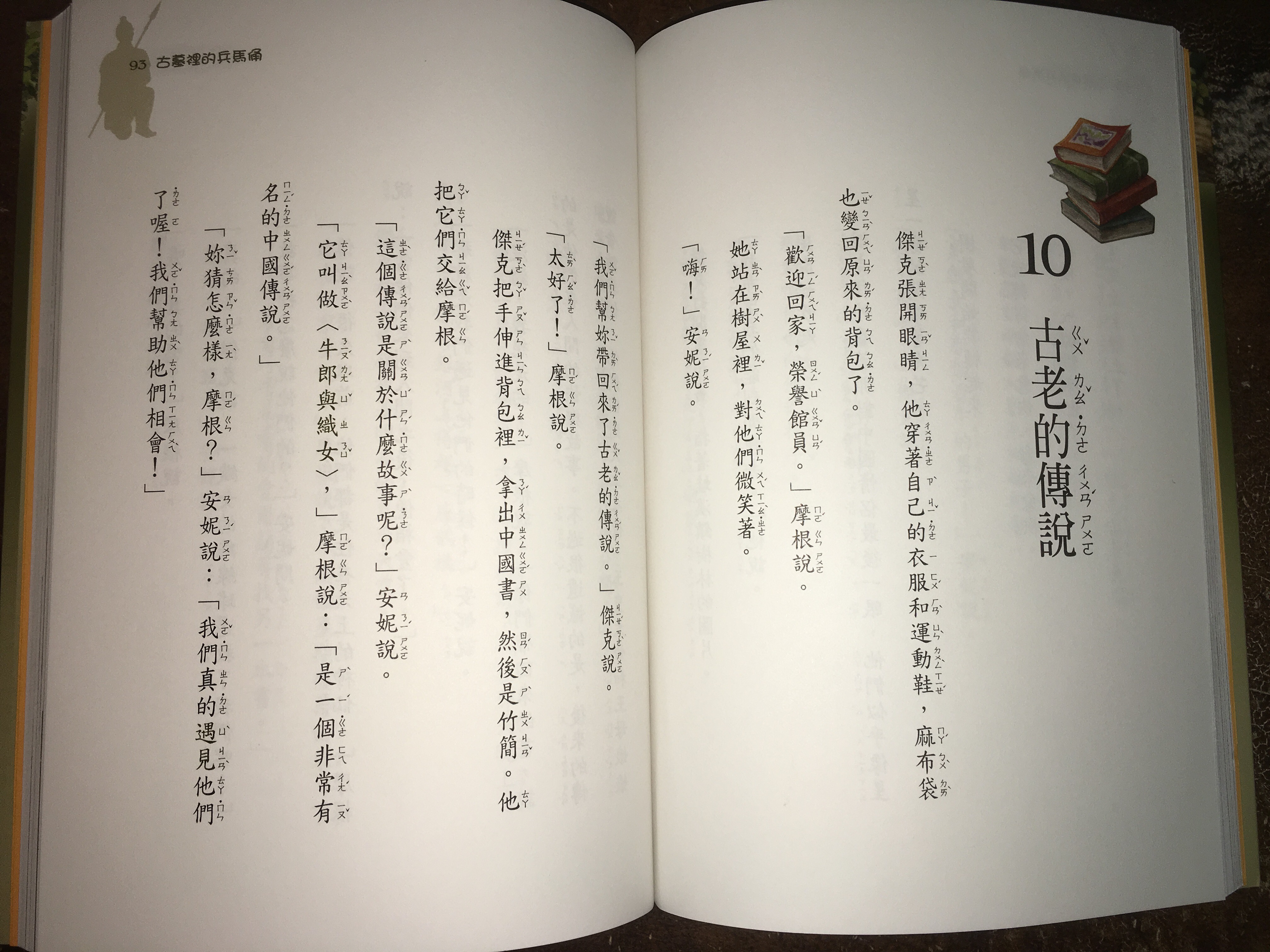
 Raising bilingual and biliterate children in Chinese and English