Learning Chinese: allocation of resources

It is fantastic that many people are interested in all things Chinese.  That is all too important for our country to continue to thrive in this world.  One of the things I ultimately would like to understand better is whether having children residing in the US without at least one Chinese speaking parent to learn Chinese is a wise way to allocate resources for the child, family, community, and country at large.

As a 1.5 generation immigrant from Taiwan and parent of two daughters who have learned Chinese better than the vast majority of heritage children, I am very much cognizant of missed opportunities and sacrifices needed for my children to learn Chinese well, while trying to do so without affecting pursuit of English proficiency, other subjects/knowledge, and other skill set too much.  I view Chinese language as one of their major extracurricular pursuits, which certainly displace other pursuits to variable degrees.  To have them learn Chinese well, my entire family has had to allocate much time, effort, and money for more than a decade so far.  It is fitting for me to say that, unless under unusual circumstances, if a family hasn’t paid, contributed, or “sacrificed” dearly in one way or another in order for their children to learn Chinese, the child has not learned Chinese well enough.  Of course, there are always exceptions, particularly families with exceptional circumstances (such as living in China for a few years) or the resource to employ additional enrichment practices and activities, like some of the non-heritage families in my FB group

Foreign Service Institute notes that it takes English speaking adults four times as long to learn Chinese, as compared to Spanish or other category 1 “foreign” language.  It takes motivated adults 2,200 hours of instruction time (plus ~ 1,800 hours of study) to reach ILR level 3 in Chinese, as compared to 600 hours of instruction for Spanish or other category 1 “foreign” languages.  I think it is fair to say that it takes children much longer.  Even though Spanish is far easier to learn and our countrymen have much more exposure to the Hispanic culture, the most common thing I hear American adults say about Spanish is: “Yeah, I took X number of years of Spanish in school, but…..”.  And adults who acquired only mediocre Chinese as children loose their limited proficiency very quickly without constant practice and exposure.  A friend of mine who is a high school Chinese teacher once commented that her non-heritage students lamented that they could only get a Chinese AP score of 2 despite years of Chinese classes and hours of hard work.  Imagine what they would have scored if they took up Spanish or French instead.

With the huge spike in Chinese immigration over the past 10-15 years or so, with no end in sight, and a projected 14% “Asian” population by 2065, with sizable percentage being of Chinese heritage, there are and will be many 1.25/1.5/1.75 generation Chinese immigrant adults who can fill employment positions that require solid bilingual/bicultural skill or even those requiring just ILR level 2 proficiency.  Will “Chinese” be the new “Spanish”, to a lesser degree of course, with plenty of native or near native bilingual speakers who can readily fill the corresponding positions, except it is four times as difficult to learn?

As the cognitive benefit of bilingualism (including global mindset) can be obtained much more readily by learning easier and no less consequential languages, do you think that it is a wise allocation of resources (children, family, community) for children of families without at least one Chinese speaking parent to learn Chinese, under the usual circumstances?


Updates on “Mind the gap”

As I have indicated before in a prior POST, it is important to have a stronger foundation in Chinese than English early on, before the age of ~ 8.

“One important aspect of achieving early high level competency in Chinese (by ~8 years of age) is that the parents likely have to forgo high level English competency early on.  Compared to Chinese, English is so easy to learn in the ELE that surrounds us, that children will instinctively favor speaking English and reading English books, unless they have much stronger Chinese listening/speaking/reading proficiency.  Therefore, the parents have to create a English-Chinese proficiency differential in favor of Chinese early on, for which I have coined the term “open the gap”.  Toward the end of this phase, it is important that the children can enjoy the CLE through multimedia AND reading.  The inability to read a variety of Chinese books that the children are interested in by around the end of third grade can often deal a critical blow to the children’s interest in the CLE.  (And this is one major benefit of learning phonetics, either zhuyin or pinyin.)  However, around the end of third grade, it is important to start catching up in English proficiency, given that the transition from learning-to-read to reading-to-learn takes center stage in subject classes +/- annual standardized testing.  I call this phase, “close the gap”.  It often takes at least a couple of years (~3 years for my elder daughter) to close the gap to achieve native level English proficiency, matched for age and intellect.  That period of time can be nerve-racking for parents, and probably intolerable by parents without decent command of English and/or decent understanding of English pedagogy.  I think it can be critical that one of the parents have decent English proficiency, so that the parents are willing to “open the gap” in the beginning and then know how and when to “close the gap”.  If neither parents has decent English proficiency, such as when both parents are adult immigrants and neither had learned English reasonably well, they may not be comfortable with this aggressive approach to learning Chinese for their children.  On the other hand, if the child is gifted and the parents can establish a good CLE, it is possible that the child can learn both languages reasonably well early on at the same time.  Regardless of the circumstance, it still takes lots of work for the child to learn Chinese reasonably well (IRL level 3 and above) and English very well (native level) by early teens and lots of patience and work too (plus frustration!) for the parents.  Luckily, parents of this generation can take comfort in the experience of tens of thousands of youth immigrants who immigrated to the US in the 1980s and 1990s around their tween years and had been able to catch up in their English while retaining much of their Chinese.  “

To put things in perspective, my elder dd “Charlotte” was able to read Chinese youth short stories and then young adult novels WITHOUT phonetics starting at ~ 10.5 years old.  She was capable and able to truly enjoy reading English youth/young adult novels starting ~ 10-10.5 years old, using the Harry Potter series as the reference point (Lexile rank 880-1030, mostly ~ 900 or grade 5-6 reading level).  She was in 5th grade when both mile stones were reached.  [Previously, her English was so terrible by the middle of third grade (sigh, by my design – CLE, yes) and her Chinese was not good enough still, that I pulled her out of school, along with her younger sister in kindergarten, to homeschool them for ~ 20 months. ]

Moving forward a few years, my younger dd “Georgia”, was able to read Chinese young adult novels without phonetics at ~ 9.5 years old (see POST), about a full year before Charlotte was able to do so.  Based on their relative progress in Chinese acquisition, I was pretty confident several years ago that Georgia would reach that milestone at an earlier age and she did.

After homeschooling them, we let Georgia skip a grade unto third grade upon their return to your typical all English private school, since there is no good public gifted program in our small, relatively rural, town.  I knew that we will have to work on “closing the gap” in English along the way.  Georgia was able to do relatively well but did show sign of deficiency in areas where English proficiency is important.  We continued our CLE at home but did spend extra time to work with her on English, trying to “close the gap”.  I have to say that the last three years have been trying, as the instruction (English, of course) shifts more and more from “learning to read” to “reading to learn”.  It was our hope that Georgia would start to catch up in English in 5th grade, like her sister, though she would be one year younger than her sister at the same grade (9 instead of 10).

Well, that didn’t happen.  Using the Harry Potter series as a reference point once again, it was not till this week that Georgia, who just started middle school, is capable and able to truly enjoy reading the novels.  She is now engrossed in reading the series in earnest, on her own time.  She is right in the 10-10.5 years age range at this point, just like her elder sister was three years earlier.  This comes as a relief for us, especially since the second chapter of her sixth grade’s World History textbook is very dense, discussing some fundamentals concepts, such as trade, globalization, business cycle, supply/demand curves, before moving unto the easier story-telling portion of of the textbook.  The entire textbook, to no surprise, assumes competent 6th grade English proficiency.  It is definitely NOT “learning to read”.  So, it is a BIG relief that Georgia finally starts to “get it” and should “close the gap” in the coming 2 years.  This whole scenario would have not been as “acute”, had we not allowed her to skip a grade, since she would have an extra year of cushioning.  It seems that Georgia applied her “intellect deferential” to Chinese (1 year ahead of Charlotte), and not so much English (similar to Charlotte).

Both my daughters’ experiences mirror those of tens of thousands of youth immigrant like myself (1.5 generation) and many of you in our initial struggle to learn English.  It is infrequent to see such “ordeal” in heritage children born and raised here.  In the unintentional and “natural” scenario that such occurs, those children were probably raised in ethnic enclaves in one way or another.  What I had designed was to create such an “artificial ethnic enclave” through heavy doses of CLE + “accelerated” Chinese language instruction early on, such that my daughters kind of grew up as 1.5 generation youth immigrant instead of as 2.5 generation, despite being born and raised here.  Given no prior published “success” stories to guide me, that was what I figure would take to get them to achieve ~ ILR level 3.5-4 Chinese proficiency and native level English proficiency, matched for age and intellect.

Is it doable?  Yes……, even in relatively rural eastern North Carolina, but the family have to have the resources, knowledge, and grit to pull it off.  But it sure is tough and not for the faint of heart.  As I had mentioned in prior post, I knew it would be tough.  But I was wrong.  It was tougher than I had ever imagined.  (But, it depends on your expectation, of course.)

*********************

Lastly, a couple of corollary, observation, and comment:

  1.  It shouldn’t be a surprise that it is next to impossible for any Chinese immersion school in the US to conduct subject instruction (namely, science and social studies) competently in Chinese by 6th grade level.  The demand for Chinese language proficiency is simply way too high.  Just look at the English textbook and imagine the same book in Chinese!  Also, even upper elementary math word problem would be too difficult for many.
  2. Based on my daughters’ intellect (observed and tested), they should have been able to enjoy reading the first few Harry Potter novels by or during third grade (~ 8 years of age) at the latest, had they been effectively monolingual  in English.  Instead, it took them till 10 years of age to do so.  That occurred by design, namely through years of heavy doses of CLE.  Those two year gap was the “price” we had to pay.  Had I shifted and accelerated their English learning pace, I would have increased the risk of them not being able to read Chinese young adult novels early enough, thus not achieving my initial goal.
Social inclusion

Food for thought and discussion:

I hope this is not too much of a touchy subject.

It is natural that people of similar background befriend each other.  

For children of Chinese heritage who pretty much speak English all day long (which would be the majority), I think (I may be wrong) it is often the case that many, if not the majority, of their close friends are of other heritage, Asian, or minority children, particularly if they live in areas with good percentage of such ethnic/racial groups.  

For heritage children with parents like us trying so hard to raise our children to learn Chinese well, do you think that prolonged heavy exposure to CLE (Chinese Language Ecosystem) and diligent Chinese instruction into the teens can lead to decreased social inclusion in groups formed by members of majority ethnic/racial group, namely Caucasian, who do not share such upbringing and ecosystem?   Not to mention that many of us probably want our children to do well in various academic and extracurricular activities, with their own time commitment.  (I suppose sports can bring some of the kids together, particularly boys.)  I am not suggesting that there is a preferred choice of association.

In my prior blog entry, based on informal survey of fellow parents, I noted that a child need to spend a minimum of 2/3 of the waking hours in CLE between the age of 4 to ~ 8 or so to achieve a ILR level three or above in Chinese proficiency (listening, speaking, and reading).  Please note that full time English only school takes up about 25% of the waking hours averaged over the entire year (180 days of school).

What are your experiences so far?   I would love to hear thoughts from our non-heritage parents as well!  Thank you in advance!

劉倚帆 (Yvonne Liu)

A FB member brought this young lady to my attention today.  I did some research and noted the following:

Yvonne Liu was born in 1989 at New York City to famed Taiwanese author 劉墉.

Her brother is 16 years senior and moved with the family from Taiwan to the US at the age of 8.  He attended Stuyvesant and then Harvard and is an author and radio host in Taiwan.

Yvonne is skilled in ice skating, piano, violin, and math (Olympiad highest individual score at school), graduated high school as valedictorian, and attended Columbia, majoring in music and economics.   She later worked in China as a manager for Warner Bros. Entertainment and currently attends Wharton for MBA.  It seems her Chinese is pretty decent.  According to her father, she previously translated two books from Chinese to English.  Her father took her on trips abroad for opportunities to speak Chinese.  You can click on mark 9:00 in the video below to listen to Yvonne speak back in 2008, when she was 17.   I believe high IQ, a parent well studied in Chinese literature who taught her Chinese, a sibling who is a native speaker (though he was likely mostly away when she was growing up due to their age difference), growing up in NYC, and strong connections to the motherland are key to her Chinese proficiency.  With the limited information from my research, I would rate her overall Chinese to be ILR level 3-3.5 by 18.  I know another young woman with similar background who achieved ~ ILR level 3-3.5 Chinese proficiency under the tutelage of her mother, who is a Chinese author and was a private school Chinese teacher.

Click on mark 9:00.

Below is section of an article from China, converted to traditional Chinese:

在劉墉看來,從小到大一直品學兼優的女兒最為欠缺的就是社會的歷練,為此他決定在將要到來的2005年暑假期間帶女兒進行一次特別的中國之行。

特意把女兒帶到自己簽名售書現場的劉墉這次並沒有像往常那樣談他的作品,而是把女兒劉倚帆先介紹給了大家,並要女兒現場先為大家演奏一首樂曲。

劉墉還是第一次在自己的簽售現場以這種方式向公眾介紹自己的女兒,劉墉把這次大陸之行當作了對女兒進行的一次生動的社會實踐教育,他隨時隨地的指點女兒出色的去完成這次課程。

在劉墉的作品中,有很多是寫給他女兒的,對於自己寵愛有加的女兒,劉墉以細膩的筆觸為女兒深入淺出的講解指點生活中方方面面的內容,大到為人處事的智慧、小到坐立行走的姿勢,甚至穿衣打扮,事無鉅細,點點滴滴間傾注了一位父親對女兒的全部情感。

在《跨一步就成功》這本劉墉特別寫給女兒的書裡,他寫到:為了使你成為大家閨秀,以後恐怕我們得多帶你參加一些應酬。如果能表現的大方脫俗,也能給人大家閨秀的感覺。

劉老師你們家小帆平時在家裡化裝嗎,以前化裝都是爸爸給畫,都是我畫,您親自畫嗎,對親自畫還跪在地上畫,每一次都是跪在地上畫。

二八的佳人巧梳妝,她就要上台,左右顧盼一笑,心中嘭嘭跳,二八的佳人

隨時隨地的編一些小曲兒逗女兒開心是劉墉的拿手好戲,在女兒馬上就要上場錄製電視節目前,劉墉更是想著法子讓女兒放輕鬆。

帶著女兒不斷的參與各種社會活動的劉墉時刻要求女兒以一種輕鬆平常的心態去面對公眾。劉墉常常對女兒說越是將要面對不平常的情況,越應該讓自己的心保持在平靜的狀態,這樣才能去從容的應對。

記得前不久,你曾經怨我們不是英語家庭,所以你的英文詞彙不如洋孩子多的時候,我怎麼說嗎?

我說正因為我們在美國是這樣的弱勢,就更要把握中國人的優勢。

什麼是中國人的優勢?

那當然是中華文化!

當一年前劉倚帆第一次來到中國大陸的時候,劉墉帶她去的第一個地方就是長城。他要女兒切身的感受中華文化的厚重精深。

和許多已經不太會講中文的華裔的後代不同,美國生美國長的劉倚帆中文一直說的非常的好,而這,得益於劉墉一直堅持對她進行的嚴格的中文教育

你覺得我中華文化比你當地的文化強的多,那你會堅持讓你孩子學,如果你到那裡惟恐你的孩子講的英文,不像是美國人,惟恐你的孩子的笑聲不像是西方人的話,那恐怕你就會比較放鬆,儘管你口頭說你要好好學中文,但你平常所顯露的崇揚的那種心態你的孩子就知道中文是不重要的

從她小的時候,我就用中國文字,象形文字啊,象形指示會意形聲的方式來教他,像是早上這個旦我說太陽地平線多簡單,上下地平線的上頭,地平線的下頭馬上就會了,用畫畫的方式,甚至用演戲的方式,像我教她背唐詩的話我常常是把那個詩用演戲的方式演,每一段用演戲,她想不起來了,我就作動作給她她就想起來

雖然劉倚帆在劉墉別出心裁的教導下從中文中得到了很多快樂,中文也一直學的很不錯,但是在美國劉倚帆卻並沒有太多使用中文的機會。如何使女兒學以致用,這又成了劉墉考慮的頭等大事。

由於劉墉只能利用女兒短暫的假期帶女兒到中國內地等講中文的地方來,所以他盡量利用每一次面對公眾的機會讓女兒主動去講話。

Q & A

Q: 想請問 xxxxx 和 其他有類似背景的媽媽,小時候花了很多功夫學好中文,會不會因為中文的優勢,而在大學選系時考量語文類為主修呢?有時我也會想, 如果孩子的天生專長不是語文類的話, 要不要花那麼多時間學習語文呢? 還是要把心力放在他的專長上? 畢竟 孩子越大 時間越有限,怎麼分配是難題。Oliver Tu, 請問你有思考過這個問題嗎? 謝謝!


A: 這些問題我都有思考過,也在我這裡的英文部落格分享過。

小孩子  在美國學好中文跟其學其他專長不太一樣。不同之處就是帶小孩的家長(父或母)會中文對要學好中文的小孩是極重要的,不像學習其他的專長(比如鋼琴),父母不會,影響較少。所以如中文沒傳承好到下一代,就差不多是斷了,除非後代有再搬去說中文的國度ㄧ段時間。

學中文在整體上是會有一點點的優勢,對也要看他的專長的領域和居住的環境。比如,我在北卡算鄉下的城市裡行醫,中文對我在職業上一點都沒有幫助,反而以前學的ㄧ些西文用處較大。當然,如你所言,也要考慮機會成本,為了學好中文而沒學到的其他專長。如果要大學前中文學到還不錯的水準(能看金庸小說,基本的報紙,大概頂多國ㄧ程度?),以我的估計,大約三分之二的中文教學需在國ㄧ前就完成。所以,機會成本大致上是其他的才藝,而不至於長期影響學業上的成就。比如,如果小孩數理有天份,不至於因學好中文而埋沒了其天份,頂多是不能去Carnegie Mellon Hall 表演鋼琴 (or something like that)。

所以,我習慣問其他家長,你希望你的小孩子在20歲到30歲時,中文好,還是鋼琴好,希望以如此的問題來幫助家長思考。答案就要看每位家長的優先選擇,無對錯之言。我們兩位小留學生夫妻是學“傳統”的樂器,也就是鋼琴或小提琴。這樣的美國人生,我們都走過,也跟大部分人ㄧ樣,填完大學申請書後,樂器就少碰了。以現今的的學習及成長競爭環境而言,栽下如此龐大的投資來學ㄧ手的好鋼琴或小提琴,在算進機會成本之後,不見得比較划算。與其我們的美國女兒花如此多的時間來學這些樂器,我覺得他們把中文學好比較重要。所以我們讓他們學吉他,較好學多,唱歌表演也可用上,是比較社交型的樂器,也會有較不同的人生體驗 。

以我的長期觀察及調查,如此學好中文的華裔小孩(沒幾個….),在國中前,百分之66到75%的時間是在中文的小環境長大,大致上家長和小孩的生活圈是其他第一代的家庭,但也要注重中文教學。當然,在如此環境下長大的小孩,也只有少數人會成功,這就要看父母的優先了。(180天的~8AM – 3PM美語學校只佔總共時間的~25%。)

其實,中文本身沒大家說的這麼難學,成千萬的亞洲小孩都學的好,是以大部分小孩的天份都能學的來,是接觸時間的問題而已。要學好中文在“直接“或”正式”教學上的時間是還可以接受的,在國中前,大約是ㄧ天ㄧ個小時,以後就可減少許多,因為基礎已經建立好了(應當有讀倪匡或瓊瑤的程度)。然而,國中前的難處是在周遭都是美語的大環境中,長期創造中文的小環境(Chinese Language Ecosystem or CLE),來啟發孩子學中文的興趣及意願,加上培養中文交談和閱讀的習慣。而要創造和與孩子浸在中文的小環境,就要花不少的心思和投資,才是此追求的難處,令“天下”父母親怯步。

希望以上有完整回答妳的問題。


Chinese Accelerated Reader

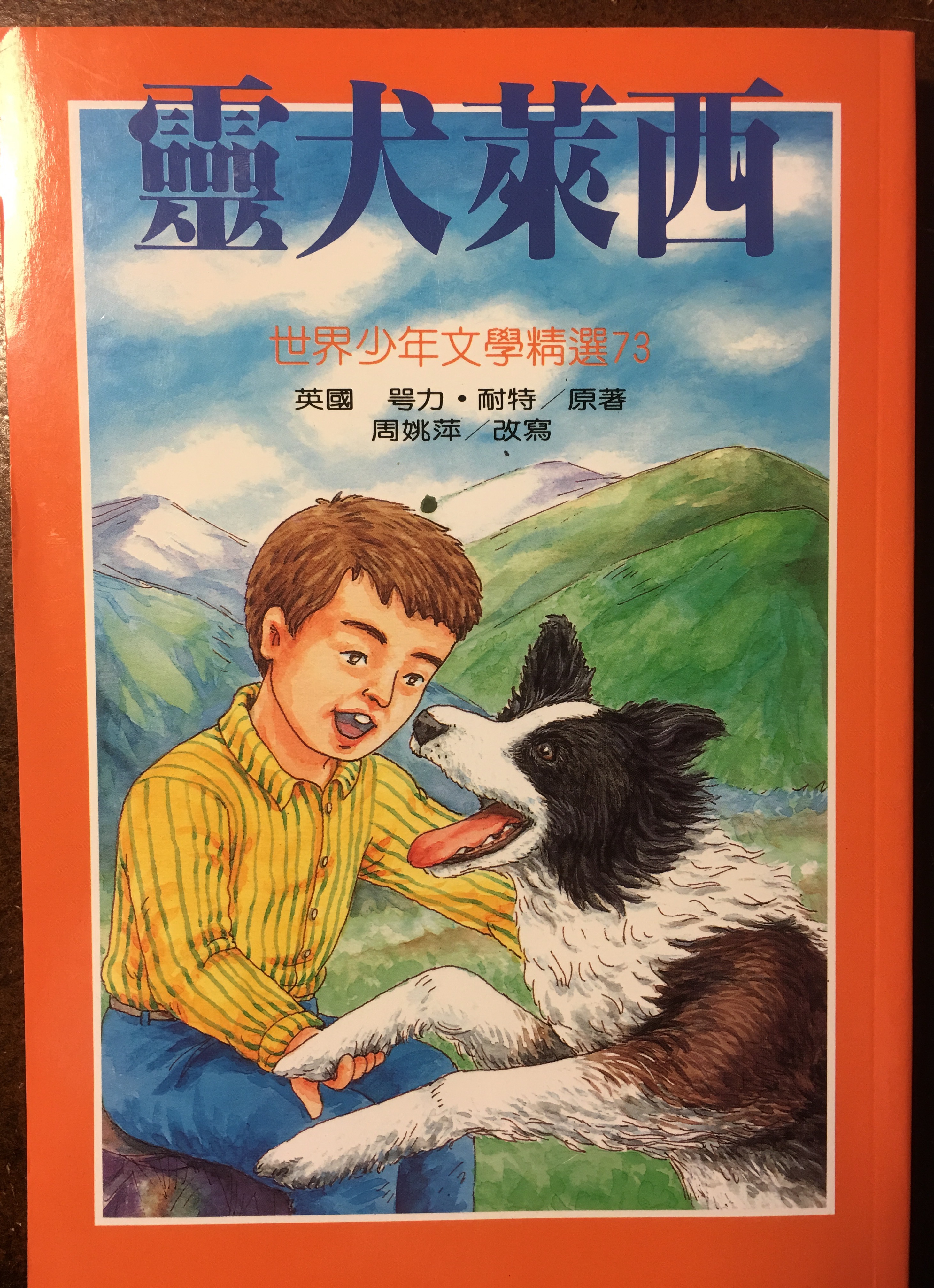
Thanks to Guavarama, who organized group book purchase from Taiwan, we recently received the book collection from  東方出版社‘s 世界少年文學精選.  This is a collection of 119 classic books of the western world, rewritten in traditional Chinese specifically for children (probably abridged in some way), with zhuyin assistance, with renowned titles such as Romeo and Juliet, Secret Garden, Moby Dick, Lassie Come-Home, The Adventures of Tom Sawyer, The Three Musketeers, and the likes.  This series has been around for 20+ years and is intended for 8-9 year old children in Taiwan.

My now 10 year old younger dd, “Georgia” has read the first three and is now almost finished reading Lassie.  It takes her about 2-3 hours to read each book and will probably take me 1.5 to 2 hours to do the same.  It would be great if I have the time to read these books myself so that I can ask her appropriate questions to check her comprehension.  Yes, I can read the Chinese excerpts from Wikipedia or similar website but it will still take me some time to.

It dawns upon me that it would be great if there is Accelerated Reader type of questions for these books.  There are pros and cons to these books.

Pros:

  1. Western classic stories.  These will not go out of style in the foreseeable future.  Our American born children are familiar with many of these stories, which makes Scaffold Reading Experience (SRE) easier.
  2. These books have zhuyin, which makes it much easier to read.  I am not concerned about children relying only on zhuyin to read.  When the children reads more and more while continuing to take Chinese lessons, they will rely in zhuyin less and less.  In my experience, when the child can read ~ 800 characters a minutes with zhuyin on the side, s/he can read books of the same level without zhuyin at about half of the speed.
  3. There are a wide variety of books in this series, suitable for readers of different maturity levels.  Some are more for elementary school students while others are suitable for teenagers.  Some of the English version of these books in unabridged version are mandatory readings for middle school and high school students.

Cons:

  1.  It is not available in simplified characters, much less with pinyin.
  2. There are far fewer usage of classic Chinese expressions and idioms, as these are western literature.  Chinese classic stories, even abridged versions written for children, are great for those.  So, I do encourage children to read those as well.


With these in mind, I decide to explore commissioning Jessica, a free lance writer in Taiwan whom I had worked with on other projects, to create authentic Chinese questions banks (not translated from unabridged English edition) for some of these books.  At this stage, these questions would simply assess whether the reader has basic understanding of the plot.

At this point, Jessica borrowed the books from the public library and came up with three sample questions for “Lassie Come-Home” or “名犬萊西”.  To come up with 15 questions for this book, she quoted me ~ US$50.  She wrote three sample questions for met at his point.


靈犬萊西

1.  書中的主角萊西是屬於哪一種狗?

a) 狼犬

b) 牧羊犬

c) 貴賓狗

d) 牛頭犬

*Ans: page 13

2.  書中的老公爵等了多久採買到了萊西?

a) ㄧ年又三個月

b) 兩年

c) 三年

d) 三年半

*Ans: page 29

3.  萊西第二次逃回的家時,是誰把他帶回老公爵的家?

a) 漢斯

b) 山姆

c) 喬

d) 山姆和喬

Ans: page 48

I think it would be great if the community of traditional Chinese learners and their families can help fund such a project.  I think weekend Chinese schools would be very interested in such a project as well.  I can then look into putting these questions online.  With a proper FREE website, students to create their own account and the computer will score the questions for them.  We can look into creating similarly authentic question banks for abridged version of Chinese classics and easier translated works such as the Magic Tree House series.  These won’t be outdated either.  Who knows, we can also put up questions for 金庸‘s kunfu novels, which my elder dd, almost 13, is reading.  There are some online questions already, such as these two links: A & B.

Do you think this is a worthy project to fund?

Addendum:  I think this can be very helpful for weekend Chinese school students.  One way to minimize cost is to get interested native level immigrant parents and teachers (who are likely also parents) nearby to help out with question generation.  A number of parents in my FB group, many in California, an I have the same set of books.  We can approach nearby weekend Chinese schools to see if there are parents and teachers who would be interested in each borrowing a few books from us and then generating 15 questions for each book.  Divide and conquer.  The whole set can be done in no time.  Interested Chinese schools can then just buy a set or two of these books for the school library and students can check the books out.

Chinese-English biliteracy: the narrow road

第二,三代的華裔小孩要中英語雙語和“雙文”實在是件艱難的事。如果要大學前中文學到還不錯的水準(能看金庸小說,基本的報紙,大概頂多國ㄧ程度?),以我的估計,大約三分之二的中文教學需在國ㄧ前就完成。先注重中文,再來補英文 ,至於多寡就依人而定。當然,英文落後會影響其他學科,但孩子小時,可以拉的回來。

大女兒在三年級時英文是爛的要命,中文也還得加強,所以就在家自學~ㄧ年半,兩項都大有進步,後來就轉回私立學校。這幾年學基測驗(TerraNova),英文從88百分位(5年級)升到去年的95百分位(六年級)和今年的98百分位(7年級),而其他科目也逐漸升到今年的96-98百分位。總之,她有照預期的在中學時漸漸拉上來,而在中文方面也在看金庸小說了(今天又自己再次看瓊瑤的“六個夢”),也在學業及才藝社交方面大致上都是自理,令我們做父母親的欣慰。

至於小女小三歲又跳ㄧ年級念,挑戰更大,尚在努力當中,還在有時會讓我抓狂的過渡期,(我)還需要忍耐ㄧ兩年!

這些都讓我想起馬太福音7:13-14: ”你們要進窄門.因為引到滅亡、那門是寬的、路是大的、進去的人也多。引到永生、那門是窄的、路是小的、找著的人也少。“

這條路有夠難走。

Achieving Chinese-English bilingualism and biliteracy for a child is no easy task.  Well, let me rephrase that: achieving Chinese-English bilingualism and biliteracy for a child is a very difficult task.  I am reminded that just about every single day.

As I have written in previous posts, in my opinion, one just about have to let English slide in the beginning.  To achieve Chinese ILR level reading level ~ 4 by early teens, I estimates that roughly 2/3 of the Chinese instructions and learning have to be front loaded and compressed into pre-middle school years.  Then, around the time when Chinese reading proficiency is at least minimally proficient (at least able to read comics for leisure), start catching up in English, with the goal of reaching age/intelligence matched level sometimes in middle school.  If the child can read Harry Potter or the likes in English before they can read interesting books in Chinese, that can be recipe for trouble, in terms of Chinese literacy, as the child can quickly loose interest in Chinese reading.

On the flip side, the lack of English proficiency can affect other subjects, which may put tremendous stress on the children and the parents, particularly when the children attends all-English school, like mine.  As the children were still young at that age, I was not overly concerned about the other subjects, though math word problems, which have a strong language component, can present quite a challenge.  It had been my hope that with catching up in English and adequate math practice, the child will outgrow that phase.

As mentioned in prior posts, the English proficiency of my elder daughter “Charlotte” was terrible when she was attending third grade in the small private school she attended (more “limited” public school options in more rural NC).  Though it was so by my design, I just about couldn’t take it then, particularly when I supervised her homework time.  And her Chinese was still not strong enough.  So, I pulled both of my daughters out mid-school year and have them homeschooled for about 20 months.  Charlotte’s Chinese and English both improved much through homeschooling.  She then returned to another private school starting 5th grade.

Like most students in NC, Charlotte is required to take a national standardized achievement test every year, which is TerraNova for her current school.  Her language composite score was 88 percentile (5th grade), 95 percentile (6th grade), and 98 percentile (7th grade) over the past three years.  I did work with her some more on her English up till ~ first half of her 6th grade, after which I determined that “she’s got it!” and let her fly solo.  In short, she has caught up during middle school, as we had hoped for.  We are pleased with her progress and hope that she keeps up her good work.

As for my younger “Georgia”, she have had the dual challenges of learning Chinese well and skipping a grade.  I think she would have qualified to be enrolled in HAG public school program if we had one.  Since we live in a small and relatively rural county, we don’t have one such program; so, I resorted to letting her skip a grade when she returned to private school.  Her English has improved quite a bit over the past two and half years but remains a challenge in 5th grade, which is starting to affect her other subjects more.  As she will be starting middle school in the fall, we will be working on her English over the summer, upon her return from 6 weeks of stay in Taiwan, where she will attend a month of public school in the 4th grade.  It will be back to homeschool mode for much of the rest of the summer.  I think this will be her last summer of attending school in Taiwan for the month of June.  Next summer, I think she will just spend a couple of weeks in Taiwan having fun, instead of attending a month of 5th grade.  The other time, we will devote to catching up in English to the level of her grade peers, who are at times two years older than she is.  We hope that  she doesn’t have too much on her plate.

All of these just reminds me of Mathew 7:13: “Enter through the narrow gate. For wide is the gate and broad is the road that leads to destruction, and many enter through it.  But small is the gate and narrow the road that leads to life, and only a few find it.”  

Limitation of Chinese pedagogy in anglophone society

A few recent posts and comments got me thinking once again about the limitation of the typical Chinese pedagogy in anglophone society, whether it be weekend Chinese school, home instruction, or immersion school.  I, of course, always have to refer to Foreign Service Institutes’s list of the approximate time one needs to learn a specific language as an English speaker to reach ILR level 3 in speaking and reading.  Basically, Mandarin Chinese takes about 4 times as long to learn as category 1 languages, which include Spanish, French, and Italian.

This, along with other observations of mine, generates a number of implications for children born/raised in anglophone society:

  1. An immersion school model that works for Spanish/French will not work well for Chinese, given the 4x factor.  Anglophone elementary students typically have good proficiency in basic English language by the end of third grade such that they can learn non-ELA (English Language Art) subjects such as fourth grade science and social studies without stumbling on the English language itself.  Though I am no expert in immersion school models, I doubt that current Chinese immersion school models can achieve equivalent result for Chinese for non-heritage students.  My suspicion is that, by the end of elementary or middle school in Chinese immersion schools, the most that almost all non-heritage students can achieve is ILR level 1 or 2, matched for age.  Heritage students who have substantial exposure to and enrichment in Chinese at home or non-heritage students who receive much additional Chinese enrichment often through the sheer will of their parents are a different story, of course.  For these groups, they are in effect going for the 4x factor.
  2. To achieve a minimum of ILR level 3 in Chinese speaking and reading proficiency, one has to devote substantial effort early on due to the 4x factor, particularly between the age of 4 to 8.  By the end of third grade, the basic foundation would need to be laid already, achieving ~ end of second grade reading level in Taiwan or ~ middle of second grade level in mainland China.  I would say that about 50% of the work would need to have been done by the end of third grade.  Otherwise, it is difficult to proceed without lowering in ILR proficiency level.  The main difficulty past third grade is, of course, the inability of the child to read interesting Chinese books without at least ILR level 3 reading proficiency (matched for age, of course).  There are few who can overcome the magic of Harry Potter and the likes.  And you all know the rest of the story.
  3. Weekend Chinese school curriculum are generally evenly distributed from K to 12th grade and are not FRONT LOADED in the first few years.  Therefore, students strictly following such curriculum will typically achieve only ILR level 1 and 2 proficiency in reading by the end of 12th grade.

But, it is certainly not the end of the world.  There are a number of ways to reach higher Chinese proficiency in college and beyond, for those who elect to do so.  Not to mention other skills one hopefully acquire by not devoting such time and effort in Chinese.  For me, the question that I pose to other parents is pretty simple: “Do you prefer that your child have good Chinese proficiency vs. good piano or violin proficiency (or other skill sets you may prefer) by 20-30 years old?”  There is certainly no right answer, just your answer.

Homeschooling vs. regular schooling for our girls

We homeschooled our girls for ~ 20 months about 4 years ago and they have been back in a private school for about two and half years now.  Homeschooling was more “efficient” for us in terms of their academic and Chinese instruction/learning, freeing up more time for extracurricular activities and more Chinese, but their new private school certainly make up much of it in terms of their art/music program and the built-in socialization interactions.  My 12 year old “Charlotte” greatly enjoy her group guitar lessons and art class at school (she loves to draw), which took extra effort for us the parents to get into our homeschool program.

Though there are many ways for homeschoolers to build-in some friendly “competition” with other students in terms of the various aspects of their education, I do like the built-in version with regular schooling.   It sure saves me lots of time and serves as good additional motivator for my daughters.

With regular schooling, I have to say that we get a kick out of talking to “Charlotte” about her clubs, tennis meets, extracurricular activities, and interaction with school/class mates and friends, with all their teenage drama, friendship trouble and make-ups, boys, school dance, the eye rolls (!), and no, no boyfriends for them till….college (so says my better half).  After major adjustment during her first year in their new private school, it seems all the drama these days are with the other kids, at least that’s what she has led us to believe , LOL.  And we get to enjoy listening to tales of growing pains – daily, and mostly in Chinese of course (I work with her on that).  Now, we could probably pull some of these off, if we had continued to homeschool, but it would have taken much work on my part.

We are so glad that my girls are growing not just academically, but also emotionally, maturing into the great women they will one day become.  They will need the resilience, perseverance, and emotional intelligence to thrive in their brave new world, to adapt to, bend, or break whatever bamboo and glass ceilings that will surely try to come their way.

Granted, homeschooling provides a different experience but can be similarly enriching.  It just takes more time than I am able to devote these days.  I do say, however, that homeschooling never left us.  Their regular schooling is simply part of their education, as education is so much more than schooling.  And we do the rest at or through home!  (This calls for a story on the side.  On getting a phone text notice of school snow day, I told the girls, “There is good news and bad news.  The bad news is that, there is no school.  The good news is, there is homeschool!”  They went ballistic and said that it should the other way around!   LOL)

Finally, here is “Charlotte”, with her art-work in progress.

image