神鵰俠侶 (Return of the Condor Heroes)

前些日我分享了「支架式教學」 。十二歲的大女兒過去兩個月有空時讀自製有注音的「神雕俠侶」版本,我也請家教在週末時聽及帶女兒朗讀,解釋不解之處及用詞。如此看完我印出的半集”注音版”後(此金庸小說共有四集),大女兒已經可以看普通的版本了,不像當初的吃力。現在她回到以往看中文版的英文翻譯小說的速度,以ㄧ分鐘ㄧ面(~500個國字)讀「神雕俠侶」,中文功力更上ㄧ層樓了~!(但還沒到「玉女心經」級,更不用說「九陰真經」級!LOL)

Back in January, I shared with you the Scaffold Reading Experience.  In the past two months, 12 year old “Charlotte” read the famed kungfu novel “Return of the Condor Heroes” using the self -made version with zhuyin on the side, when she’s got time.  On the weekend, Charlotte read it aloud to her Chinese tutor, who guided her reading with explanation when needed.  The novel has four volumes and I printed out half a volume with zhuyin on the side.  After reading such half volume, Charlotte now is able to read the regular novel with much more ease than at the very beginning.  She can now read this kungfu novel at the speed of one page per minute, or ~ 500 characters a minute.  This is the same speed at which she previously read the Chinese edition of translated English novels.  It looks like her Chinese proficiency is up a notch now.

木蘭辭

前幾天有網友建議女兒們可學朗讀木蘭辭,所以就找ㄧ版本來念念看。以下是小女兒念前半段。

A FB group member suggested that we can try Mulan Verse.  Since many heritage kids are familiar with the story, we gave it a shot.  Here is “Georgia” reading the first half on the second day.


木蘭辭

唧唧複唧唧,木蘭當戶織。聞機杼聲,唯聞女歎息。問女何所思?問女何所憶?

女亦無所思,女亦無所憶。昨夜見軍,可汗大點兵,軍書十二卷卷有爺名。

阿爺無大兒,木蘭無兄,願市鞍馬,從此替爺征。

東市買駿馬,西市買鞍韉,南市買轡頭,北市買長鞭。

朝辭爺娘去,暮宿黃河邊。聞爺娘喚女聲,但聞黃河流水鳴濺濺。

旦辭黃河去,暮至黑山頭。聞爺娘喚女聲,但聞燕山胡聲啾啾。

萬里赴戎機,關山度若飛。朔氣傳金柝,寒光照鐵衣。將軍百戰死,壯士十年歸。

歸來見天,天坐明堂。策勳十二,賞賜百千強。可汗問所欲,“木蘭不用尚書郎,願借明駝千里足,送兒故鄉。”

爺娘聞女來,出郭相扶。阿姊聞妹來,當戶理紅妝。小弟聞姊來,磨刀霍霍向豬羊。

開我東閣門,坐我西閣床。脫我戰時袍,我舊時。當窗理雲鬢,對鏡貼花黃。

出門看夥伴,夥伴皆驚惶。同行十二年,知木蘭是女郎。

“雄兔腳撲朔,雌兔眼迷離;兩兔地走,安能辨我是雄雌!”

塞翁失馬

Prosody appreciation through a short classical Chinese piece of writing.  This is the story behind the idiom, 塞翁失馬, 焉知非(禍)福.

小時候,父親教過我幾篇文言文的文章,讓我有最基本的認識。雖自己小五後就全家移民,現為人父,也用ㄧ短篇成語的文言文典故來教女兒們朗讀的技巧。

原文

近塞上之人,有善術者,馬無故亡而入胡,人皆吊之。其父曰:『此何遽不福乎?』居月,其馬將駿馬而歸,人皆賀之。其父曰:『此何遽不禍乎?』家富良 馬,其子好騎,墮而折其髀,人皆吊之。其父曰:『此何遽不福乎?』

居一年,胡人大入塞,丁壯者引弦而戰,近塞之人,死者十九,此獨以跛之故,父相保。 故福之禍,禍之福,化可極,深可測也。」

English explanation from Wikitionary

“It can be difficult to foresee the twists and turns which compel misfortune to beget fortune, and vice versa. There once was a old man, skilled in divination, who lived close to the frontier (with his son). One of his horses accidentally strayed into the lands of the Xiongnu, so everyone consoled him. (But) the old man said, “Why should I hastily (conclude) that this is not fortunate?” After several months, the horse came back from the land of the Xiongnu, accompanied by another stallion, so everyone congratulated him. (But) the father said, “Why should I hastily (conclude) that this can not be unfortunate?”. One day (the son) fell off the stallion, and broke his leg, so everyone consoled (the father). (But) the father said, “Why should I hastily (conclude) that this is not fortunate?”

One year later, the Xiongnu invaded the frontier, and all able-bodied men took up arms and went to war. Of the men from the frontier (who volunteered), nine out of ten men perished (from the fighting). It was only because of (the son’s) broken leg, that the father and son were spared (this tragedy). Therefore misfortune begets fortune, and fortune begets misfortune. This goes on without end, and its depths can not be measured. (Wiktionary translation)”


Definition:

(1)塞上:長城一帶。塞,邊塞。

(2)善術者:精通術的人。善:擅長。術,術,推測人事吉凶禍福的法術,如看,占卜等。

(3)故:緣故。亡:逃跑。

(4)吊:對其不幸表示安慰。

(5)何遽:怎麼就,表示反問。

(6)居:過了。在表示時間的詞語前面,指經過的時間。

(7)將:帶領。

(8)為:是。

(9)富:很多。

(10)好:喜歡。

(11)墮:掉下來。

(11)髀:大腿。

(12)大:大舉。

(13)引弦:拿起弓箭去打仗。引弦,拉開弓弦。。

(14)近塞:靠近長城邊境。

(15)十九:十分之九;指絕大部分。

(16)跛:名詞,指腿腳不好,走路失去平衡,一拐一拐的;瘸腿。

(17)保:保全。

楊貴妃

It took 9 year old “Georgia” a few days of reading practice to get this right.  The text is likely at least junior high level.


楊貴妃 (The story of Imperial Consort Yang, one of the four beauties of ancient China.)

楊玉環於公元719年出生於蜀州(今四川)。十六歲時,楊氏嫁給唐玄宗的兒子李瑁。不久,楊氏生下兩個兒子。李瑁的母親武惠妃是玄宗最寵愛的妃子。公元737年武惠妃逝世,玄宗 悼惜良久,當時後宮數千,無可意者。有人進言楊氏「姿質天挺」,於是唐玄宗將楊氏召入後宮之中。其後,以為玄宗母親祈福的  名義,敕書楊氏出家為女道士。道號「太真」。

745年, 李瑁新娶韋氏。一個月後,楊氏還俗,受冊封為貴妃。此時楊氏二十七歲,而唐玄宗已六十一歲了。這時楊氏反成為李瑁的庶母。楊貴妃備受寵幸,其宗族因此繁盛,很多人都獲授官爵或賞賜。其堂兄楊國忠為人好賭,但也封官入朝、把持朝政。唐玄宗此後愈加沉溺於酒色,政治更加腐敗。

755年,節度使安祿山以清君側,反楊國忠為名, 起兵叛亂,兵鋒直指長安。次年,唐玄宗帶著楊貴妃楊國忠逃往蜀中(今成都), 途經馬嵬驛時,禁軍士兵一致要求處死楊國忠楊貴妃,亂刀殺死了楊國忠唐玄宗言: 楊國忠亂朝當誅,然貴妃無罪,本欲赦免,無奈禁軍士兵皆認為貴妃乃 禍國紅顏,安史之亂乃因貴妃而起,不誅難慰軍心、繼續包圍皇帝。唐玄宗為求自保,不得已之下,賜死了楊貴妃。最終楊貴妃被賜白綾一條,縊死在佛堂的梨樹下,時年  三十八歲。

清平調

Three years ago, “Charlotte” studied and memorized 清平調 when she was 9.  I put together the following for her to read.  Now, it’s “Georgia”‘s turn, who is also nine now.


清平調

李白

雲想衣裳花想容

春風拂檻露華濃

若非群玉山頭見

會向瑤臺月下逢


一枝紅艷露凝香

雲雨巫山枉斷腸

借問漢宮誰得似

可憐飛燕倚新粧


名花傾國兩相歡

常得君王帶笑看

解釋春風無限恨

沈香亭北倚闌干


楊貴妃 (The story of Imperial Consort Yang, one of the four beauties of ancient China.)

楊玉環於公元719年出生於蜀州(今四川)。十六歲時,楊氏嫁給唐玄宗的兒子李瑁。不久,楊氏生下兩個兒子。李瑁的母親武惠妃是玄宗最寵愛的妃子。公元737年武惠妃逝世,玄宗 悼惜良久,當時後宮數千,無可意者。有人進言楊氏「姿質天挺」,於是唐玄宗將楊氏召入後宮之中。其後,以為玄宗母親祈福的  名義,敕書楊氏出家為女道士。道號「太真」。

745年, 李瑁新娶韋氏。一個月後,楊氏還俗,受冊封為貴妃。此時楊氏二十七歲,而唐玄宗已六十一歲了。這時楊氏反成為李瑁的庶母。楊貴妃備受寵幸,其宗族因此繁盛,很多人都獲授官爵或賞賜。其堂兄楊國忠為人好賭,但也封官入朝、把持朝政。唐玄宗此後愈加沉溺於酒色,政治更加腐敗。

755年,節度使安祿山以清君側,反楊國忠為名, 起兵叛亂,兵鋒直指長安。次年,唐玄宗帶著楊貴妃楊國忠逃往蜀中(今成都), 途經馬嵬驛時,禁軍士兵一致要求處死楊國忠楊貴妃,亂刀殺死了楊國忠唐玄宗言: 楊國忠亂朝當誅,然貴妃無罪,本欲赦免,無奈禁軍士兵皆認為貴妃乃 禍國紅顏,安史之亂乃因貴妃而起,不誅難慰軍心、繼續包圍皇帝。唐玄宗為求自保,不得已之下,賜死了楊貴妃。最終楊貴妃被賜白綾一條,縊死在佛堂的梨樹下,時年  三十八歲。


The poem explained:

清平調

李白

雲想衣裳花想容

春風拂檻露華濃

若非群玉山頭見

會向瑤臺月下逢

檻:欄杆。華:花。

群玉山:神話傳說中西王母所居的仙山。瑤台:傳說在昆侖山,是西王母居住的宮殿。

解釋:楊貴妃是一個十分美麗的女子,我們看見了彩雲,便想著她華麗的衣裳;我們看見了花朵,便想著她姣好的容貌。在春風吹拂著窗櫺,露水濃厚的時候,她的姿態更是嬌滴滴了。如果不是在西王母所住的群玉山看見她,那未必在瑤臺的月光下面,纔能和她相逢呢?


一枝紅艷露凝香

雲雨巫山枉斷腸

借問漢宮誰得似

可憐飛燕倚新粧

紅豔:指牡丹

雲雨巫山:指楚王與巫山神女約會事。
飛燕:漢成帝寵妃趙飛燕。

解釋:一枝繁盛而艷麗的芍藥花,因為沾了露水,更加凝結著香氣;但是楚襄王夢見巫山的神女和他幽會,畢竟是件空虛的事情,徒然使他想斷肝腸罷了。至於我所說的芍藥花,在漢宮裡有誰能夠和她相像呢?只有一個剛才梳妝而令人可愛的趙飛燕了。


名花傾國兩相歡

常得君王帶笑看

解釋春風無限恨

沈香亭北倚闌干

傾國:喻美色驚人。

解釋:消散

沉香:亭名,沉香木所築。

解釋:嬌豔的名花,和蓋世無雙的美貌的貴妃,大家並論起來,這兩件事情,都有歡喜的情緒;所以 常常得到 君王帶著笑臉去觀看,君王要解除春風裡送來的許多煩惱,就和貴妃在沉香亭的北面,把身體靠著欄干,賞玩御花園裡的景色。


這三首詩第一首以牡丹比貴妃,歌詠她的美豔;第二首運用典故,以帶露之花比貴妃得寵;第三首兼詠貴妃和牡丹。這組詩構思精巧,詠花詠人,緊密結合。當時,玄宗和貴妃對詩人的才華都很讚賞。據說後來高力士以詩中用了飛燕、襄王的典故進讒,說是有譏諷貴妃與玄宗之意,使他們頓生疑忌,終至把李白放出京城

Update: A little slowing down

Work is taking up more of my time this year, as one physician left the practice at the end of last year; so, I have not had the time to post recently.  “Charlotte” and “Georgia” continue to work on their Chinese but have a little less time recently.

Charlotte, who is 12 and in 7th grade, has had projects after projects at school since school resumed after Christmas break, which have kept her very busy.  When she has some time to spare, she continues to study Chinese using 6th grade first semester self-study textbook guide from Taiwan but is making slow progress.  I continue to set aside time for her to read the kungfu novel 神雕俠侶 and she continues to reads parts of it aloud with the Chinese tutor on the weekend.

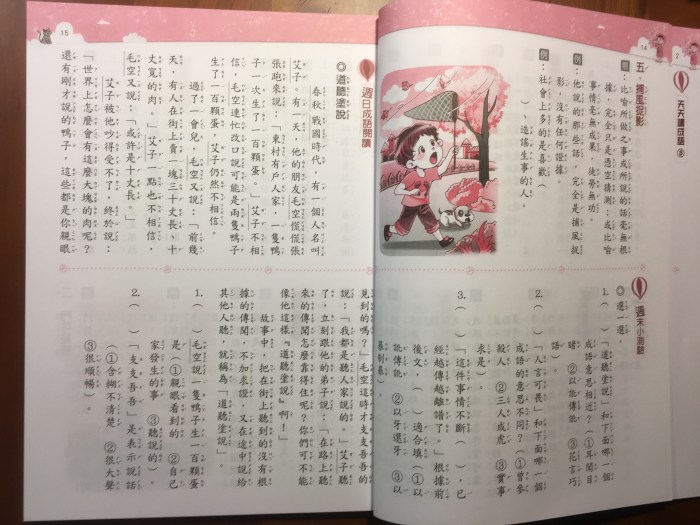
We recently got a fresh supply of workbook from Taiwan, which go over idioms and expressions.  So, we are trying those too.  Here is one such workbook:
image

At home, Charlotte continues to speak Chinese with me about 90% of the time and with her younger sister Georgia about 80% of the time.  Just tonight, she gave a brief impromptu Power Point presentation in Chinese to the rest of the family on why I should drive them to the bus stop in the morning 5 minutes earlier.  She typed up the slides in English but presented it in Chinese; so, my wife and I are happy about it.  The thing is, I converse with the children in Chinese almost exclusively, except for certain expressions we find it more natural to say in English; so it actually would feel rather unnatural if Charlotte presents such topic to us in English.

As for “Georgia”, who is 9 and in 5th grade (skipped a grade), she has been spending a little more time on her English and math recently, trying to catch up to her peers who are mostly at least one and half year older than she is.  Math word problem she has a little more problem with as usual.  In any case, she is still studying Chinese using 4th grade first semester self-study textbook guide, reading Chinese cultural stories with the tutor on the weekend, and is learning more idioms through the new workbooks as well.

I set aside time for her to read novels/chapter books as well.  She is reading the Chinese edition of the abridged version of Animal Farm at this point.  This series is certainly much more challenging for her than the last few books of Magic Tree House, as the selections, though abridged, are of famous English literary works.  So, the theme and the story lines are likely more suitable for middle schoolers.

Lastly, both of them learn to write one classic Chinese poem every 2 weeks or so this year.