First grade book list (traditional)

This is supposedly a list from the Ministry of Eduction in Taiwan at some point in time (probably ~ 2011)

教育部訂出了適合一年級閱讀的130本書單


教育部推廣國小一年級新生閱讀計畫書單
NO 索書號 書名 出版社 備註
1 J 308.9/1151 長頸鹿量身高 格林文化事業
2 J 312/3373 總共是100 上誼
3 J 388.89/8430 鳥巢大追蹤-50種鳥巢內幕大公開 遠流
4 J 428.83/9257 第一次環島旅行 天衛
5 J 813/2002 老鼠阿修的夢 上誼 共2冊
6 J 813/2002 好朋友 上誼 共2冊
7 J 815.9/1025 小毛上學去 臺灣麥克
8 J 815.9/1025 小毛惹麻煩 臺灣麥克
9 J 815.9/2002 田鼠阿佛 上誼
10 J 815.9/2103 Guji Guji (中英雙語書+CD) 信誼 共3冊
11 J 815.9/3134 你看起來很好吃 三之三
12 J 859.4/4432 誰偷了便當 和英
13 J 859.4/4704 一片披薩一塊錢 格林 共3冊
14 J 859.4/7511 一個不能沒有禮物的日子 和英文化出版社 共3冊
15 J 859.4/7511 小魚散步 (中英雙語書+CD) 信誼 共8冊
16 J 859.6/0040 想要不一樣 遠流
17 J 859.6/0051 真假小珍珠 天下雜誌
18 J 859.6/0051 我有友情要出租 國語日報
19 J 859.6/1066 安的種子 上誼 共2冊
20 J 859.6/1262 葉子鳥 信誼基金出版社
21 J 859.6/1491 小羊睡不著 三之三文化 共2冊
22 J 859.6/2100 小石獅 和英文化出版社 共2冊
23 J 859.6/2100 京劇貓.長坂坡 和英文化出版社
24 J 859.6/2112 查理與蘿拉—我絕對絕對不吃番茄 經典傳訊 共3冊
25 J 859.6/2614 颱風那一天 格林
26 J 859.6/2840 媽媽,外面有陽光 和英文化出版社 共2冊
27 J 859.6/3197 小保學畫畫 小魯 共4冊
28 J 859.6/4012 子兒,吐吐 信誼 共5冊
29 J 859.6/4012 23 信誼
30 J 859.6/4210 百步蛇的新娘 信誼
31 J 859.6/4410 吃六頓晚餐的貓 和英 共4冊
32 J 859.6/4422 癩蝦蟆與變色龍 信誼
33 J 859.6/4430 小圓圓跟小方方 國語日報
34 J 859.6/4430-3 我有兩條腿 國語日報
35 J 859.6/4430-6 影子和我 國語日報
36 J 859.6/4432 彈琴給你聽 和英
37 J 859.6/4432 山上的水 和英
38 J 859.6/4437 達達出發了 新手父母 共2冊
39 J 859.6/4438 謊話蟲 信誼
40 J 859.6/4442 換換書 天下雜誌
41 J 859.6/4442 大家一起拔蘿蔔 和英
42 J 859.6/4704 大象男孩與機器女孩 格林 共2冊
43 J 859.6/5703 爸爸與我 國語日報 共2冊
44 J 859.6/7170 受傷的天使 信誼
45 J 859.6/7244 劍獅出巡 信誼
46 J 859.6/7511 沒毛雞 和英文化出版社 共2冊
47 J 859.6/7511 熊爸爸去另一個城市工作 和英
48 J 859.6/7513 20個銅板 格林
49 J 859.6/7554 蘿拉的藏寶圖 國語日報
50 J 859.6/8735 風中的小米田 遠流
51 J 859.7/4494 明天就出發 信誼基金出版社 共2冊
52 J 859.8/0443 戰役(藝術與人文繪本01) 米奇巴克
53 J 859.9/1231 一日遊 信誼
54 J 859.9/4134 啊!腳變長了! 信誼
55 J 859.9/4437 強強那麼長 新手父母
56 J 859.9/7230 阿志的餅 青林國際出版
57 J 859.9/7244 請問一下,踩得到底嗎? 信誼 共3冊
58 J 859.9/7734 米米說不(附中英雙語CD) 和英文化
59 J 859.9/8076 媽媽買綠豆(20週年紀念版) 信誼基金出版社 共2冊
60 J 859/0042 春神跳舞的森林 格林 共3冊
61 J 859/8966 奧力佛是個娘娘腔 三之三文化事業 共2冊
62 J 861.59/0498 全部都是我的寶貝 大穎文化
63 J 861.59/2271 雞蛋哥哥 小魯
64 J 861.59/2403 阿松爺爺的柿子樹 道聲
65 J 861.59/2423 愛思考的青蛙 上誼文化 共8冊
66 J 861.59/2524 100層樓的家 小魯
67 J 861.59/2832 鼴鼠寶寶挖地道 小魯文化
68 J 861.59/3134 三隻餓狼想吃雞 三之三 共2冊
69 J 861.59/3134 我是霸王龍 小魯
70 J 861.59/3134 你永遠是我的寶貝 小魯文化
71 J 861.59/3134 今天運氣怎麼這麼好 小魯 共4冊
72 J 861.59/3251 隔壁的貍貓 小魯
73 J 861.59/3448 種子笑哈哈 遠流
74 J 861.59/3571 我討厭媽媽…… 三之三 共2冊
75 J 861.59/3821 長大後想變成什麼呢? 小魯
76 J 861.59/4024 我是獨特的 小魯 共2冊
77 J 861.59/4093 平底鍋爺爺 台灣東方出版社 共3冊
78 J 861.59/4621 大頭妹 小魯 共2冊
79 J 861.59/4642 怕浪費的奶奶 三之三
80 J 861.59/4734 快要來不及了 小魯文化
81 J 861.59/5235 牙齒掉了 小魯 共2冊
82 J 861.59/5244 古利和古拉 信誼
83 J 861.59/6221 飛啊!蝗蟲 青林
84 J 861.59/7104 春天來了,貓頭鷹阿姨 青林
85 J 861.59/7104 我的蠟筆 維京國際
86 J 861.59/7885 山田家的氣象報告 維京國際
87 J 861.59/9455 世界上最美麗的村子 小魯 共2冊
88 J 862.59/2644 白雲麵包 維京
89 J 872.59/1742 巫婆的孩子 維京國際
90 J 872.59/2123 我如何認識世界 三之三
91 J 872.59/2441 森林裡的小鹿 米奇巴克 共2冊
92 J 872.59/2630 會飛的抱抱 上誼 共3冊
93 J 872.59/2777 我是植物小保姆 遠流
94 J 872.59/7712 土撥鼠的禮物 和英文化出版社 共4冊
95 J 873.59/1711 永遠愛你 和英 共4冊
96 J 873.59/2112 照顧我們的地球 上誼
97 J 873.59/2310 姊姊好聰明喔! 遠流
98 J 873.59/2310 5隻小紅怪 遠流
99 J 873.59/4044 山丘上的石頭 道聲 共2冊
100 J 873.59/5047 聰明的波麗和大野狼 台灣東方出版社
101 J 873.59/6882 最厲害的妖怪 遠流
102 J 873.59/7067 石頭湯 小魯 共2冊
103 J 873.599/0024 小海螺和大鯨魚 維京國際
104 J 873/0042 南瓜湯 和英 共4冊
105 J 873/4431 天空為什麼是藍色的 和英 共3冊
106 J 874.57/3577 不睡覺的小孩 格林
107 J 874.59/1644 一個愛建築的男孩 三之三
108 J 874.59/1724 逛了一圈 維京 共2冊
109 J 874.59/2125 星月 和英 共4冊
110 J 874.59/4140 圖書館老鼠 小魯文化
111 J 874.59/4454 勇敢湯 小魯 共4冊
112 J 874.59/4474 因為爹地愛你! 小魯文化
113 J 874.59/5304 貪吃的狐狸 信誼
114 J 874.59/5771 早起的一天 和英 共3冊
115 J 875.59/0032 鱷魚和長頸鹿~搬過來 搬過去 三之三
116 J 875.59/4080 壞心情 小魯文化
117 J 875.59/4424 不要親我! 音樂向上
118 J 875.59/7832 不會寫字的獅子 米奇巴克
119 J 876.59/3744 你在開玩笑嗎? 米奇巴克
120 J 876.59/4440 走進生命花園 米奇巴克
121 J 876.59/7222 黑白村莊 和英文化出版社
122 J 876/9474 薩琪到底有沒有小雞雞 米奇巴克 共3冊
123 J 877.59/2160 無敵鐵媽媽 格林文化
124 J 877.59/2160 量身訂做的爸爸 青林
125 J 877.59/2630 我不想長大 格林文化
126 J 878.59/1738 多多的大麻煩 三之三
127 J 881.759/7173 奶奶慢慢忘記我了 奧林文化 共2冊
128 J 882.559/3422 誰最有勇氣? 和英文化出版社
129 J 882.559/3544 是狼還是羊 三之三
130 J 885.359/0010 大櫻桃的敵人 三之三

Story books list (traditional)

臺北市100年度兒童深耕閱讀親子閱讀闖關書單

A list according to this blog

Taipei City’s story book recommendation from 2011

臺北市100年度兒童深耕閱讀親子閱讀闖關書單
編號 類別 書名 作者 出版社
001 自我瞭解 恐怖的頭髮 傑洛德.羅斯 三之三文化
002 失敗了也沒關係 宮川比呂 東方
003 媽媽爸爸不住一起了 凱斯.史汀生 遠流
004 原來我這麼棒~自信 明水晶 三采文化
005 13歲的超能力 英格麗‧羅 小天下
006 鑑賞表現 黑鉛筆和紅鉛筆 穆罕默德.芮札.謝姆斯 飛寶國際
007 全世界最棒的房間 土井香彌 道聲
008 色彩之王馬諦斯-亨利‧馬諦斯的故事 羅倫斯.安荷特 維京國際
009 小天使失蹤了–美術館奇遇記 馬克思‧杜科 上誼
010 永不放棄的建築大師:安藤忠雄 周姚萍 小天下
011 勇於表達 然後呢,然後呢…… 谷川俊太郎 遠流出版
012 你不可以隨便摸我! 珊蒂.克雷文(Sandy Kleven) 大穎文化
013 春天在大肚山騎車 文米雅;圖林怡湘 青林
014 圓圓的傘 尹東才(윤동재 大穎文化
015 魔術師的大象 凱特‧狄卡密歐 東方
016 尊重關懷 熊爸爸去另一個城市工作 陳致元 和英文化
017 20個銅板 陳建祥 格林文化
018 躲貓貓大王 張曉玲/潘堅 信誼
019 天鵝絨兔子 酒井駒子 上誼
020 班上養了一頭牛 木村節子 小天下
021 溝通分享 別學我 曹俊彥 小魯
022 不不不,不是那樣!是這樣! 卡特琳.莎樂爾 遠流出版
023 西貢小子 張友漁 天下雜誌
024 易開罐夏天 周姚萍‧亞平等 國語日報
025 爸爸的未婚妻 今井恭子 新苗文化
026 文化學習 我吃拉麵的時候…… 長谷川義史 遠流出版
027 感謝這世界 艾莉絲.麥晶蒂 三之三文化
028 最後的巨人 法蘭斯瓦.普拉斯 時報出版
029 我也是臺灣人 李光福 小兵
030 我的阿富汗筆友-安德魯‧克萊門斯9 安德魯‧克萊門斯 遠流出版
031 主動探索 長頸鹿的信 岩佐惠 台灣東方出版社
032 這是祕密 約翰‧伯寧罕 上誼
033 送你一個名字 呂淑敏 天下雜誌
034 好心的大爺!幫幫忙! 蘿拉‧愛米‧舒麗茲 東方
035 不可思議的竹筍 松野正子 小魯
036 獨立思考 送你一顆蘋果 三枝寬子 東方
037 去買東西! 作、繪者:佐藤和貴子 天下雜誌股份有限公司
038 企鵝腳為什麼不結冰 《新科學家》週刊(New   Scientist)策劃 遠流
039 爺爺泡的茶 張曼娟策劃/孫梓評撰寫 天下雜誌股份有限公司
040 星期三戰爭 蓋瑞‧施密特 東方
041 國際瞭解 一個愛建築的男孩 安德麗雅.碧蒂 三之三文化
042 大木棉樹-亞馬遜雨林的故事 文圖/林妮.伽利 和英文化
043 夏綠蒂遊莫內花園 瓊安奈特/梅麗莎‧斯威特 典藏藝術家庭股份有限公司
044 一秒鐘的改變 郝廣才 格林文化
045 鄭明進與20個插畫家的秘密通訊 鄭明進 積木文化
046 解決問題 十兄弟 沙永玲、鄭明進 小魯
047 我的妹妹不可愛 濱田 桂子(浜田 桂子) 大穎文化
048 神奇樹屋39:深海大章魚 瑪麗‧波‧奧斯本 小天下
049 超級姊弟3:放假時的小插曲 茱蒂‧布倫 天下遠見
050 水上人家:香港生活故事選 霍玉英主編;高佩聰圖 聯經
051 創造力 奇妙的花園 彼得.布朗 小天下
052 用點心學校 林哲璋 小天下
053 畢卡索和綁馬尾的女孩-巴帕布羅.畢卡索的故事 羅倫斯.安荷特 維京國際
054 穿山甲的故事地圖 文:莊世瑩 圖:林怡萱 青林
055 奇幻聊齋-一杯茶換來的故事 岑澎維 國語日報
056 環境教育 10件事我做了,世界會更好 米蘭妮‧華許 青林
057 鴨子敲門 黃文輝 東方
058 美麗的紅毛港 朱秀芳\彭大維 青林
059 小田鼠的寶貝蛋 武鹿悅子;繪者:末崎茂樹 大穎文化
060 運河驚奇之旅 深井節子 阿爾發
061 性別教育 我有兩個家 瑪莉安‧德‧史梅特 小魯
062 有很多為什麼的書 瑪丁‧拉封/奧棠斯‧德‧夏朋雷斯 飛寶國際文化
063 野丫頭娜娜的秘密 窪島里歐 核心出版集團-東雨文化
064 別的國家都沒有 陳志勇 格林文化
065 改變世界的天才科學家們 黃仲煥、金弘栽 臺灣麥克
066 品格教育 下雨天 彼得.史比爾 上誼
067 誰要收養小貓 成行和加子 東方
068 誰是偷畫賊? 艾莉絲.布洛奇 小天下
069 媽祖回娘家 鄭宗弦 九歌
070 親愛的 幸佳慧 小天下
071 人權教育 我綁架了外公 克萊兒‧克雷孟特 天下遠見
072 快樂王子 王爾德 格林文化
073 超級姊弟2:學校裡的小驚奇 茱蒂‧布倫 小天下
074 畫框裡的貓‧出逃 殷健靈 聯合報
075 投資大師羅傑斯給寶貝女兒的十二封信 Jim Rogers 遠流
076 資訊教育 我如何認識世界 優利.修爾維滋 三之三文化
077 一起去看雲 湯米.狄波拉 天下雜誌
078 日本新幹線     高鐵出發囉 鎌田步 阿爾發
079 蘭德理校園報-安德魯‧克萊門斯5 安德魯‧克萊門斯 遠流
080 瘋狂科學俱樂部3-炸彈大開花 柏全德‧布林立 遠流出版
081 海洋教育 豐富的地球 本川達雄、渡邊賢一 小魯
082 我從哪裡來?要往哪裡去? 山本敏晴 天下雜誌
083 九分鐘 申惠恩文;伊蕊•克拉爾 聯經
084 積木之家 繪/加藤久仁生 文/平田研也 張老師文化
085 小海螺和大鯨魚 茱莉亞‧唐納森 維京國際
086 生涯教育 大櫻桃的敵人 徐素霞 三之三文化
087 我和蟋蟀一樣快 奧黛莉‧伍德 三之三文化
088 三隻小豬不一樣 克莉絲汀‧諾曼-菲樂蜜(Christine   Naumann-Villemin) 大穎文化
089 成績單 安德魯‧克萊門斯(Andrew   Clements) 遠流
090 狗狗旅館 露意絲‧鄧肯 小天下
091 家政教育 小熊我和你 安東尼布朗 格林文化
092 爸爸我愛你 莉拉‧普樂普 天下遠見
093 爺爺的有機麵包 申惠恩;高林麻里 聯經
094 最甜的無花果 克利斯‧凡‧艾斯柏格 維京國際
095 哥哥,我想你 丁蘭姬 新苗
096 生命教育 掉下來‧掉下來了 金‧紀歐 遠流
097 故事六十八 李家同 聯經出版公司
098 向夢想前進的女孩 文:劉清彥 圖:蔡達源 青林
099 重新飛起來! 巴布‧葛拉漢 格林文化
100 俠風長流:杏林子生命之歌 杏林子 九歌

書單:給6-10歲,看到文字就想逃的孩子

Recommended graded reader/book list (traditional character) from a magazine

書單:給6-10歲,看到文字就想逃的孩子

From 親子天下 2009-11

【6~10歲書單推薦】

●系列書:

閱讀123、DK知識讀本(天下雜誌)

故事摩天輪(東方)

我會讀(信誼)

神奇樹屋(小天下)

我的藝術探險營(青林)

魔法校車(遠流)

●橋梁書:

適合低年級

猴子的森林(和融)

黃色小水桶(東方)

我是火雞(天下雜誌)

外婆和奶奶(天下雜誌)

小熊(信誼)

給小熊的吻(信誼)

小熊貝魯與小蟲達達(小魯)

怪獸突突(小魯)

一年級鮮事多(作家)

二年級問題多(作家)

我是老大(米奇巴克)

薩琪想要一個小寶寶(米奇巴克)

大野狼肚子餓日記1(三采)

適合中低年級

我的肚子變白的原因(和融)

甜甜圈池塘(和融)

蝌蚪運動會(和融)

狐狸電話亭(和融)

平底鍋爺爺(東方)

【貓鼠奇兵】抓賊大作戰(格林)

【青蛙與蟾蜍】好朋友(信誼)

【青蛙與蟾蜍】好伙伴(信誼)

【青蛙與蟾蜍】快樂年年(信誼)

【青蛙與蟾蜍】快樂時光(信誼)

第一次去露營(信誼)

不不幼兒園(信誼)

【露露與菈菈】杯子蛋糕的魔力(東雨)

蚱蜢旅遊記(遠流)

貓頭鷹在家(遠流)

適合中年級

管家貓(東方)

貓計程車司機(東方)

冰箱裡的企鵝(東方)

愛挖耳朵的國王(東方)

最後的魔法(東方)

象什麼(天下雜誌)

小火龍棒球隊(天下雜誌)

我家有個花果菜園(天下雜誌)

【太空忍者豬豬丸】摺紙術大公開是也(天下雜誌)

奇奇鎮的怪事(小魯)

拉拉與我(小魯)

【札克擋案】我的祖父是貓(哈佛人)

【柯波大街系列】露西阿姨的廚房(哈佛人)

2年1班昆蟲博士(小天下)

2年3班漫畫高手(小天下)

三年級花樣多(作家)

四年級煩惱多(作家)

阿咪撿到一本書(民生報)

好忙好忙的動物醫院(維京國際)

適合中高年級

歡迎光臨海愛牛(天下雜誌)

【什麼都行魔女商店】討厭魔法的小魔女(東雨)

【香草魔女】魔女的第101號繼承人(東雨)

Georgia’s reading progression

I was organizing our digital photo album earlier today when I spotted a couple of videos of “Georgia” reading or speaking Chinese from ~ 3 years old to 8 years old.  I put those videos together with the more recent ones, to give fellow parents some idea as to the pace that she was learning Chinese, which may be instructive to fellow parents.  I hope this is helpful.

This is my sweet “Georgia” “reading” with our first au pair at 3 years old.  How quickly a child grows up!


Here is Georgia reading a story book at ~ 5 years and 10 months old:


Here is she reading first grade textbook at ~5 years and 11 months old:


Here is she reading a story book at 7 years and 3 months old, at which time she already started reading comics without zhuyin: 這時侯她已開始看沒注音的漫畫。


Here is she reading second grade textbook at ~ 8 years and 2 months old:


Here is a reading of Bambi storybook at ~ 8 years and 3 months:


Here is Georgia reading third grade first semester textbook at ~9 years and 6 months old, at which time she can read the Chinese edition of Magic Tree House at about 800-1,000 characters a minute.  About a month later, she read the Chinese edition of the first book of The Chronicle of Narnia without zhuyin.


This is Georgia reading third grade social study textbook this week at ~ 9 years and 8 months old:


Finally, here are some readings or recitation at ~ 9 years and 10 months old:


Originally published in 1-2016, revised 3-2016.


Flash cards

Many parents tried flash cards to teach Chinese reading.  I certainly did for my elder daughter “Charlotte” when she was ~3-4 years old, now 12, but not for my younger one, “Georgia”, now 9.  And many will continue to do so.

Regardless of the merit of flash card, I think there is a potentially interesting way to try flash card to “accelerate” Chinese reading for a few anxious parents, based on the work of Glenn Doman (1919-2013), founder of The Institutes of the Achievement of Human Potential outside of Philadelphia, and co-author of a series of “The Gentle Revolution” books, such as “How to Teach Your Child to Read”.  The flash card part of the Doman method, as it is called, is based on using BIG flash card to teach infants and toddlers to read, do math/arithmetic, recite knowledge, etc.  The institute also works to rehab “brain injured” children through pattern therapy, with criticism of effectiveness; but that’s a different story.

I had the pleasure of meeting Glenn Doman around 2003 in one of the courses the institute offers.  Here is one of his videos:

In terms of the Doman flash card method, it is best to start at 0-24 months old, the earlier the better.  Repetition and quickly (1 second or less) going over the cards are the name of the game.  As with all things, preparation often takes longer than the “instruction” itself.  Here is one non-offical website that points out the salient aspects of the method.   To modify the program to Chinese, I think parents can start with radicals, then character, words, and finally sentence (sequence of cards).

Do I think it’s an overkill?  Yes.  Do I think it is necessary?  Absolutely not.  Do I think it can work for its intended purpose of accelerating character, phrase, and sentence recognition through pattern recognition?  Yes.  Do I think it can make a great reader out of your child?  Yes, and no….  That will depend on the CLE, amount of reading practice, and the effort/priority you place from the time your child is ~ 4-12 years old.

I sure would like to see someone try.  It will certainly make a very interesting and instructive blog (+ business opportunity?).


神鵰俠侶 (Return of the Condor Heroes)

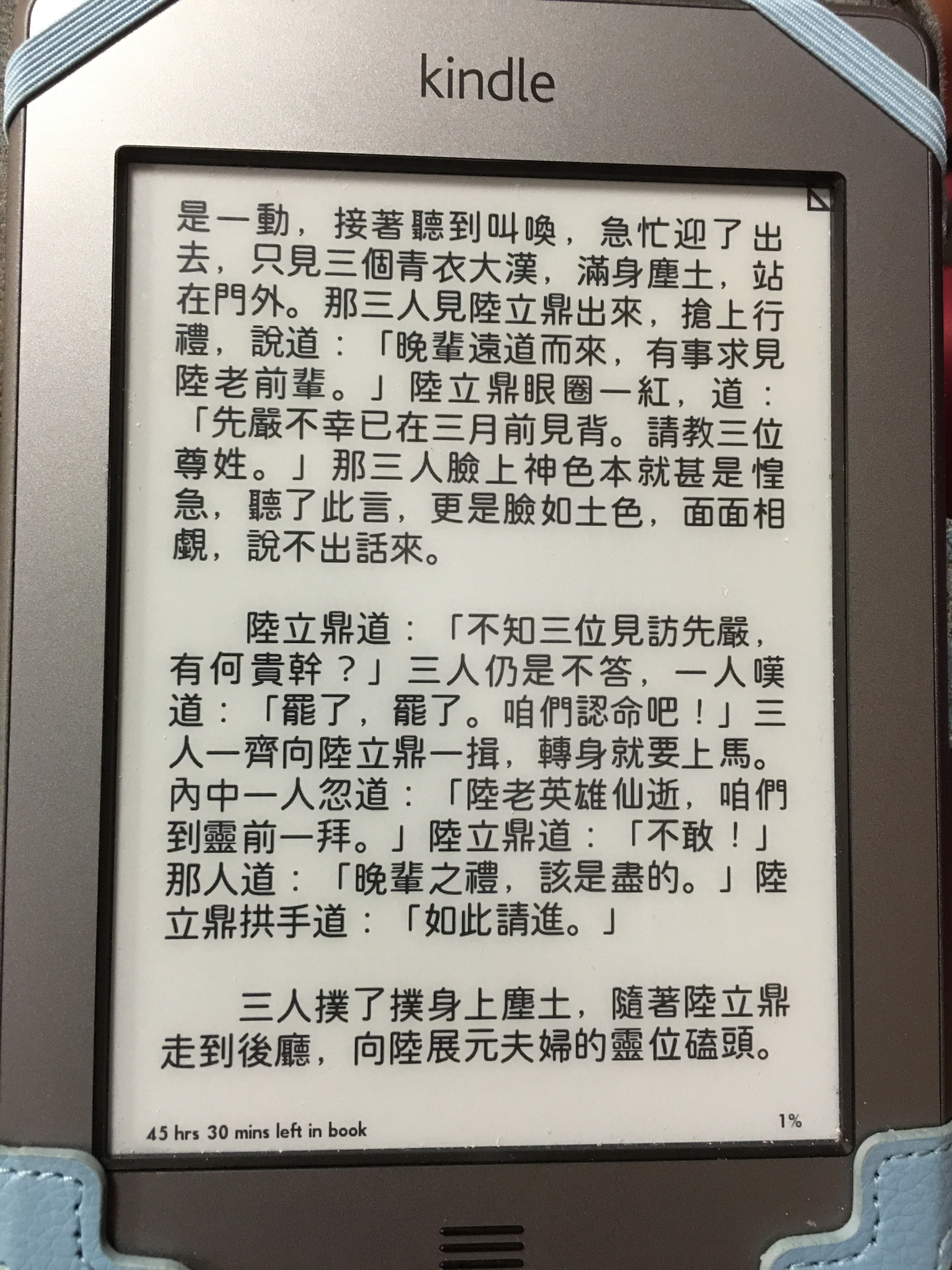
While waiting for our flight home after a fantastic vacation, I challenged 12 year old “Charlotte ” to read 金庸’s 神鵰俠侶 on the Kindle, the cartoon version of which she watched a few years ago.  (Otherwise, she can do math!  We have more than an hour to kill.)   However, the first chapter is slow, as it is just the opening, to introduce the character of 李莫愁.  In any case, besides a few questions every now and then, Charlotte seems to be able to read it.  There are some cultural background information that I do have to explain to her, such as why some people are referred to as “晚輩“, “前輩”, “賢弟”, “英雄“.  Of course, these terminologies are an integral part of the kung-fu literary world, and, along with other terminologies, expression, and customs, reflect aspects of the Chinese culture.


Here is the cartoon version for those interested:  神雕俠侶

Reading social studies textbook

We had 9 year old “Georgia” do social studies reading on our trip.  Though it is only a third grade textbook, it is a tough reading for her since there are many new words that we don’t use in our daily conversation here.  This is the second time she worked on it.  The first time was only for about 10 minutes with with explanation of the reading included.  The second time was on New Year’s Eve for about 30 minutes, yes, while on vacation…  For me, it is more important to practice reading the passages well than  to “cover the materials” and go through the whole textbook, as we don’t have a specific curriculum and timeline for our instructions. 


Reading to write (compose)

It was truly a pleasant surprise, that 12 year old “Charlotte” can compose in Chinese relatively well (by typing) despite having NOT written any Chinese since around 9 years old, except for character practice mainly.  It had been my strategy that extensive reading of Chinese textbooks and novels would greatly help her with composition, but to see the process in action and the whole thing coming to fruition was just a joy.

One parent noted that the story that Charlotte had composed in the last couple of days reads like a translated novel.  Well, there is a good reason for that.  She read quite a few Chinese edition of American novels, including The Selection series, Ender’s Game, Twilight series, and Starters.  She also read aloud with the Chinese tutor a couple of the Chinese edition of Arsene Lupin’s novels, commonly known as 亞森羅蘋 in Taiwan.

I think reading aloud is quite helpful for language learners.  There are many excellent youth novels with zhuyin from Taiwan, such as 亞森羅蘋 series.  I don’t know if there are as many youth novels with simplified characters and pinyin from mainland China.  Books like these serve well as bridge readers and for read alouds.  Here is what亞森羅蘋’s novels look like:


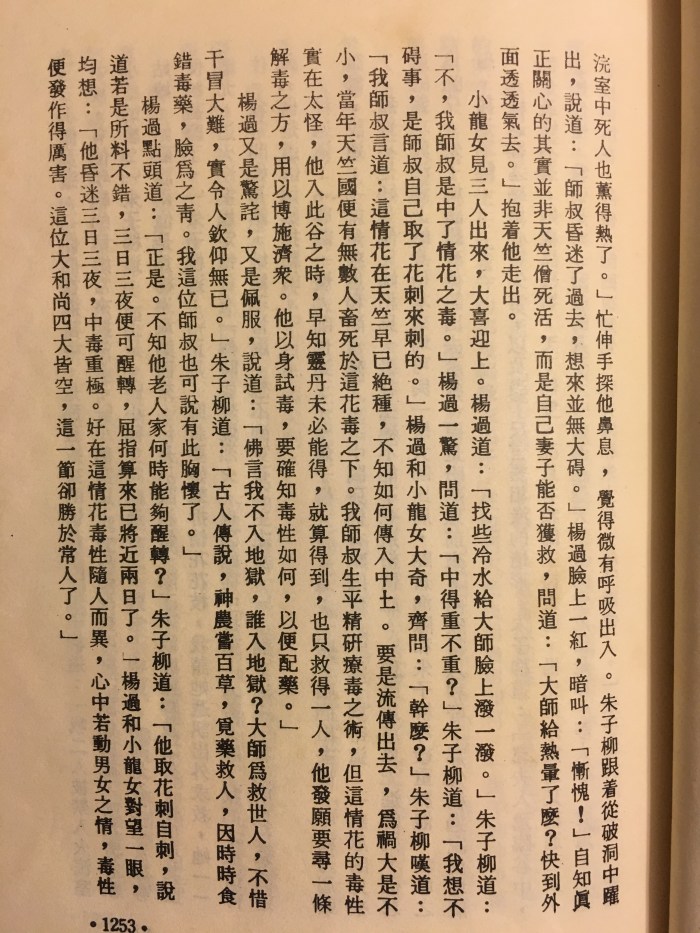
In any case, I think it is time that she reads some more original Chinese novels.  She did read a couple of 倪匡‘s 衛斯理 series before.  One of my goal is for them to be able to read 金庸’s kung-fu novels proficiently.  I thought that it may still be a couple of years out.  But, out of curiosity, I showed her a copy of 金庸‘s 神雕俠侶, whose story she is familiar through watching the cartoon version.  She seems to get the gist of the story.  Maybe I will have her read it aloud with the tutor’s assistance.  Who knows, she may be ready for it!

image

Chinese-Spanish-English immersion

A fellow parent’s child rearing experience points out an interesting concept on raising children to be trilingual in Chinese, Spanish (or other category 1 language), and English.  This probably applies best to Chinese speaking household where English is not used much.

  1. Have the child attend Spanish-English immersion school starting kindergarten or earlier.  There is a good chance English will start to be introduced around 2-3rd grade.  Spanish is easier to learn even compared to English, and the child can read chapter books fairly early in early elementary school.
  2. Do lots of Chinese homeschooling with CLE (Chinese language ecosystem) at home as discussed before.  Get reading level up quickly as described before.
  3. Minimal or no English at home.  Since the child has not formally learned English at school and does not get to speak English at home, he only gets a little of English exposure and won’t be as comfortable playing with and interacting with non-school individuals in English.  The goal is for the child to prefer Chinese outside of school.  At school, it is mainly Spanish.
  4. When English is introduced and taught more and more at school, the child can learn English fairly readily, due to its similarity with Spanish and with all the English ecosystem outside of school and home.  After a few years of learning, the child’s English may get close to that of monolingual kids.
  5. The overall “scheme” is to for the child to learn an easier (but closely related to English) minority language at school and a difficult minority language at home.  Then, add English, the community / majority language, at ~ third grade.  Of course, time constraint will, as always, be the main factor in determining the proficiency of the various languages.  There is still no getting around needing to cut back on other commitments if the child is to have equivalent proficiency in English and Chinese compared to other children (matched for age and intelligence) learning just English and Chinese but not Spanish.  But, when the other children start putting time into learning Spanish (or other category 1 language such as French) in middle school or high school, things can even out, with better Spanish accent to boot.

Reading/writing, subject/language

In our bilingual journey, I made two observations that are likely different from the commonly used pedagogy for Chinese immersion schools.  The following assumes that the goal is IRL level 5 (native level) for English and IRL level 3 or greater for Chinese by end of high school.  I appreciate any feedback.

1.  Reading and writing.  Get reading proficiency high first, so that the child can enjoy entertaining readings in Chinese around the time he develops stronger and stronger English reading.   Enjoying CLE (Chinese language ecosystem) in greater depth does not require writing but requires decent reading proficiency.  Since all these reading practices takes time, which is often the most precious resource, I recommend not spending nearly as much time doing writing early on.  Also, the reading part of the CLE would be mostly narrative readings.  When the child can read youth and/or young adult novels proficiently hopefully by/in middle school, start doing more expository readings and then start doing more writing and typing.  Composition is the typical “highest order” skill, used to narrate, explain, or persuade.  I would be more than happy if my children can compose decently well in Chinese by typing instead of writing everything out.  But of course, they need to know how to write basic characters and how to write any characters presented with the correct stroke order.

Don’t get bogged down with trying to learn much reading and writing at the same time and then end up with only IRL level 1-2 on both end due to lack of time.  Get reading proficiency high to IRL level 3-4 as soon as possible and then come back to work on writing.  One’s writing proficiency is almost never as good as one’s reading proficiency; so, getting reading proficiency high first.  Then, the child will have a much higher chance of writing Chinese using the correct Chinese syntax and expression, rather than “Chinglish”.

However, if the community ecosystem has a strong Chinese language presence (not saying it is dominant) with decent CLE built in and the overarching schooling assessment takes bilingual education into account, such as in Singapore, then simultaneous emphasis on reading and writing can work well.

2.  Subject language learning.  These are the more “technical” vocabulary and expression in different subjects, mainly science and social studies.  The child’s Chinese proficiency almost always lags behind his English proficiency, particularly past third-fourth grade.  Not to mention that annual standardized testing and assessment are mostly done in English.  So, it makes sense to learn these subjects using the more proficient language – English.  It’s much faster too, as the child won’t be bogged down by inadequate Chinese proficiency.  After a year or two, come back to do some reading of these subjects, in Chinese.  This second part is to learn the terminology in Chinese but not the subject itself, since the child already knows the subject in English.  In this fashion, we separate subject learning from Chinese language learning and use the English language ecosystem to our advantage.