7th grade Chinese Language Art

DD#2, 13, 8th grade now, is moving unto 7th grade Chinese Language Art textbook from Taiwan.  Her Chinese lessons now mainly consist of reading aloud to fluency Chinese Language Art textbooks and doing Chinese debate, besides watching 「如懿傳」(Ruyi’s Royal Love in the Palace).  This movie series sits nicely between the two series she previously watched,「後宮甄嬛傳」and 「延熙攻略」.

Here is the first chapter she is working on, which is chapter 2 of 康軒’s 7th grade second semester textbook.  I previously couldn’t acquire the first semester book.

下雨天,真好(琦君)

一大清早,掀開窗簾看看,窗上已撒滿了水珠。啊,好極了!又是個下雨天。雨連下十天,半月,甚至一個月,屋裡掛滿萬國旗似的溼衣服,牆壁地板都冒著溼氣,我也 不抱怨。雨天總是把我帶到另一個處所,在那兒,我又可以重享歡樂的童年。那些有趣的好時光啊,我要用雨珠的鍊子把它串起來,繞在手腕上。

那時在浙江永嘉老家,我才六歲,睡在母親暖和的手臂彎裡。天亮了,聽到瓦背上嘩嘩的雨聲,我就放了心。因為下雨天長工不下田,母親不用老早起來做飯,可以在 熱被窩裡多躺會兒。我捨不得再睡,也不讓母親睡,吵著要她講故事。母親閉著眼睛,給我講雨天的故事。在熹微的晨光中,我望著母親的臉,她的額角方方正正, 眉毛細細長長,眼睛瞇成一條線。我的啟蒙老師說菩薩慈眉善目,母親的長相一定就跟菩薩一樣。

雨下得越來越大。母親一起床,我也跟著起來,顧不得吃早飯,就套上叔叔的舊皮靴,頂著雨在院子裡玩。溝裡水滿了,白繡球花瓣落在爛泥地和水溝裡。我把阿榮伯 給我雕的小木船漂在水溝裡,中間坐著母親給我縫的大紅「布姑娘」。繡球花瓣繞著小木船打轉,一起向前流。我跟著小木船在爛泥地裡踩水,吱嗒吱嗒的響。

天下雨,長工們不下田,都蹲在大穀倉後面玩。我把小花猫抱在懷裡,自己再坐在阿榮伯懷裡,等著阿榮伯把一粒粒又香又脆的炒豆子剝殼送到我嘴裡。豆子吃夠了再吃芝麻糖,嘴巴乾了吃橘子。下雨天真好,有吃有玩,長工們個個疼我,家裡人多,我就不寂寞了。

五月黃梅天,到處黏糊糊的,母親走進走出的抱怨,父親卻端者宜興茶壺,坐在廊下賞雨。院子裡各種花木,經雨一淋,新綠的枝子頑皮的張開翅膀,托著嬌豔的花 朵,父親用旱煙袋點著它們告訴我這是丁香花,那是一丈紅。大理花與劍蘭搶著開,木樨花散布著淡淡的幽香。牆邊那株高大的玉蘭花開了滿樹,下雨天謝得快,我得趕緊爬上去採,採了滿籃子送左右鄰居。玉蘭樹葉上的水珠都是香的。

唱鼓兒詞的總在下雨天從我家後門摸索進來,坐在廚房的長凳上,唱一段「鄭元和學丐」。母親一邊做飯,一邊聽。淚水掛滿了臉頰,拉起青布圍裙擦一下,又連忙盛 一大碗滿滿的白米飯,請瞎子先生吃,再給他一大包的米。晚上就在大廳裡唱,請左鄰右舍都來聽。寬敝的大廳正中央燃起了亮晃晃的燈,燈一亮,我就有做喜事的 感覺,心裡說不出的開心。雨嘩嘩的越下越大,瞎子先生的鼓咚咚咚咚的也敲得越起勁。母親和五叔婆聽了眼圈兒都哭得紅紅的,我就只顧吃炒米糕、花生糖。父親卻悄悄的溜進書房作他的「唐詩」去了。

如果我一直不長大,就可以永遠沉浸在雨的歡樂中。然而誰能不長大呢?到杭州念中學了,下雨天,我有一股淒涼寂寞之感。

有一次,在雨中徘徊西子湖畔。我駐足凝望著碧藍如玉的湖水和低斜低斜的梅花,卻聽得放鶴亭中響起了悠揚的笛聲。那是許多年前的事了,笛聲低沉而遙遠,然而我卻仍能依稀聽見,在雨中…。

Introduction to the work of Professor Stephen Krashen

“Stephen Krashen (born 1941) is professor emeritus at the University of Southern California,[1] who moved from the linguistics department to the faculty of the School of Education in 1994. He is a linguist, educational researcher, and political activist.” – Wikipedia

Principles and Practice in Second Language Acquisition by Stephen Krashen

“The acquisition–learning hypothesis claims that there is a strict separation between acquisition and learning; Krashen saw acquisition as a purely subconscious process and learning as a conscious process, and claimed that improvement in language ability was only dependent upon acquisition and never on learning……..Acquisition requires meaningful interaction in the target language, during which the acquirer is focused on meaning rather than form.” – Wikipedia     (CLE = subconscious acquisition + meaningful.  Weekend Chinese class = conscious process.  Based on a cursory review, this is where I may differ with the professor, as far as Chinese is concerned.  Using his term, I think acquisition and learning are complementary, due to the high opportunity cost and resource commitment required.)

“Furthermore, Krashen claimed that linguistic competence is only advanced when language is subconsciously acquired, and that conscious learning cannot be used as a source of spontaneous language production. Finally, learning is seen to be heavily dependent on the mood of the learner, with learning being impaired if the learner is under stress or does not want to learn the language.” – Wikipedia  (CLE =subconscious.  Weekend Chinese class = stress + does not want to learn)

“The monitor hypothesis states that consciously learned language can only be used to monitor language output; it can never be the source of spontaneous speech.” – Wikipedia  (Weekend Chinese class = consciously learned language => not the source of spontaneous speech)

“The affective filter hypothesis. This states that learners’ ability to acquire language is constrained if they are experiencing negative emotions such as fear or embarrassment. At such times the affective filter is said to be “up”.” – Wikipedia (Parents speaking Chinese with children in the public  [granted there may be some scenario that this is not wise].  Also, we parents can readily admit that there are things that we don’t know how to say but we can look it up and learn together => less fear or embarrassment)

“Krashen promotes the use of free voluntary reading during second-language acquisition, which he says “is the most powerful tool we have in language education, first and second………Proponents such as Stephen Krashen (1989) claim that reading alone will increase encounters with unknown words, bringing learning opportunities by inferencing. The learner’s encounters with unknown words in specific contexts will allow the learner to infer and thus learn those words’ meanings. While the mechanism is commonly accepted as true, its importance in language learning is disputed. “- Wikipedia.  (This is where  access to and reading of extensive Chinese books come in, of course.)

“Free voluntary reading (FVR) is the reading of any book (newspaper, magazine or comic) that students have chosen for themselves and is not subject to follow-up work such as comprehension questions or a summary.” – An introduction to the work of Stephen Krashen.     (I rarely ask the girls on the details of their reading.  As long as they read, it’s good.)

“In language learning, extensive reading is contrasted with intensive reading, which is slow, careful reading of a small amount of difficult text – it is when one is “focused on the language rather than the text”.   Extensive and intensive reading are two approaches to language learning and instruction, and may be used concurrently; intensive reading is, however, the more common approach, and often the only one used.  Extensive reading has been used and advocated in language learning since at least the 19th century.  In the first language, many connections have been made between reading and vocabulary size, as well as other academic skills.” – Wikipedia.  (For me, intensive reading comes in two major flavors.  The first one is the usual language instruction based on textbooks or the likes.  The second one is the read-aloud exercises of an appropriately leveled reading material – probably the most efficient way of increasing colloquial fluency in my pointed of view.  In my point of view, intensive reading and extensive reading are complementary, and, when combined with CLE, is the best long-term method to learn Chinese (or other difficult to learn languages), when the requirement of time, resources, and opportunity cost is high.  Interestingly enough, to a certain extent, Karaoke singing can provide CLE, read-aloud intensive reading, and voluntary-extensive reading, all concurrently!)

In conclusion….

To sum it up, I think I have done the many things that Professor Krashen promotes based on his research, by providing CLE and free voluntary reading.  Where he and I may differ is that I think acquisition and learning (his terminology) are complimentary, to provide long-term, effective, and efficient improvement in Chinese proficiency.  CLE makes long term possible, providing the psychological backdrop for the child, which promotes effectiveness.  Due to its high resource/time demand and opportunity cost, we need efficiency as well.  That’s where intensive reading and active learning comes in.  For me, the particular instruction curriculum and the actual instruction/active learning is the easy part.  Providing the CLE is the tough part.  Where Chinese weekend schools fail for most is not only for the lack of rigor, but that active learning is only part of the picture and can not provide the long term needs, which is required to sustain such learning.  Where Chinese immersion school is far less than optimal for most is that it provides only ~ 15-20% of students’ year-round waking hours as their CLE, which is a far cry from the amount of CLE required for difficult to learn languages such as Chinese, in the greater Anglophone environment.

Maintaining Heritage Language: Perspectives of Korean Parents

I stumbled on a 2011 paper on maintaining Korean heritage Language from the perspective of Korean parents.  There is little here that I don’t know already, but I see that both ethnic Korean and Chinese parents share the same struggle.

https://files.eric.ed.gov/fulltext/EJ986889.pdf

“Perhaps more importantly, none of the students felt that Korean HL schools had made a difference in their HL maintenance. Based on what both the parents and students stated, it is fair to say that parents could not do the job of policing HL with their children, since the children were increasingly resistant to speaking and learning Korean.

Korean HL schools were therefore an easy alternative that the parents could count on in spite of the fact that their children hated those schools. While the parents might have agreed that the Korean HL schools were not effective, to stop sending their children would have been an admission of failure in HL maintenance. For these parents, the HL schools were a solution to the dilemma they faced, and the burden of teaching and monitoring Korean was turned over to those institutions…….

This remark strongly suggests that the parents themselves gradually reduced the use of HL and switched to English, perhaps because they felt that they were in fact capable of speaking in English. This might be the key reason why the student participants’ younger siblings’ seldom spoke Korean. The interviews revealed that in the cases of Derek, Gene, and Nina’s younger siblings, the use of Korean ranged from dismal to none.

It can be argued that the student participants in this study maintained HL not because of their parents’ determination or choice, but because of a lack of English proficiency at the beginning of their immigrated life. Of interest in Nina’s statement above is that there was not a time when Korean was used 100% of the time at home. This may be the reason why HL parents chose to send their children to Sunday HL schools, since they might well have felt that they could not maintain the HL at home, definitely feeling that they needed outside help. For these reasons Korean HL schools remain as one of the most popular choices for HL parents. “

Modern Mandarin Chinese

Did you know that the pronunciation of 普通話, Putonghua or the modern standard Mandarin Chinese, dates back only about 400 years?

From 中国华文教育馆 (PRC’s Oversea Chinese Language and Cultural Education Online), the Manchurian people, after establishing the Ching Dynasty and succeeding the Ming Dynasty in the 17th century, had to learn one of the northern Han dialects for ease of communication.  However, they couldn’t learn it well and eventually developed a “Manchudized” version, which eventually turn into the pronunciation we know today.

“与南京官话保留了中原古音不同,王照提倡的北京官话受北方游牧民族特别是满族的影响很大。满洲入关以后,满语完全不能适应新的生活需要,不得不学习和借鉴汉语。但是,满族人不能区分尖团音,也不会发入声,因此,满洲贵族所说的北京官话是满族化了的汉语,也被戏称为“五音不全”的汉话。”

From 百度

“南北朝时期开始,中原雅音南移,作为中国官方语言的官雅言逐渐分为南北两支。六朝即南京话为汉语标准语,明朝永乐年间建都北京时从南京北调40万人口,超过北平原有人口。清入主中国,旧北平话逐渐演变形成了北京话。清雍正六年设“正音书馆”,以北京官话为标准语,在全国推行,以后北京官话逐渐取代南京官话成为中国官场主流的标准语,有人也称之为北方官话,和被称为南方官话的南京官话相对应。清末进行国语编审,民国初年拟定国音,“京国之争”以后实行以北京官话为基础的新国音,自此以北方官话为蓝本的国语(普通话)成为中国官方标准语言。随著现代教育、传媒的普及发达,当代的北京官话 – 普通话,在华语圈有向各种方言渗透的趋势。”

Therefore, the venerated Tang poems dating back to the 7-10th century and classics before Ching Dynasty were not written with such pronunciation in mind.


Below are a couple of interesting video clips:


Chinese in the teen years and beyond

There have been recent discussions in the FB group “Raising Bilingual Children in Chinese and English” that my co-administrator Virginia and I manage regarding the extreme difficulty many parents have in getting their children to learn Chinese in their teen years, living in areas where Chinese is a minority language.

Yes, it is all true.  It is extremely difficult.

It requires tremendous or unusual effort, time, “intelligence”, opportunity, money, or some such combination.

You probably understand very well all the above factors but may find it disconcerting that I include “intelligence”.  Please refer to the end of this entry for a brief discussion on this matter.  As far as the relationship between intelligence and “foreign language learning”, you can find some discussions on the matter in this site.  According to this one paper, “Taken together, the findings of the study are compatible with the conceptualization of language aptitude according to a hierarchical model which subsumes specific abilities of importance in the language classroom under a more encompassing general ability, or general intelligence.”

The point I want to get across is, learning Chinese in this kind of setting is more like learning a foreign language and less like a first language, and such ability correlates with our “general intelligence”, which typical IQ tests try to assess.  This type of “general intelligence” has little correlation to anthropologists’ idea of intelligence, which some consider as the global capacity to adapt to one’s environment and to exploit it to one’s advantage.

Basically, a “smarter” child in the sense of IQ test typically learn things faster, things in the usual academic sense.  So, a “smarter” child can pick up Chinese faster and with less committed resources.  When the kids approach and reach middle and high schools, there are simply tons of worthy pursuits other than Chinese and the opportunity cost to learn Chinese shoots up, typically in the sense of college application.  So,  children and their parents may find it much more appealing to hold off or slow down Chinese learning to pursue other worthy subjects.

This is the reason that, in my Letter to Parents in 2015, I wrote: “Lastly, given the immense effort required to achieve level 3 or above proficiency by mid-teens, I don’t think it is realistic and “necessary” for most heritage families to do so.  I think it is perfectly fine to achieve level 1-2 proficiency by the end of middle school.  For those students who really want to excel in Chinese in high school, college, or beyond, intensive studies then will typically be more efficient and less frustrating.  The difficult part for high school students is time constraint, due to the various academic and extracurricular demands.   However, in college and beyond, a couple of years of living abroad and intensive studying will be all it takes to achieve level 3 to 4 proficiency.”

Four years later, I maintain the same sentiment.  I do, however, want to provide you some real-life examples to assuage your anxiety.

As you may know, my family and I moved from a relatively rural NC community, where my daughters grew up, to metro Atlanta almost two years ago.  Here, I meet middle-aged professionals who immigrated to the states at a young age (say, 3 – 7) and speak Chinese pretty well now (ILR level 3.5-4).  One thing they have in common is their large Chinese speaking clientele.  They had good basics and relearned and picked up much Chinese due to their professional needs.  (I don’t know their reading comprehension proficiency.)

Recently, I met up with two couple friends, who immigrated from Taiwan in their mid 20s and one of their American born and raised daughters.  Their DD was able to speak fair Chinese by the end of high school (ILR ~2) but had limited Chinese reading comprehension.  She is smart, but likely not “crazy” smart.  If I remember correctly, she scored about 98-99th percentile in SAT and ACT with little preparation.  After taking two years of Chinese coursework in college, enough for a minor, I would say her Chinese speaking proficiency is now ILR level 3.  Her writing (typing, of course) and composition picked up tremendously with her course work.  The following is one of her college essays on 程蝶衣 in the 1993 movie, 霸王別姬 (Farewell My Concubine).

Some of the requirements for the essay are as follows.  “The length requirement for all essays is 600-800 Chinese characters. Provide the Chinese character count at the end of each essay…..  You are encouraged to use the dictionary for this assignment, but the use of translation tool is not allowed! You are also encouraged to use grammar and vocabulary beyond what you have learned in class, but you should be able to identify and know the meaning of the new words you used. You may not have a native speaker of Chinese help you write or correct your homework assignments.”

程蝶衣的各種感情

在《霸王別姬》裡,人物的相互關係反映在文化改革的中國社會情況裡面。這部電影隨著程蝶衣的故事,從他小時候呈現在戲班子的生活到他長大以後面對的關於各種關係的挑戰。程蝶衣的故事表達了古時候個人的關係,也讓觀眾看出他的性格怎麼影響他在那個社會的生活。

在電影的前幾分鐘,程蝶衣的媽媽,一位妓女,帶著一個小小的程蝶衣去戲班子,因為她沒辦法在妓院照顧他了。那時候程蝶衣被叫做小豆子,遇到了另外一個男孩,小石頭,開始他在生活中最重要的關係。因為兩個孩子還有其他的科班孩子從他們的師傅受到了非常大的壓力和挨打,所以他們得互相依賴才能繼續練習,繼續長大。小豆子是個年輕貌美的男孩,師傅指定他在戲裡扮演旦,然後小石頭扮演淨,兩個在同台演情侶的情況下一起長大。由於程蝶衣把自己投入到他的扮演角色,他就開始真正的愛上段曉樓。程蝶衣的性格其實很簡單,他很容易愛上他身邊的事,比如說,一開始他不愛戲,可是他沒有別的選擇,為了生活只好學戲,然後慢慢地喜歡上它。段曉樓跟戲一樣,讓程蝶衣有安全感,也天天跟他在一起,因為這個原因程蝶衣才會喜歡段曉樓。

第二個人物關係是戲班子的師傅和程蝶衣。在科班的時候,為了訓練學生,讓他們背腳本背歌詞,師傅以打為主,不管學生說得對說的錯,師傅還是打他們。雖然師傅在孩子的眼睛裡是他們得最尊重的人,但是在社會裡,他的地位其實是很低的,跟妓女的地位差不多。 其實師傅打他們是愛他們的,是為了他們好,也是愛他們的,因為如果這些學生沒有學好戲,那他們根本就沒有機會在傳統的社會裡生活。到程蝶衣長大以後,他變成一位明星了,還是跟段曉樓一起回去科班找他們的師傅,三十歲的時候被師傅打還是能忍受,因為師傅收養了他們,給他們機會。

第三個人物關係是程蝶衣和菊仙複雜的關係。由於菊仙嫁給段曉樓,程蝶衣他從一開始就恨她,她也恨程蝶衣。菊仙本來也是一位妓女,地位也沒比程蝶衣的高,可是程蝶衣心愛的段曉樓愛上了菊仙,沒有愛上他。他的性格比較冷漠,對別人的關係不感興趣,所以其他人如果沒有跟戲有關係,那程蝶衣就不管,他就狠心地不接受菊仙。不過,幾年以後,程蝶衣還是慢慢地容忍菊仙,因為程蝶衣非常愛段曉樓,還有他吸鴉片上癮的時候也收到菊仙的幫忙,到最後為了配合他的好友,就對菊仙好一點,但是在他的心裡還有一些不甘心。

程蝶衣並不是一個有愛的人,可是他很珍惜他和他尊重的人的關係。由於他兩個最愛就是京戲和段曉樓,他最重要的人物關係就跟著兩件事有關。在電影裡,這些不同的關係表達了各種的愛,讓觀眾受到深深的感動。

Here is the simplified Chinese version:

程蝶衣的各种感情

在《霸王别姬》里,人物的相互关系反映在文化改革的中国社会情况里面。这部电影随着程蝶衣的故事,从他小时候呈现在戏班子的生活到他长大以后面对的关于各种关系的挑战。程蝶衣的故事表达了古时候个人的关系,也让观众看出他的性格怎么影响他在那个社会的生活。

在电影的前几分钟,程蝶衣的妈妈,一位妓女,带着一个小小的程蝶衣去戏班子,因为她没办法在妓院照顾他了。那时候程蝶衣被叫做小豆子,遇到了另外一个男孩,小石头,开始他在生活中最重要的关系。因为两个孩子还有其他的科班孩子从他们的师傅受到了非常大的压力和挨打,所以他们得互相依赖才能继续练习,继续长大。小豆子是个年轻貌美的男孩,师傅指定他在戏里扮演旦,然后小石头扮演净,两个在同台演情侣的情况下一起长大。由于程蝶衣把自己投入到他的扮演角色,他就开始真正的爱上段晓楼。程蝶衣的性格其实很简单,他很容易爱上他身边的事,比如说,一开始他不爱戏,可是他没有别的选择,为了生活只好学戏,然后慢慢地喜欢上它。段晓楼跟戏一样,让程蝶衣有安全感,也天天跟他在一起,因为这个原因程蝶衣才会喜欢段晓楼。

第二个人物关系是戏班子的师傅和程蝶衣。在科班的时候,为了训练学生,让他们背脚本背歌词,师傅以打为主,不管学生说得对说的错,师傅还是打他们。虽然师傅在孩子的眼睛里是他们得最尊重的人,但是在社会里,他的地位其实是很低的,跟妓女的地位差不多。其实师傅打他们是爱他们的,是为了他们好,也是爱他们的,因为如果这些学生没有学好戏,那他们根本就没有机会在传统的社会里生活。到程蝶衣长大以后,他变成一位明星了,还是跟段晓楼一起回去科班找他们的师傅,三十岁的时候被师傅打还是能忍受,因为师傅收养了他们,给他们机会。

第三个人物关系是程蝶衣和菊仙复杂的关系。由于菊仙嫁给段晓楼,程蝶衣他从一开始就恨她,她也恨程蝶衣。菊仙本来也是一位妓女,地位也没比程蝶衣的高,可是程蝶衣心爱的段晓楼爱上了菊仙,没有爱上他。他的性格比较冷漠,对别人的关系不感兴趣,所以其他人如果没有跟戏有关系,那程蝶衣就不管,他就狠心地不接受菊仙。不过,几年以后,程蝶衣还是慢慢地容忍菊仙,因为程蝶衣非常爱段晓楼,还有他吸鸦片上瘾的时候也收到菊仙的帮忙,到最后为了配合他的好友,就对菊仙好一点,但是在他的心里还有一些不甘心。

程蝶衣并不是一个有爱的人,可是他很珍惜他和他尊重的人的关系。由于他两个最爱就是京戏和段晓楼,他最重要的人物关系就跟着两件事有关。在电影里,这些不同的关系表达了​​各种的爱,让观众受到深深的感动。

How about that?!!!!  Reflecting back on my own daughters, I now understand why, shortly after turning 13 a few years ago, having read quite a few teenage American novels in Chinese edition, my elder DD was able to compose the following, which could be the beginning of a short story or novella:

下課的鐘終於響了。  我馬上把所有的課本和習作塞進書包裡和跑出教室。  春假開始了。  我得快點敢回家。  我走到許阿姨的麵包店,買了哥哥最喜歡吃的新鮮奶油吐司。  我進家門時突然感到頭暈, 然後正常。  我慢慢的走進客廳,看到哥哥和另一位我不認識的男孩子的背影。  哥哥轉向我而開始微笑。  我給了他一個大擁抱後,把麵包給了他。  哥哥接過了麵包後便給我介紹他旁邊的男孩。

“凱雅, 這是我的朋友維斯。” 哥哥說。  維斯有一雙鑽石藍的眼睛和深咖啡色的頭髮。  他穿著休閑褲子和一件白色的上衣。

“妳好。“ 維斯說。

”你好。“ 我回答。

”維斯跟我是在大學認識的。  因爲他春假沒事所以帶他來。“ 哥哥解釋。

我怎麼覺得維斯好像不太對勁。  每次靠近他時,我的頭越來越暈。  在吃飯時, 我故意坐和他最遠的坐位。  維斯總是令爸媽和哥哥笑而他很有禮貌。  可是我還是覺得他不太對勁。

半夜, 我起來去拿一杯水喝。  當我回來時, 快經過哥哥房間時,聽到他和維斯在悄悄的說話。

”你確定?“ 哥哥問。

”你妹是。“ 維斯回答。

”我妹是我們在尋找的天使?”

“是。”

“你確定?”

“安靜, 有人來了。” 維斯說。

我停下了腳步。

“那是凱莉。” 哥哥說。

我還是站在走廊中間。  為什麼他們在三更半夜講那麽奇怪的話?

“凱莉。  你三更半夜在家裡走來走去幹嘛?“ 哥哥問。

”你們幹嘛三更半夜在講一些奇怪有的沒的?“ 我問。

哥哥把頭探出門外而說, ”妳還沒回答我的問題。“

”你也還沒回答我問你的話。“

“妳先回答我的問題。“ 哥哥又說。

”你們兩個不要吵了。“ 維斯說。

“明天再講吧。  我要睡覺。” 我說便回了房間。

********

(睡夢中……)

太陽的光照射在石門上的圖案。  那些圖案是為了封閉門後面的靈魂。  我拍一拍我雪白的翅膀而降落在門的正前方。從門裡的一些小縫隙我能看到靈魂淡藍色的光。  傑克也在門前降落。

  “妳準備好了嗎?他問。  我點了頭。  我從口袋裡拿出一把銀色的鑰匙然後解開了門上的鎖。  古老的石門慢慢的打開。

********

有人在門上一直敲門。  我看了床頭櫃上的鬧鐘。  現在早上7:45。

“幹嘛?  今天禮拜六。” 我問。

“我們跟你哥哥和維斯要出外爬山。  妳要去嗎?” 媽媽回答。

“不用了。”

“好, 傍晚見喔。”  我聽到大家穿鞋和門上鎖的聲音。  幾分鐘後, 我走進哥哥的房間。  在他的床上有一本很厚的書本。  書的封面是用深色的牛皮所做的而且上面沒有字。我把書拿起來便把它拿回我房間去看。  前幾頁記載著一個神話故事:

她的使命, 是守護他的靈魂。  他為了人類跟地獄的鬼魂爭鬥而喪命。  她答應了湯姆斯她會盡所有能力保護他。  幾百年過去了。  湯姆斯還是沒有回來。  她的答應,也跟著那些年一天天的消失。  直到那天使死了, 他還是沒有回來。 

真是一個悲慘的故事。  我才不會那麽耐心地去等一個永遠沒回來的人。  這個天使也真是的。我再翻了一頁。  這一頁上面寫了不同人的名字。

So, as you can tell, all is not lost for you parents out there!  There is great hope!  I would say your children’s Chinese can improve by leaps and bounds in college and beyond, if they apply themselves later,  with the basics that you painstakingly provide in their youth.  If you have to put Chinese on hold in their teens, just trying to maintain their level of proficiency would be more than fine.

Good luck and good journey!

Oliver

**********************

Like many things in the field of IQ, there is more than enough controversy: “No anthropologist believes that IQ tests measure intelligence. At best he believes that IQ tests measure only a small part of intelligence, and by far the least important part. This is because the anthropologist does not use the word intelligence in the same way as the psychometrician uses it. The anthropologist thinks of intelligence as the individual’s global capacity to adapt to his environment and to exploit it to his, and his group’s, advantage. To the anthropologist, any nonphysical ability possessed by man but not possessed by animals, or possessed in only a rudimentary way by animals, is a legitimate manifestation of intelligence. An individual’s ability to sing, dance, create art, see visions, or fashion tools is as much a part of man’s intelligence as his ability to do geometry or argue philosophy. IQ tests are good estimates of the latter, but have little correlation with the former, and in the context of man’s evolutionary history, the anthropologist considers these non-IQ attributes to be the more important. There can be little wonder, then, that anthropologists regard IQ tests with skepticism. IQ tests are not measures of general adaptability……..  When intelligence tests are factor analyzed, there are normally seven factors extracted: verbal meaning, verbal fluency, reasoning, number, space, memory, and perceptual speed. But all of these factors correlate, or overlap with one another to such a degree that what is common to all of them accounts for most of the variance in test scores. This common property is itself a factor, the general factor, and has been given the symbol g.  All of these factors now have the status of hypothetical constructs, but g is by far the most important of them.  A test is an intelligence test only insofar as it is saturated with gPsychometricians make a conceptual distinction between intelligence and g, but for all practical purposes they treat both terms as interchangeable………. The two with the highest g loadings are the verbal and reasoning factors.


母親節表演 Mother’s Day performance

As part of the girls’ Chinese learning, they continue to perform for our family Chinese pop band, “Tu and Only” or 「杜ㄧ無二」.  Since DD#2, “Georgia” is now officially 13, “Tu & Only” is probably the only teenage band of its kind in southeast US or maybe the whole US (?!).  We took a three month break after our four February performances for the Chinese New Year celebration.  Below is our most recent two-song performance for Mother’s Day celebration with over 200 folks in attendance.  By the way, I haven’t played the violin in about thirty years and just bought a violin from Amazon to play for the band.  So, I am a bit rusty!


Here is the crowd after some have left and others line up for snacks.


Changing direction – social studies textbook

DD#2, “Georgia”, almost 13 now, is finishing up reading aloud to fluency the first semester Chinese Language Art (CLA) textbook from Taiwan. My original plan was to move onto six grade second semester textbook, which would be the natural progression. But, now that she recently joined the newly organized Chinese debate team, I am changing our plan.

Debate Asia, the organization that runs the Chinese debate competition, frequently uses as debate topics subjects that are of concern to the United Nation. There are, therefore, much use of social studies terminology and language, in Chinese of course.  Regular CLA textbooks would not be efficient in providing such subject languages exposure. 

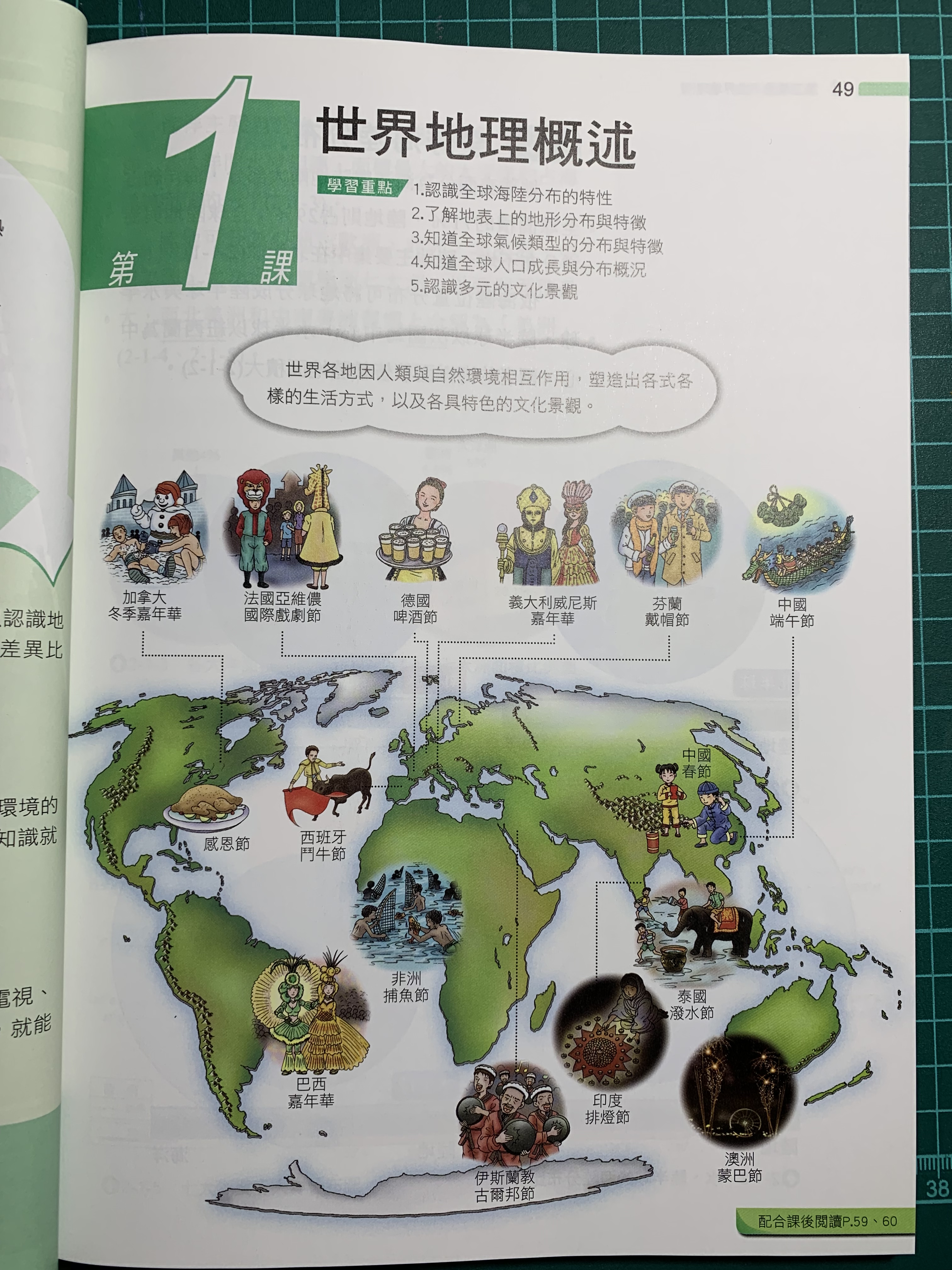
The following two pictures are from a 7th grade second semester CLA textbook that I prepared for my DDs before. 

img_3381img_3383


Compare the above with the following images from an 8th grade second semester social studies textbook.

img_3376img_3378img_3379

img_3415

img_3380

As you can clearly see, the social studies textbook provides excellent and efficient exposure to relevant Chinese terminology and language.  It is also fitting that these materials overlap with Georgia’s English based social studies course material at school, which makes learning via scaffold reading experience (SRE) possible.

Yes, it is more boring to read these social studies textbook aloud, but I hope she can appreciate the language knowledge soon, when her debate competition gets closer and closer.  We will see how it goes!

(There are videos online which go over much of materials presented in the textbook, but some narrators kind of just read the slide content off the screen, which is boring.  Their pronunciation could be “better” also.)

Fewer posts

One reader noted that I don’t blog as much about my DD’s Chinese learning journey these days.  That is absolutely true. There is simply less to blog about these days, as we are mostly in late consolidation to maintenance phase.  For me, most of the work for Chinese learning before they finish high school would have been done toward the end of middle school.

DD#1 “Charlotte”, almost 16, is finishing up 10th grade.  She has already switched track and commit most of her effort and time to academic and extracurricular activities with emphasis on future college application.  She attends a competitive high school and it is harder to stand out these days.  I have her do just a little maintenance type of Chinese reading to keep up her proficiency.  We continue to converse in Chinese at home, though I do have to correct her often as our conversation topics and depth increase further.  We spend maybe 15-20 minutes a day watching a Chinese high school teen soap 「致我们单纯的小美好」or “A Love So Beautiful.  She loves the show but cringes at the awkward teen puppy love interactions, LOL.

Charlotte does attend a Saturday simplified Chinese “AP” class a couple of times a month just to maintain some exposure to AP Chinese topics.  There are only two to three students in the class, one of whom is my DD#2.  That class provides more of an exposure to the Chinese AP topics rather than being a test preparation course.  It is unfortunate that her high school doesn’t have Chinese AP class.  However, since my goal has never been about test taking and has always been about actually knowing and using Chinese as a communication tool, I am not sweating it and would rather that she commits her time to other areas.  For more formal instruction, I recently resumed having her read aloud select piece in CLA textbook about 10-15 minutes a day several days a week, picking up where we left off almost two years ago in 6th grade CLA textbooks.  That’s all the time she can commit to Chinese these days.  But we hope to move onto junior high level textbooks soon.

The good news is that she has just been recruited to join a brand-new southeast regional Chinese debate team that will compete in Taiwan with teams across Asia at the end of the summer.  This is a wonderful opportunity to hone in her Chinese colloquial proficiency, as I have been seeking out extracurricular activities that require much actual Chinese usage.  Since there are few such activities for teens, we often have to come up with our own, such as our band.  To receive coaching in Chinese for debate conducted in Chinese is like a dream-comes-true.  So, hopefully the whole things goes smoothly.

As for my almost 13 years old DD#2 “Georgia”, we continue to do Chinese read aloud exercises 5 days a week as mentioned in recent blog entries.  She is using 6th grade textbook also, moving at a faster pace than “Charlotte” three years back.  She attends the same casual Saturday “AP” Chinese classes every week, which I plan for her to repeat next year to improve her familiarity with simplified Chinese and get really acquainted with the material.  She watches about 30 minutes of Chinese drama 後宮甄嬛傳 with me at night, which she loves.

“Georgia” is also finishing up reading the third book (out of four) of 神雕俠侶 kungfu novel.  I recently printed the remainder of the novel out with zhuyin included, since her comprehension and reading speed do go up with them.  I plan to have her finish reading this novel with zhuyin assistance and then try another 金庸‘s kungfu novel without zhuyin.  She doesn’t particularly enjoy reading Chinese kungfu novel (but loves watching such TV shows) and that’s why it has been taking this long.  Maybe I should have her pick out the next novel herself.

“Georgia” was also recruited to try out the Chinese debate team as well.  She took three semesters of English debate classes before; so, this will be an excellent opportunity for her as well.  In terms of her English, she is doing extra reading comprehension exercises to “close the gap” further.  She is in accelerated ELA class one grade level higher at school, but can still work on her English more.  She is not one of those “brilliant” kids who are two-three years (or more) ahead in multiple subjects.  My best guess is that such “brilliant” kids probably have IQ (in the general sense) of around 150  (~1 in 2,000 people) or higher.

In terms of our band, we performed four times in February and are taking a little break.  We plan to work on one popular Cantonese and one Taiwanese song in the coming months.

Overall, IMHO, how well a child handles Chinese-English bilingual education in the tween to teen years, even with favorable Chinese Language Ecosystem (CLE), depends much on the individual’s general intellect, given high level competition for top college spots these days.  Most children likely need to divert attention away from Chinese learning to participate in the college application rat race.  So, it is ever more important that the majority of a solid Chinese instruction and foundation be laid down by the end of middle school.

翠玉白菜 (Jadeite Cabbage) – expository writing

About 5 weeks out from when DD#2, “Georgia”, started working on a 6th grade Chinese Language Art textbook (first semester) from Taiwan, she is right on track, at a pace of one chapter a week.  She just finished reading to fluency chapter 5.  It is on 翠玉白菜 or Jadeite Cabbage, a piece of jadeite carved into the shape of a Chinese cabbage head with insects on the leaves.  It is a prized piece at the National Palace Museum in Taipei.

This is a tougher piece for her to read aloud, given it is an expository and descriptive writing, with more difficult expressions and wording.  I think she’s got it down pretty good after working on it for about an hour and half, spread over five days or so.


第五課  翠玉白菜

玉是一種半透明、具有光澤的美石,中國人極愛玉石的雅致和溫潤,喜歡拿玉來比喻美麗或尊貴,更將玉石巧雕成各式各樣的吉祥造型。

玉器的製作相當費工、費時,玉匠為了充分利用玉料,雕琢時會順應其自然天成的外形或色澤來設計製作,這就是所謂的「量材就質」。故宮博物院典藏的「翠玉白菜」,就是依循這種理念的經典之作,因為奇巧無比,所以成為名聞中外的藝術品。

一般而言,質純的玉石呈白色,有些因為含有不同的金屬元素,會呈現翠綠色或赤色。翠玉白菜就是以一塊半白半綠的玉料雕成,玉匠巧妙利用玉質顏色的變化,將玉石綠色部分,雕出翻捲的菜葉;白色部分,雕出脈絡分明的菜莖,白、綠的漸層變化,渾然天成,有如一顆鮮嫩欲滴,可以掐出水來的白菜。更有趣的是,玉匠巧妙的在葉片上雕了活靈活現的螽斯和蝗蟲,這神來一筆,讓原本靜態寫實的作品,頓時活潑起來,充滿令人驚喜的動態美。

翠玉白菜原是北京紫禁城永和宮中的陳設品,是清末光緒皇帝的妃子——瑾妃的嫁妝。這件嫁妝不但貴重,還隱含著父母對出嫁女兒的祝福:白菜寓意清白,象徵新娘的純潔;螽斯,俗稱「紡織娘」,能高聲鳴唱,而且繁殖力很強,用來祝福新娘多子多孫。

遠近馳名的翠玉白菜,結合了玉料天然的美和玉匠精湛的雕工,除了令人賞心悅目,還有一層寓意傳情的物外之趣,堪稱為玉器中的珍品,也讓所有慕名前來參觀的人,留下深刻的印象。


第五课  翠玉白菜

玉是一种半透明、具有光泽的美石,中国人极爱玉石的雅致和温润,喜欢拿玉来比喻美丽或尊贵,更将玉石巧雕成各式各样的吉祥造型。

玉器的制作相当费工、费时,玉匠为了充分利用玉料,雕琢时会顺应其自然天成的外形或色泽来设计制作,这就是所谓的「量材就质」。故宫博物院典藏的「翠玉白菜」,就是依循这种理念的经典之作,因为奇巧无比,所以成为名闻中外的艺术品。

一般而言,质纯的玉石呈白色,有些因为含有不同的金属元素,会呈现翠绿色或赤色。翠玉白菜就是以一块半白半绿的玉料雕成,玉匠巧妙利用玉质颜色的变化,将玉石绿色部分,雕出翻卷的菜叶;白色部分,雕出脉络分明的菜茎,白、绿的渐层变化,浑然天成,有如一颗鲜嫩欲滴,可以掐出水来的白菜。更有趣的是,玉匠巧妙的在叶片上雕了活灵活现的螽斯和蝗虫,这神来一笔,让原本静态写实的作品,顿时活泼起来,充满令人惊喜的动态美。

翠玉白菜原是北京紫禁城永和宫中的陈设品,是清末光绪皇帝的妃子——瑾妃的嫁妆。这件嫁妆不但贵重,还隐含着父母对出嫁女儿的祝福:白菜寓意清白,象征新娘的纯洁;螽斯,俗称「纺织娘」,能高声鸣唱,而且繁殖力很强,用来祝福新娘多子多孙。

远近驰名的翠玉白菜,结合了玉料天然的美和玉匠精湛的雕工,除了令人赏心悦目,还有一层寓意传情的物外之趣,堪称为玉器中的珍品,也让所有慕名前来参观的人,留下深刻的印象。

Six grade textbook

Sixth grade Chinese Language Art textbook from Taiwan is indeed a step tougher than that of fifth grade.  It takes DD#2 a bit longer to read till fluency.

第三課 大自然的規則

山在晨曦照耀下開始甦醒,發出劈啪的聲響,並且朝天空吐出一縷一縷的蒸氣。當陽光解除了樹林死氣沉沉的冰封盔甲時,山還「ㄆㄥㄆㄥ」低語了幾聲。外公一直注意著這一切,我也一樣。我們還留神傾聽在林間呢喃的晨間微風,以及各式各樣的聲響。
「山逐漸的活起來了!」外公輕聲說,眼睛仍專注的望著山。
「沒錯!」我回應外公說:「她復活了。」突然間,我發現我和外公同樣擁有的這種感覺,卻是大部分人從未經歷過的。
夜晚的陰影一直向後退,只剩下山腳下草地對面的一塊陰暗角落;沐浴在陽光下的青翠草地,閃著光芒。外公指著草地上一邊撲打著翅膀,一邊忙著尋找食物的鵪鶉要我看。接著他把手指向清冷的藍天。
天空潔淨得沒有一片雲。一開始,我並沒有看見外公指的那個在地平線上移動的小黑點。黑點愈來愈大,直朝著陽光飛來,這樣牠的影子就不會比牠先落在地面上。只見那隻鳥加速直往山邊俯衝下來,飛快掠過尖尖的樹頂,兩隻翅膀向後伸展,就像一顆褐色的子彈筆直的射向鵪鶉。
外公低聲笑說:「那是老鷹泰坎!」
鵪鶉們突然起了一陣騷動,紛紛朝林間倉皇奔逃,有一隻腳步稍慢了些。老鷹發動攻擊了,只見牠的頭快速起落,如雨點般死命的啄擊這一隻鵪鶉,一瞬間,撲擊便結束了,鵪鶉羽毛在空中四處飛散。老鷹用雙爪抓起牠的獵物,朝著原來的方向,越過山頭揚長而去。
我沒有哭,但我知道我的樣子很沮喪。外公對我說:「別傷心,小樹,這就是大自然的規則。」
外公拿著刀子,從地裡掘出一段甜菜根,把皮削掉,切成兩半。他把大的一半遞給我,甜菜根飽含著用來過冬的汁液,順著刀身流下來。
「這就是大自然的規則。」外公輕輕的說。