Code switching

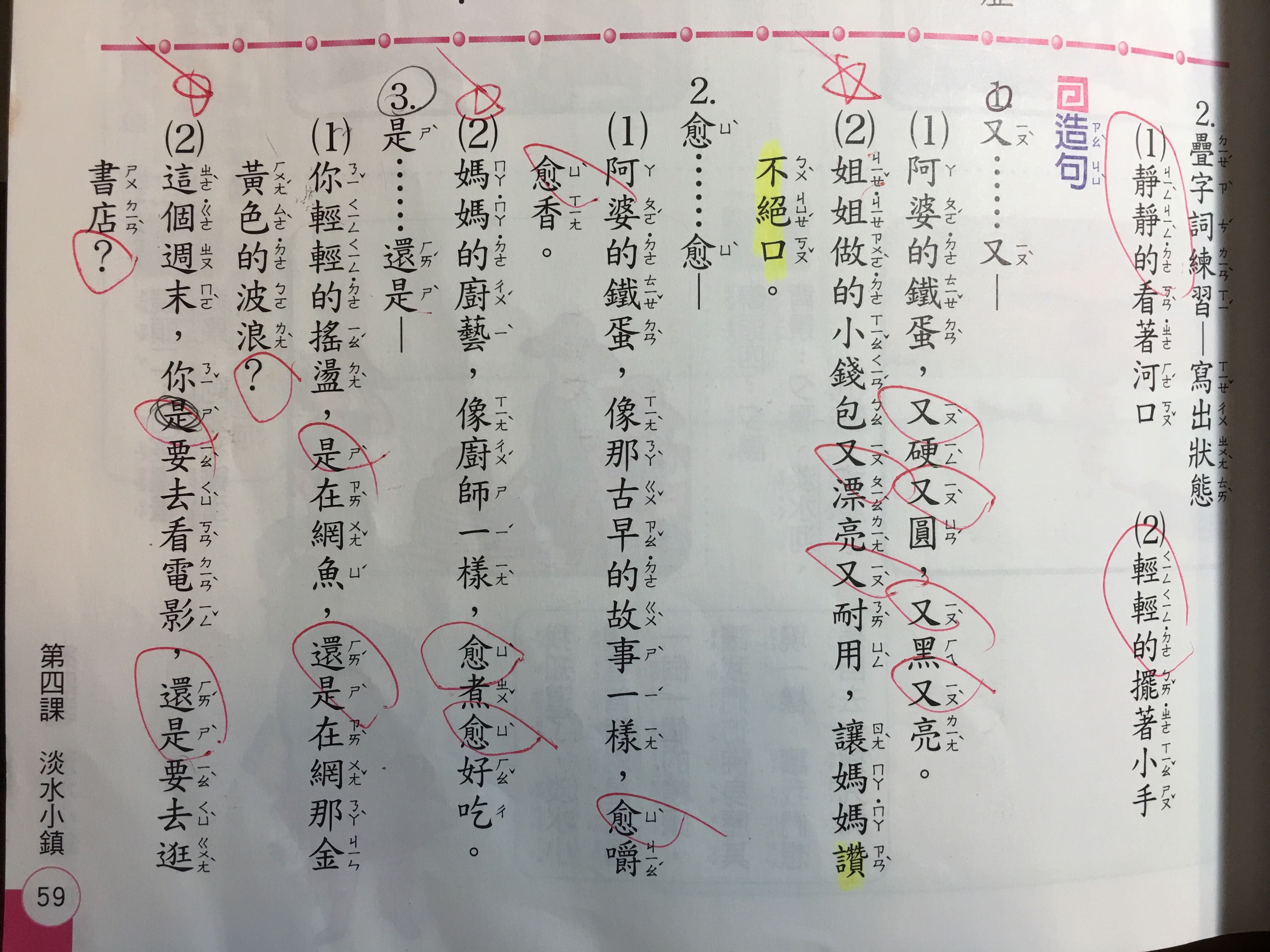
“Georgia” (9) has a stronger tendency to switch to speaking English, compared to our 12 year old daughter, “Charlotte”, who can pretty much express herself well in Chinese the great majority of the time. So, seeing that Georgia needs extra work on fuller colloquial expression, we hired a tutor to work with her on the weekend, one hour on Saturday and one hour on Sunday. She reads aloud story books with more colloquial expressions and conversations with the tutor.  The tutor also has Georgia make sentences verbally based on different sentence structures. After two months, she is doing better now.

Thankfully, Charlotte’s Chinese is strong that she continues to speak to Georgia in Chinese the great majority of the time and the two continue to converse in Chinese most of the time at home, where we continue to monitor and enforce the “Chinese Only” policy.

As I had written before, it is important that the elder child has excellent colloquial Chinese so that the younger child has a fighting chance to learn Chinese well enough.


Love in 100 Days (真愛100天)

Love in 100 Days

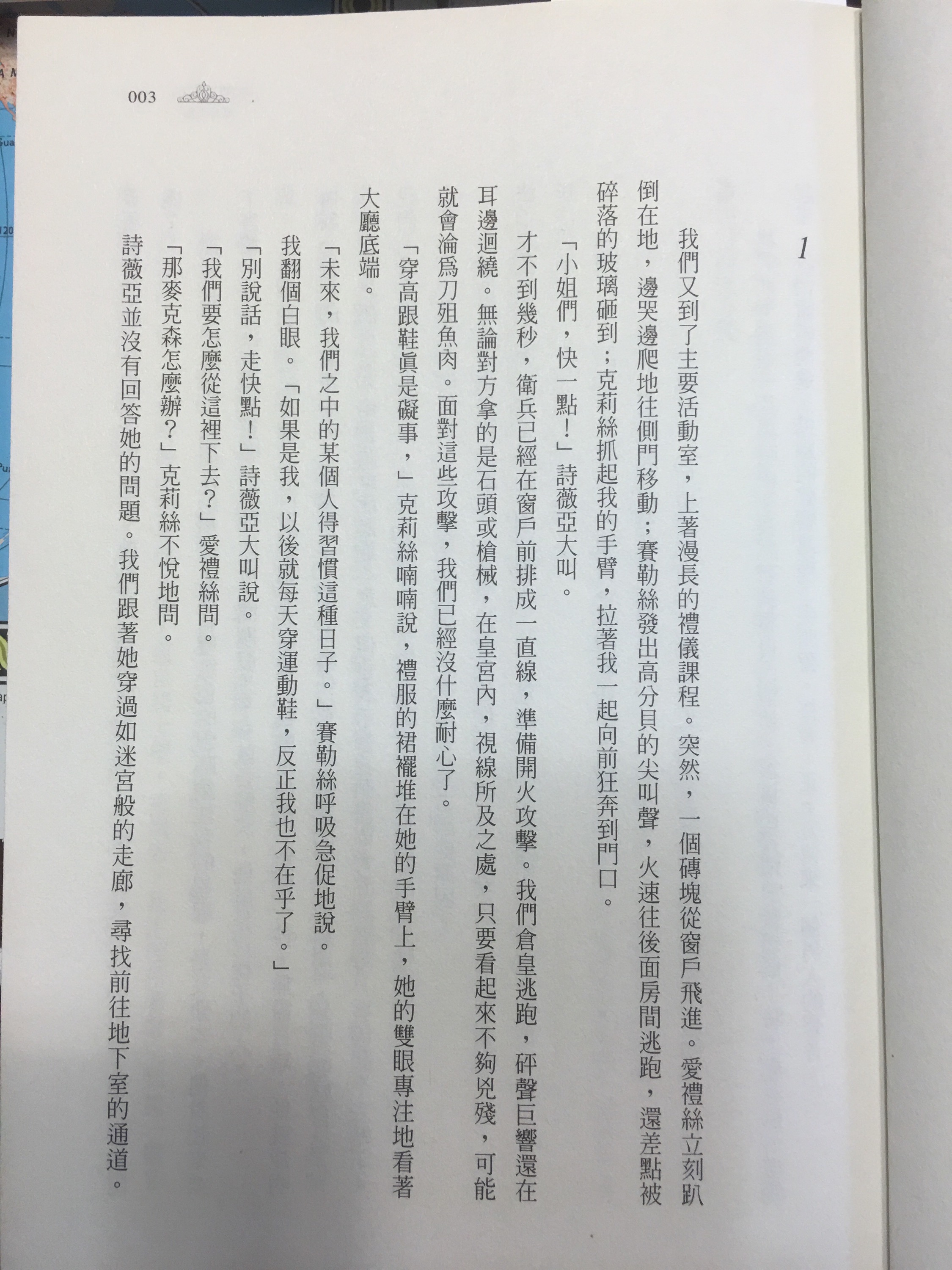
My daughters enjoy watching romantic comedy, including “100 Days” which they watched this weekend. It is readily available through Amazon’s Prime movie collection and probably through other websites. Maybe the younger one is a little precocious (or both, don’t know).  She just giggles when there is smooching onscreen. B esides cartoon/animation, this is the type of Chinese movies I can get them to watch these days.  I am glad they are familiar enough with Taiwan and the way of living there that they would watch this. It’s all about creating relevance and fortifying the CLE (Chinese language ecosystem).

The male protagonist is Johnny Lu, who emigrated to the US from Taiwan at the age of 8. He graduated from UC-Irvine and then moved back to Taiwan. After years of living there, he seems to be a balanced bilingual. The movie is pretty decent.

Trying out three languages (English, Chinese, and another one)?

An education professor at Pace University wrote a book on her experience raising her hapa sons to be trilingual (Chinese, English, + another category 1 language, up to 11 years old in this book). I don’t own the book and don’t know her sons’ proficiencies in the three languages.

http://www.amazon.com/Growing-Three-Languages…/…/ref=sr_1_1…

One of her take on trilingual proficiencies is that one can’t judge the proficiency of the various languages using the same measures as monolinguals. I, of course, agree on that part.

Here are two parents’s take on learning three languages from another site:

Parent A: 我老公講英文 我對小孩中文 但小孩回我英文…..兩位小孩三歲就出去上整天的 英文/西班牙文雙語學校⋯ 他們現在 已經 three languages la…. 還很小⋯ 五歲跟三歲半⋯

Parent B:……..我覺得先注重中英文,有餘力再加第三種語言,我是因為兒子的學校西語是必修課程,所以才學………我跟他說中文,他只回我英文,可是帶回台灣時,他想跟其他小朋友玩,就一定要說中文,說也奇怪,有那環境,他中文就自然說出來了。

My take on it: 每個家庭的期許不一樣。我希望小孩子在國中時就可以流暢的看中文小說(才不會排斥能以中文書當娛樂)。我想這一定要從小中文基礎很強,口語非常強應該是避免不了,但這樣就沒太多能花在其他語言的上面,因為還要花時間補英文或其他科目或才藝。這ㄧ方面,我們是先精再廣。 Every family has different expectation, means, or goals. For us, I want them to be able to read Chinese novels fluently in middle school. I think this require very strong Chinese since they are little, including colloquial Chinese. This really limits the amount of time one can invest in a third language (at least till the goal is almost reached), since they will have to spend a good part of that time working on their English, other subjects, or extracurricular pursuit. So, in this regard, our method is “Depth first, breadth second”.

MIND THE GAP 2

I propose two new terminologies:

Two favorable conditions for the child to achieve very good Chinese (ILR level 3 or above) in both speaking and reading by their teens seem to be for the lead parent/care giver involved to 1) converse pretty much in only Chinese with the child, both ways, and 2) at least one of the parents has good English proficiency, so that the parents are willing to let English slide in the beginning (“open the gap”), thus creating a proficiency differential in favor of Chinese in the beginning, know when to catch up in English (“close the gap”), and has the means to close the gap.

This does not apply for those who pick up more Chinese in adulthood.

If you have more than one child and hope that the younger children also have good Chinese, I recommend much heavier dose of Chinese than English for the eldest child. You need that eldest one to have excellent colloquial skill up through, say, middle school to benefit the younger siblings. (And reading proficiency is needed to complement / reinforce speaking proficiency and to maintain interest.) That was my plan from the beginning. Except, I had no idea whether the whole thing is feasible and how things would turn out, since nobody has done it before AND shared the experiences, as far as I could find. So, my elder daughter’s English did lag behind initially to the benefit of my younger one. But she was able to catch up by the end of 5th grade. Parents really can’t be sure if the first child’s Chinese will be strong enough to converse fluently with the second child all the way through 8-9 years old (for the younger child); therefore, I think it is more prudent to overshoot in Chinese initially for the eldest child, as one can always catch up in English in middle school, as so many youth immigrants had done before.

My younger daughter would have gotten much less practice in Chinese if not for my elder daughter.  Afterall, after ~ 8 years old, it is extremely difficult to find fluent Chinese speaking peers to play with, at convenient times and frequent intervals.

What do you think?

MIND THE GAP & catching up in English.

I noticed my 9 year old trailing a little behind in her vocabulary comprehension and usage in her Wordly Wise/Spelling class, granted she skipped a grade. That’s likely from reduced exposure time to English, particularly in terms of reading. So, I blocked off part of our precious Chinese lesson time for her to read more of her AR book.

That’s like heresy!

But seriously, as the child gets close to middle school, I think it is important to start closing the gap in English.

What do you think?

Some thoughts from before

I spoke with another parent on my way back from work.  Here are highlights of some of the points that I had not discussed before.

1) Education is the most important thing (well, besides the usual talk of wanting your kids to be happy and that sort of things). Schooling is a mean to the end. Education is SO much more than schooling. When schooling interferes with education, go see about switching school.

2) When weekend Chinese school (or immersion school for that matter) interferes with your kids’ Chinese education, such as focusing way too much on writing and testing, and you have a viable alternative such as home instruction, drop weekend Chinese school. Neither its scope nor curriculum is sufficient for level 3 proficiency and up any ways. A lot more is required. And if you DO do the “a lot more” part at home, you may figure out that you can be better off with home instruction.

3) Testing. I had never given my daughters any Chinese test. When we homeschooled, it seems the au pair did give them tests, but there were pretty much no stress involved, according to my kids. I didn’t know that they even had tests till just now. Why bother with test on Chinese at this age, as a Chinese-speaking heritage family? The language skill is for long term practical use, amongst other things. Test results means nothing, if one can’t speak competently or read a book. We just keep focusing on learning more and more and do more reading and conversing. There is no required pre-defined and adhered-to schedule to keep. Every day and every moment is a teaching opportunity.

4) Learning together. Here in the US, besides independent reading and watching Chinese cartoons, my daughters pretty much did all their Chinese learning with the au pairs, tutors, or me next to them. If I can manage to get some patient chart work done while they study, I try to do so, but I am there to help and guide them every step of the way. Sometimes, I would tell them to copy the text or do some reading comprehension exercises while I take a nap or something like that, but that’s infrequent. We watch all these funny Chinese YouTube videos and movies together. This allows the three of us to be our own CLE (Chinese language ecosystem), that we can retell jokes and stories months later. WE ARE OUR OWN CLIQUE and we have fun together.

5) Too much time spent with other heritage English speakings children (almost all heritage children after 7-8 years of age) most likely adversely affects your kids’ Chinese proficiency.  But parents have to balance that with the child’s identity issue, if any.  If you are so fortunate to be able to get one or two Chinese speaking playmates for your child after 8 years of age, more power to you! Keep them!